

Square Wire Mesh: The Complete Guide to Types, Weaving Methods & Uses?
Confused by all the square wire mesh options? Choosing the wrong type can increase material costs, create installation problems, and reduce overall project performance.
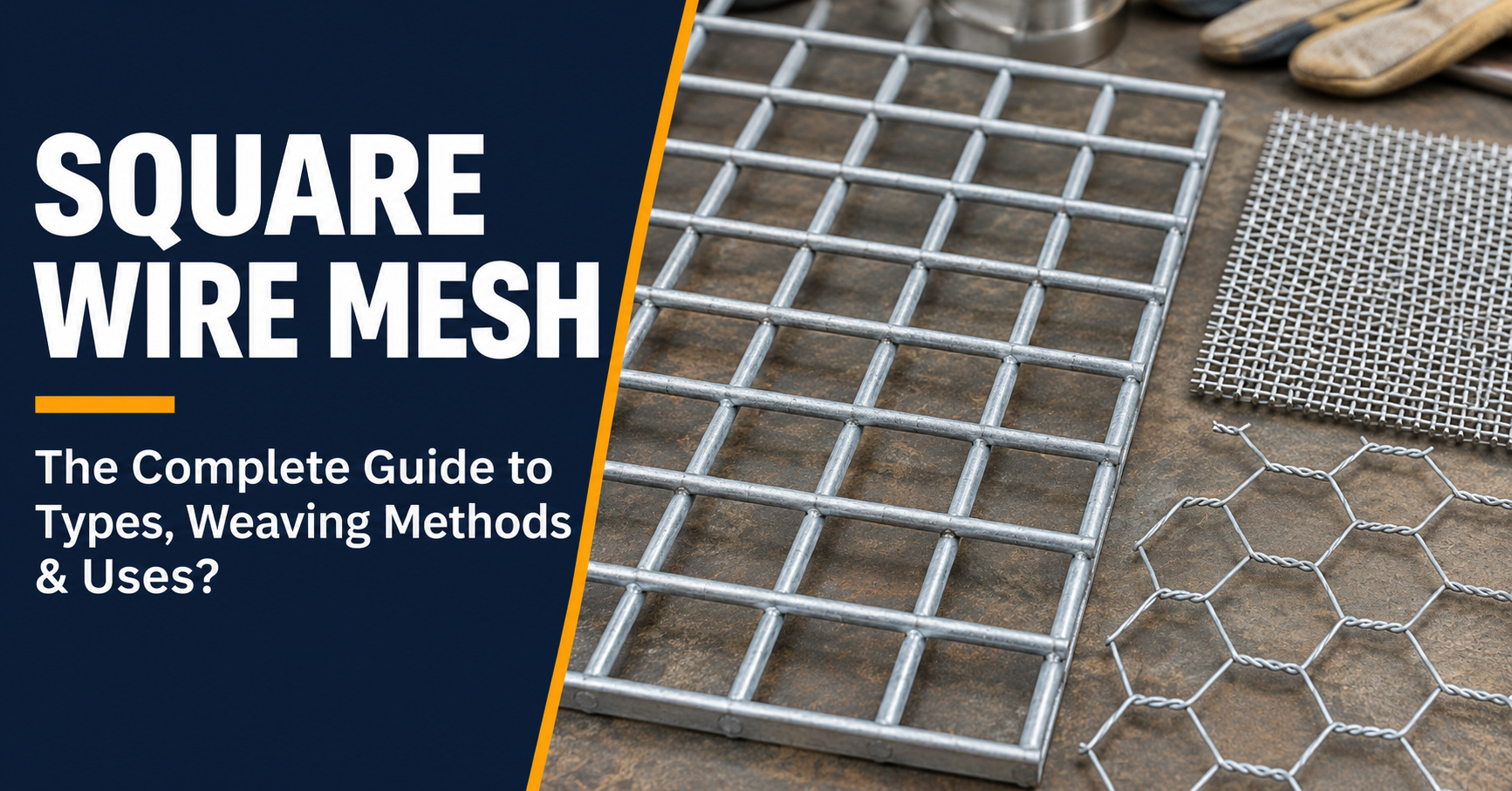
Square wire mesh is defined by its square openings and is commonly produced in welded or woven forms. Depending on material, wire diameter, opening size, and construction, it can be used for industrial filtration, security fencing, construction, garden projects, screening, and pest control.
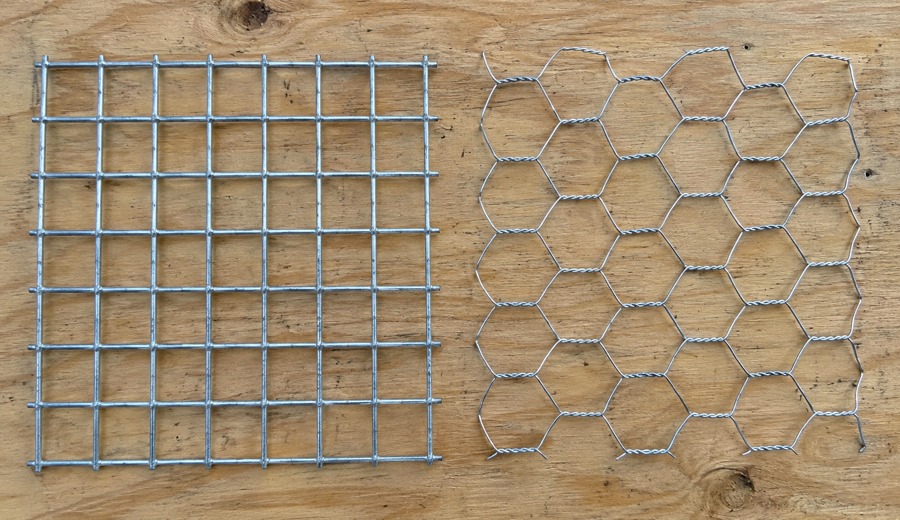
Wire mesh products can look similar, but their construction methods and performance characteristics vary significantly. Understanding the differences between welded, woven, expanded, and hexagonal mesh helps buyers choose a more suitable product for each application.
What Are the Different Types of Wire Mesh?
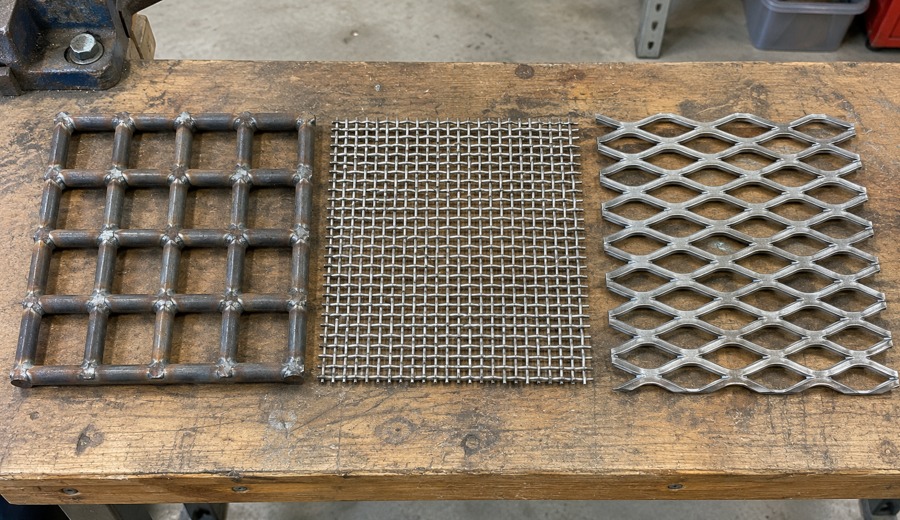
Wire mesh can be classified according to how the wires or metal sections are connected. The main categories include welded mesh, woven mesh, expanded mesh, and hexagonal mesh.
Welded mesh is rigid, woven mesh provides greater flexibility, expanded mesh is made from a single sheet of metal, and hexagonal mesh uses twisted wires to create flexible six-sided openings.
Welded Wire Mesh
Wires are joined at each intersection by welding. This produces a rigid grid with stable openings.
Woven Wire Mesh
Individual wires pass over and under one another, creating a flexible mesh suitable for screening and filtering.
Expanded Metal Mesh
Produced by slitting and stretching sheet metal, creating a one-piece structure without welded or woven intersections.
Welded vs. Woven vs. Expanded Mesh
| Mesh Type | Strength | Flexibility | Common Applications |
|---|---|---|---|
| Welded Mesh | High | Low | Fencing, reinforcement, cages |
| Woven Mesh | Medium | High | Filtering, sifting, screens |
| Expanded Mesh | Very High | Low | Walkways, grates, security |
What Is Wire Mesh Used For?
Wire mesh is used across construction, industry, agriculture, commercial distribution, retail, and DIY markets.
Typical applications include filtration, separation, concrete reinforcement, security fencing, agricultural enclosures, machine guards, shelving, garden protection, and architectural uses.
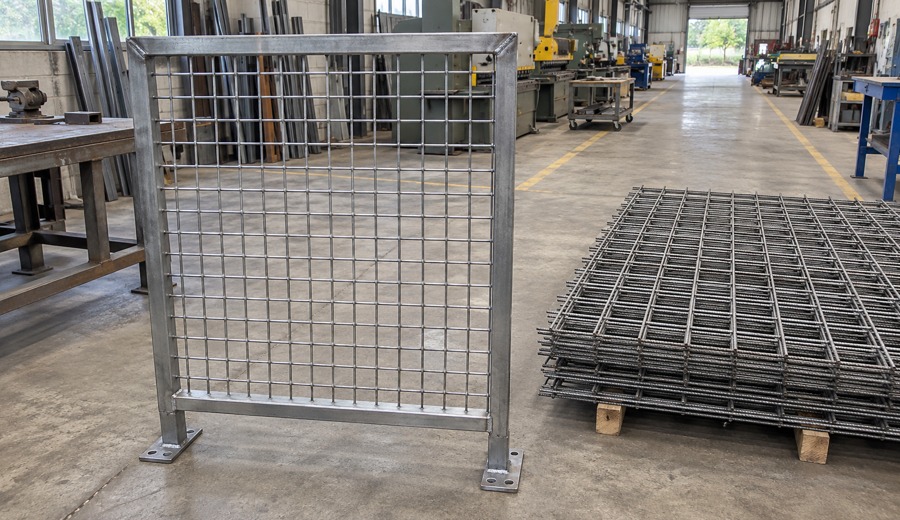
Industrial & Construction Uses
Industrial wire mesh can be used for filtration, screening, particle separation, machinery guards, partitions, and other processing applications.
In construction, products such as brick mesh and welded wire mesh may be used for masonry reinforcement and concrete reinforcement depending on project specifications.
Agricultural & Fencing Uses
Agricultural customers use different types of wire mesh for livestock, poultry, crop protection, perimeter fencing, and animal enclosures.
- Field fencing
- Deer fencing
- Chicken coops
- Poultry runs
- Garden protection
- Animal enclosures
Commercial & Retail Uses
Retailers and DIY distributors commonly purchase products such as garden fence, hardware cloth, and small-roll mesh.
For retail markets, packaging becomes especially important. Product labels, barcodes, instructions, branding, and shelf-ready packaging may form part of the purchasing specification.
What Is the Difference Between Wire Cloth and Wire Mesh?
These terms are sometimes used interchangeably, but they often describe different product ranges in commercial and industrial applications.
Wire Cloth
Usually refers to finely woven wire products with relatively small openings and higher mesh counts. Typical uses include precision screening, laboratory sieves, filtration, and particle separation.
Wire Mesh
A broader term that includes fine woven products as well as heavier welded panels, hardware cloth, fencing, and construction mesh.
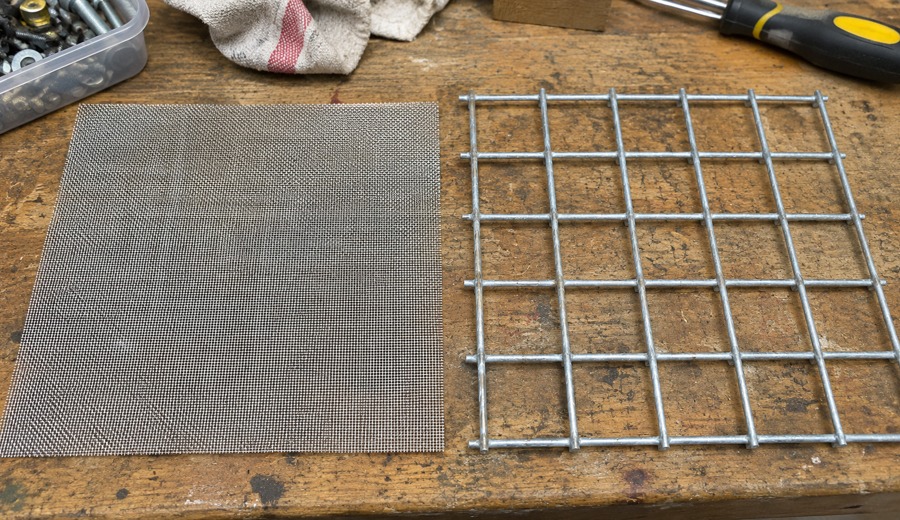
When to Use the Term “Wire Cloth”
Wire cloth is normally associated with precision applications where mesh count and opening size are critical. These applications can include:
- Laboratory sieves
- Fine industrial filters
- Chemical processing
- Food processing screens
- Particle analysis
- Fine insect screening
When to Use the Term “Wire Mesh”
Wire mesh is generally the broader category used for construction, fencing, caging, screening, and general industrial applications.
Products described as wire mesh can range from fine woven screen to heavy welded panels, so buyers should always specify measurable dimensions rather than relying only on the product name.
Procurement Tip: When requesting a quotation, specify wire diameter, opening size, material, dimensions, construction method, and quantity. This is more reliable than ordering only by terms such as “wire cloth” or “wire mesh.”
What Are the Different Types of Wire Mesh Weaves?
Woven wire mesh can be manufactured using different weave patterns. The weave affects opening stability, wire diameter capability, flexibility, and filtration performance.
Plain Weave uses an alternating over-one, under-one pattern, while Twill Weave commonly follows an over-two, under-two pattern.
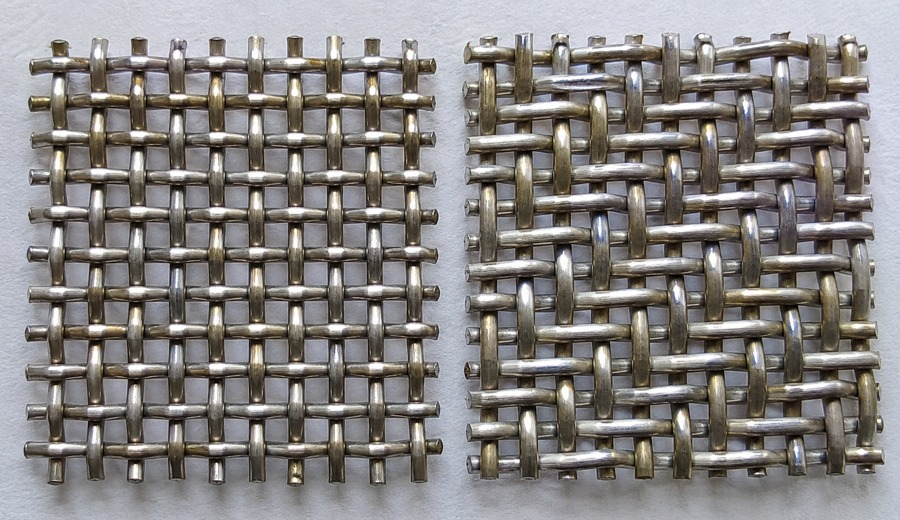
Plain Weave
Each weft wire passes alternately over and under each warp wire, producing a regular and stable square opening.
Twill Weave
Each wire typically passes over two wires and under two wires, creating a diagonal pattern that can accommodate heavier wire at higher mesh counts.
Plain Weave Applications
- General screening
- Window screens
- Partitions
- Basic filtration
- General-purpose industrial mesh
Twill Weave Applications
- Higher-strength woven screens
- Fine filtration
- High-flow filtration
- Heavy material screening
- Applications requiring greater flexibility
What Are the Different Types of Chicken Wire Mesh?
Chicken wire is generally another name for hexagonal wire mesh or poultry netting. The main variations relate to wire diameter, opening size, galvanizing process, and coating.
Common versions include galvanized-before-weaving, galvanized-after- weaving, and PVC-coated hexagonal wire mesh.
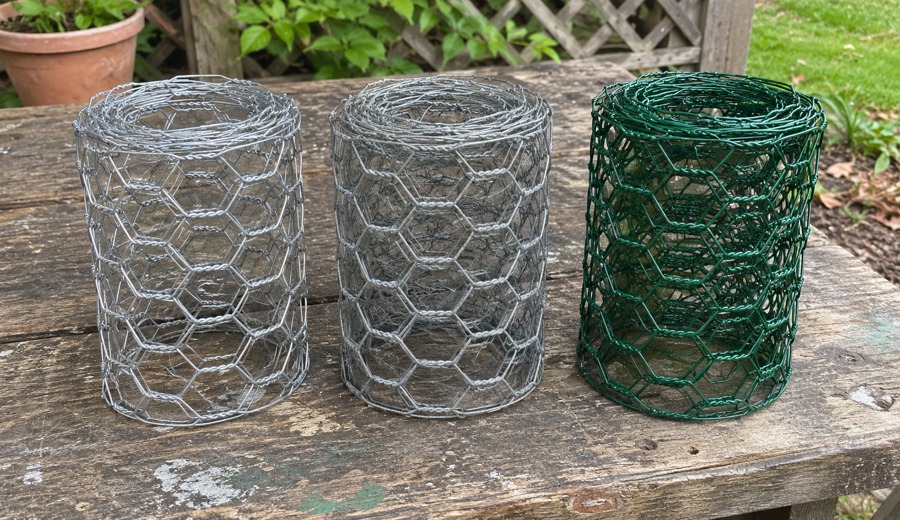
Galvanized Before Weaving
With galvanized-before-weaving construction, the individual wires receive zinc coating before they are twisted into the finished hexagonal mesh.
Galvanized After Weaving
With galvanized-after-weaving construction, the mesh is formed first and the finished product is subsequently galvanized.
This allows the completed wire structure, including the twisted areas, to receive zinc coating during the galvanizing stage.
PVC-Coated Hexagonal Mesh
PVC-coated mesh adds a polymer layer over the wire surface and can provide additional appearance and corrosion-protection options.
Is Galvanized Hardware Cloth the Same as Chicken Wire?
No. Chicken wire normally uses flexible hexagonal openings, while hardware cloth generally uses smaller square openings and a more rigid woven or welded construction.
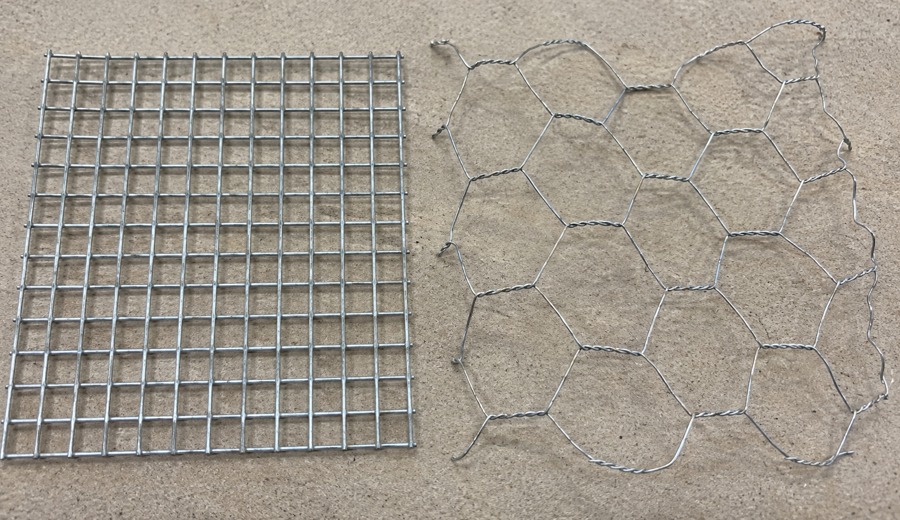
Chicken Wire
Flexible hexagonal mesh commonly used for poultry containment, garden fencing, and lightweight enclosures.
- Hexagonal openings
- Flexible structure
- Lightweight
- Easy to form around posts
Hardware Cloth
Square-opening wire mesh, commonly produced in welded or tightly woven construction and used where smaller, more stable openings are required.
- Square openings
- More rigid structure
- Smaller opening options
- Suitable for pest exclusion
When Is Chicken Wire Suitable?
Chicken wire is widely used to contain poultry and for light-duty garden fencing. Its flexibility makes it easy to install around posts and irregular areas.
When Is Hardware Cloth Better?
Hardware cloth is commonly selected where smaller openings and greater rigidity are needed, such as:
- Rodent exclusion
- Vent covers
- Lower sections of poultry enclosures
- Garden bed protection
- Small animal cages
What Is Hexagonal Wire Mesh?
Hexagonal wire mesh is produced by twisting continuous wires together into six-sided openings. It is also commonly called chicken wire or poultry netting.
Its main characteristic is flexibility. Unlike rigid welded square mesh, hexagonal mesh can drape and conform to uneven surfaces and curved shapes.
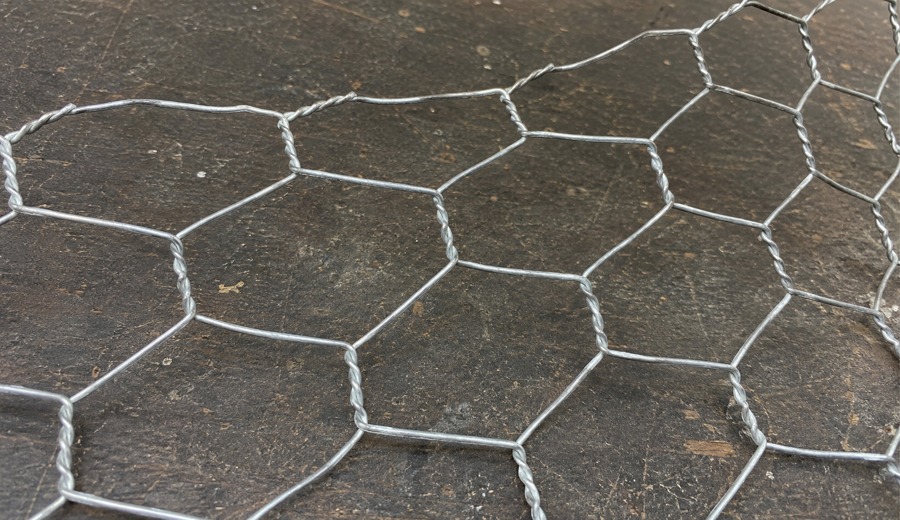
Construction and Flexibility
The twisted-wire construction allows hexagonal mesh to move and conform more easily than rigid welded square mesh. This makes it particularly practical for fencing around irregular terrain or curved structures.
The trade-off is that hexagonal mesh generally provides less rigidity than square welded mesh with comparable wire specifications.
Common Applications
- Poultry enclosures
- Chicken coops
- Garden fencing
- Tree protection
- Plant protection
- Stucco netting
- Light agricultural fencing
Square Wire Mesh vs Hexagonal Wire Mesh
| Feature | Square Wire Mesh | Hexagonal Wire Mesh |
|---|---|---|
| Opening Shape | Square | Hexagonal |
| Typical Construction | Welded or woven | Twisted wire |
| Rigidity | Medium to high | Low |
| Flexibility | Depends on construction | High |
| Typical Applications | Screening, cages, security, construction | Poultry, garden, stucco, light fencing |
| Opening Stability | Generally higher with welded construction | More flexible |
How Do You Choose the Right Wire Mesh?
Before requesting a quotation, determine what the mesh must do in the finished application.
- Strength: Is the mesh carrying load or acting only as a barrier?
- Opening size: What particles, pests, or animals must pass through or be excluded?
- Flexibility: Does the mesh need to follow an irregular surface?
- Corrosion resistance: Will it be installed indoors, outdoors, or in a humid environment?
- Dimensions: Do you need rolls, panels, sheets, or customized sizes?
- Packaging: Is the product for industrial projects, wholesale distribution, or retail shelves?
What Information Should You Send to a Wire Mesh Supplier?
B2B Purchasing Tip: Avoid requesting only “square mesh” or “wire mesh.” Providing measurable specifications helps suppliers prepare a more accurate quotation.
- Mesh type: welded or woven
- Wire diameter
- Square opening size
- Material: galvanized steel, stainless steel, etc.
- Panel or roll dimensions
- Surface treatment
- Total quantity
- Application
- Packaging requirements
- Destination port or delivery location
Conclusion
Choosing the correct wire mesh becomes much easier once you understand how construction method, opening shape, wire diameter, weave, material, and coating affect performance.
- Welded square mesh is suitable where rigidity, stable openings, and strength are important.
- Woven square mesh is commonly used for screening, filtration, and applications requiring greater flexibility.
- Hardware cloth provides small square openings for pest control, cages, vents, and general-purpose protection.
- Hexagonal wire mesh is more flexible and is widely used for poultry, gardens, light fencing, and stucco applications.
For professional B2B purchasing, always compare products using measurable specifications rather than relying only on generic names such as wire mesh, chicken wire, or hardware cloth.