

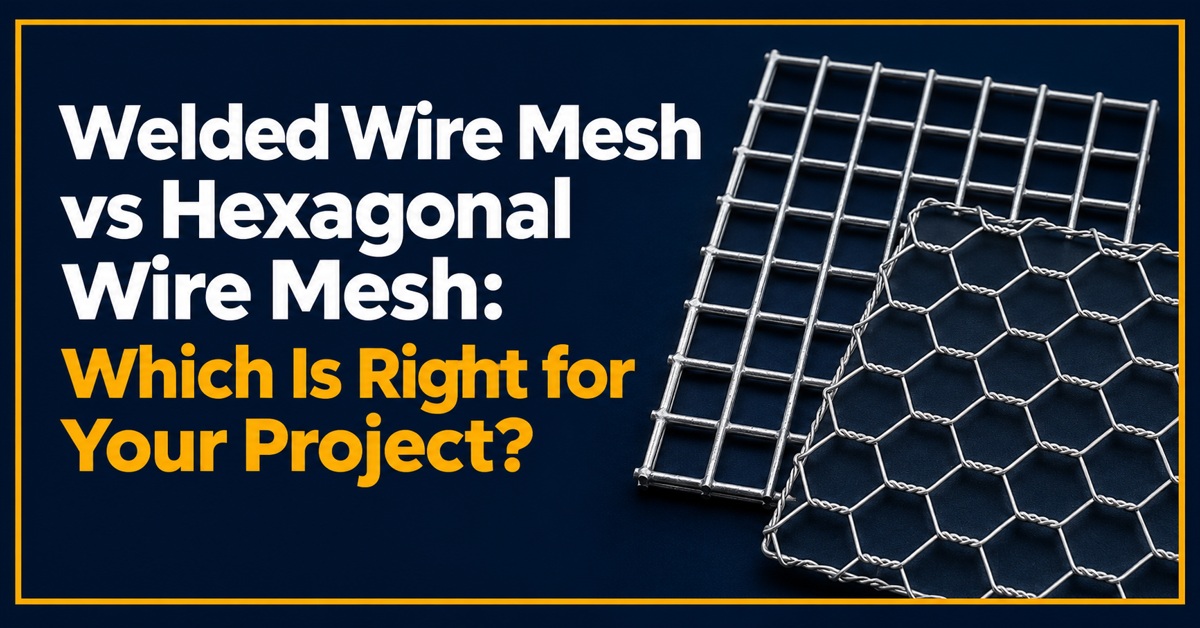
Welded Wire Mesh vs Hexagonal Wire Mesh: Which Is Right for Your Project?
Choosing the wrong wire mesh can lead to unnecessary material costs, installation problems, or inadequate performance. Welded wire mesh and hexagonal wire mesh are both widely used, but their construction and performance characteristics are very different.
Welded wire mesh is designed for rigidity and dimensional stability, while hexagonal wire mesh is designed for flexibility and easy installation on irregular surfaces.
What Is the Difference Between Welded Wire Mesh and Hexagonal Wire Mesh?
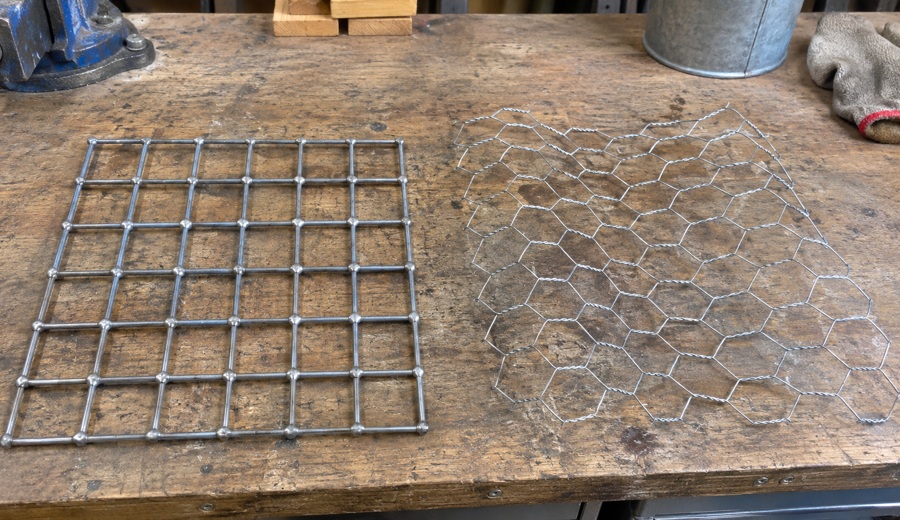
The manufacturing method creates the main performance difference between these two products.
Welded Wire Mesh
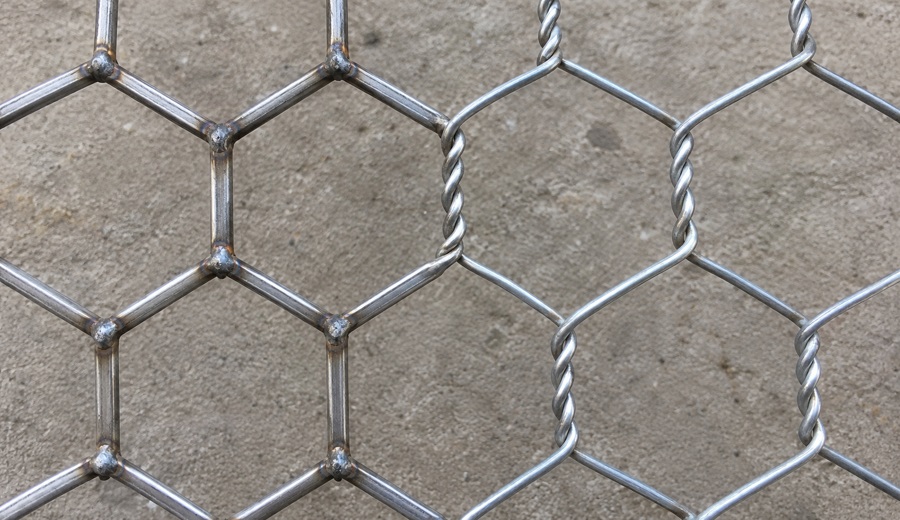
Horizontal and vertical wires cross at right angles and are welded at each intersection, creating a rigid square or rectangular grid.
Hexagonal Wire Mesh
Adjacent wires are twisted together to form hexagonal openings, creating a flexible mesh that can bend and follow uneven surfaces.
Key Differences
| Feature | Welded Wire Mesh | Hexagonal Wire Mesh |
|---|---|---|
| Construction | Wires welded at intersections | Wires twisted into hexagonal openings |
| Rigidity | High | Low |
| Flexibility | Low to moderate | High |
| Opening Stability | High | More flexible |
| Typical Form | Panels or rigid rolls | Flexible rolls |
| Typical Use | Construction, security, cages | Poultry, gardens, slopes, stucco |
Technical Note: Actual strength depends on wire diameter, steel grade, opening size, joint quality, coating, and installation. Mesh type alone should not be used to determine load capacity.
What Types of Welded and Hexagonal Wire Mesh Are Available?
Welded and hexagonal mesh can be supplied with different materials and coatings depending on the application and corrosion environment.
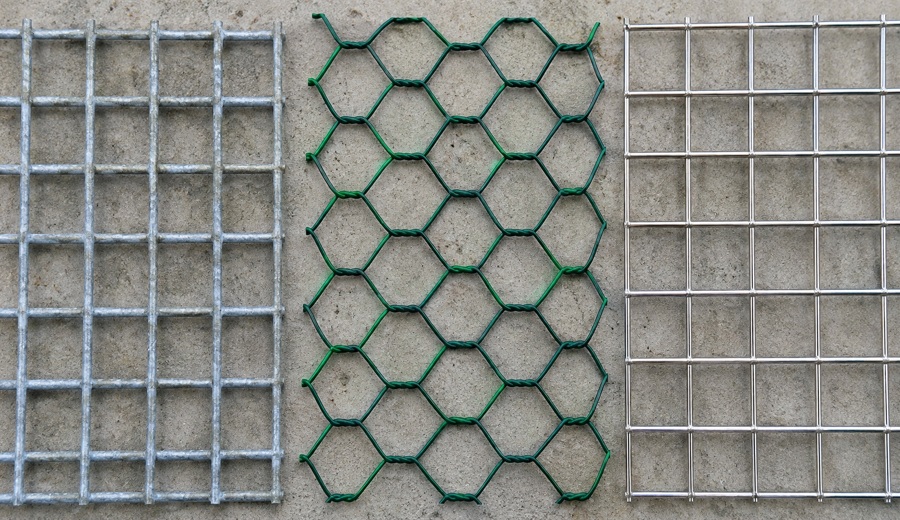
Galvanized Wire Mesh
Galvanized steel uses a zinc coating to reduce corrosion of the underlying carbon steel wire.
- Electro-Galvanized: commonly used where a lighter zinc coating is acceptable.
- Hot-Dip Galvanized: commonly selected for outdoor and higher-corrosion applications.
Galvanized Before vs After Manufacturing
Before Welding / Weaving
The wire receives zinc coating before it is converted into the finished mesh.
After Welding / Weaving
The finished mesh receives galvanizing after forming, helping coat welded or twisted areas as part of the completed product.
Buyer Tip: Corrosion performance should be evaluated using actual zinc coating mass, coating consistency, wire quality, manufacturing process, and expected environment rather than the process name alone.
PVC-Coated Wire Mesh
PVC-coated mesh adds a polymer barrier over the wire. It is commonly available in green, black, and other colors and is widely used for gardens, landscaping, residential fencing, and animal enclosures.
Stainless Steel Wire Mesh
Stainless steel provides corrosion resistance through the composition of the wire itself and can be suitable for food processing, marine, chemical, and other demanding environments.
How Is Welded Wire Mesh Manufactured?
Welded mesh production uses automated resistance-welding equipment.
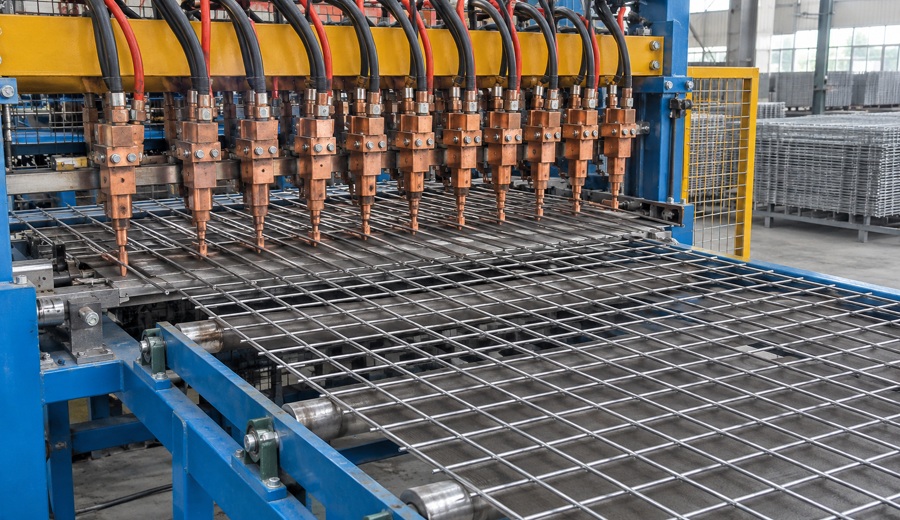
Longitudinal wires are positioned in parallel while cross wires are fed at the required spacing. Electrical resistance welding joins the wires at each intersection.
Important Quality Factors
- Wire diameter consistency
- Mesh opening accuracy
- Weld quality
- Panel flatness
- Roll or panel dimensions
- Coating consistency
How Is Hexagonal Wire Mesh Manufactured?
Hexagonal mesh is produced on specialized machinery that twists neighboring wires together to form connected six-sided openings.
The twist pattern is one of the main reasons the finished mesh is flexible and able to follow irregular surfaces.
Important Quality Factors
- Uniform opening dimensions
- Consistent wire diameter
- Stable wire tension
- Uniform twist quality
- Roll width and length accuracy
- Coating consistency
What Are the Common Uses of Welded Wire Mesh?
Welded mesh is generally selected when structural stability, rigidity, and fixed openings are important.
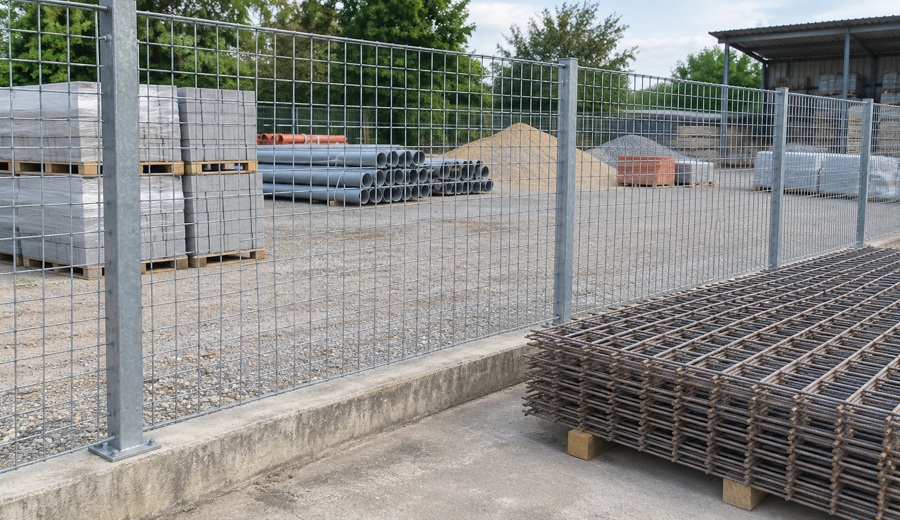
Construction
Welded wire reinforcement is used in concrete and masonry applications where specified by structural drawings or engineering requirements.
Security Fencing
Fixed intersections and stable openings make welded mesh suitable for industrial perimeter fencing, partitions, and security barriers.
Agricultural Enclosures
Heavier welded mesh is commonly selected for larger animals or applications where resistance to deformation is important.
Industrial Applications
- Machine guards
- Warehouse partitions
- Storage lockers
- Industrial shelving
- Protective barriers
What Are the Common Uses of Hexagonal Wire Mesh?
Hexagonal mesh is generally selected where flexibility, lightweight handling, and conformity to uneven surfaces are more important than rigid structural performance.

Agriculture and Gardening
Light hexagonal wire mesh is commonly used for chicken coops, poultry runs, rabbit enclosures, garden barriers, and pest protection.
Landscaping and Civil Engineering
Heavier engineered hexagonal mesh may be used for gabion systems, erosion-control structures, slope protection, and rockfall applications.
Stucco and Plaster
Hexagonal wire mesh can provide a flexible support layer for certain stucco and plaster applications.
Insulation Support
Lightweight mesh may also be used to help retain insulation in selected building applications.
Important: Lightweight chicken wire and engineering-grade gabion or rockfall mesh are different products. Always confirm wire diameter, opening, coating, twist construction, and relevant project requirements.
How Do You Choose the Right Wire Mesh?
A practical selection process can be based on four main factors: strength, flexibility, environment, and total cost.
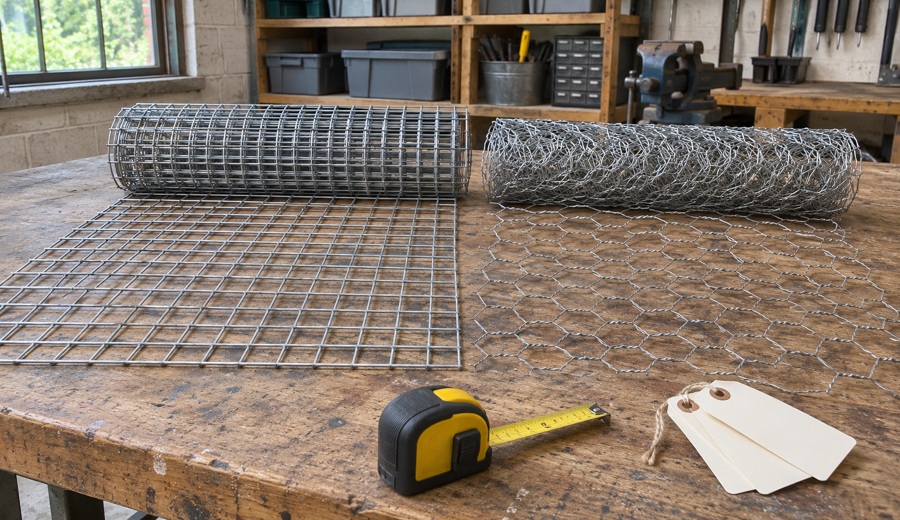
- Strength or Flexibility?
Choose welded mesh when rigidity, fixed openings, or load resistance are the priority. Choose hexagonal mesh when the material must bend, wrap, or follow uneven terrain. - What Environment Will the Mesh Be Used In?
Consider indoor or outdoor exposure, humidity, rainfall, salt, chemicals, and expected service conditions before selecting the coating. - What Is the Exact Application?
Match the product to the job. Poultry fencing, industrial partitions, concrete reinforcement, gabions, and stucco support all require different specifications. - What Is the Total Project Cost?
Compare material cost, installation, support structure, maintenance, replacement, and expected service life instead of purchase price alone.
Quick Selection Guide
| Application | Typical Choice | Main Reason |
|---|---|---|
| Concrete Reinforcement | Welded Mesh | Rigid fixed-grid structure |
| Security Fencing | Welded Mesh | Stable openings and rigidity |
| Machine Guards | Welded Mesh | Dimensional stability |
| Chicken Coops | Hexagonal Mesh | Flexible and economical |
| Garden Fencing | Hexagonal Mesh | Easy shaping and installation |
| Uneven Ground | Hexagonal Mesh | Follows contours |
| Stucco Support | Hexagonal Mesh | Flexible support structure |
| Heavy Gabion Systems | Engineered Hexagonal Mesh | Flexible heavy-duty construction |
What Information Should You Send to a Supplier?
- Mesh type
- Wire diameter
- Opening size
- Material grade
- Galvanized, PVC-coated, or stainless finish
- Zinc coating requirement if applicable
- Roll or panel dimensions
- Total quantity
- Application
- Required standard or certification
- Packaging requirements
- Destination port or delivery location
Conclusion
Welded wire mesh and hexagonal wire mesh serve different purposes, and neither product is universally better.
- Choose welded wire mesh when rigidity, fixed openings, structural stability, security, or heavy-duty containment are the primary requirements.
- Choose hexagonal wire mesh when flexibility, lightweight handling, irregular terrain, poultry fencing, gardening, stucco support, or contouring are more important.
For professional B2B purchasing, compare products using measurable specifications such as wire diameter, mesh opening, material, coating, dimensions, application, and required service environment.