

Woven Square Wire Mesh vs Welded Square Mesh: Key Differences Explained?
Choosing between woven and welded square wire mesh can directly affect project performance, installation efficiency, and total purchasing cost. Although both products use square openings, their construction methods create very different performance characteristics.
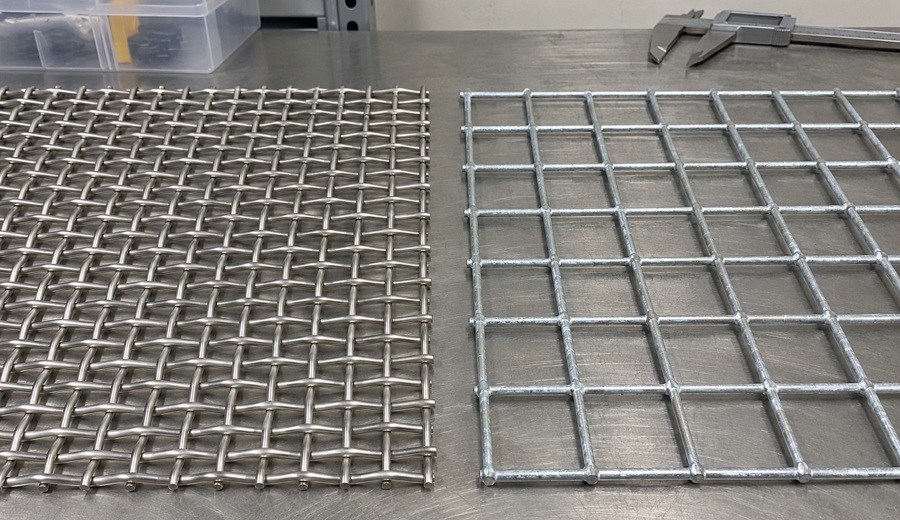
Woven square wire mesh is made by interlacing wires, creating a flexible mesh. Welded square wire mesh uses wires joined at each intersection, producing a rigid and dimensionally stable grid.

The correct choice depends on whether the application requires filtration, vibration resistance, dimensional stability, structural support, containment, or economical bulk production.
What Is Woven Square Wire Mesh?
Woven square wire mesh is manufactured by interlacing individual wires over and under each other in a pattern similar to textile weaving.
Because the wires are interlaced rather than welded, woven mesh retains greater flexibility and can tolerate controlled movement at the intersections.
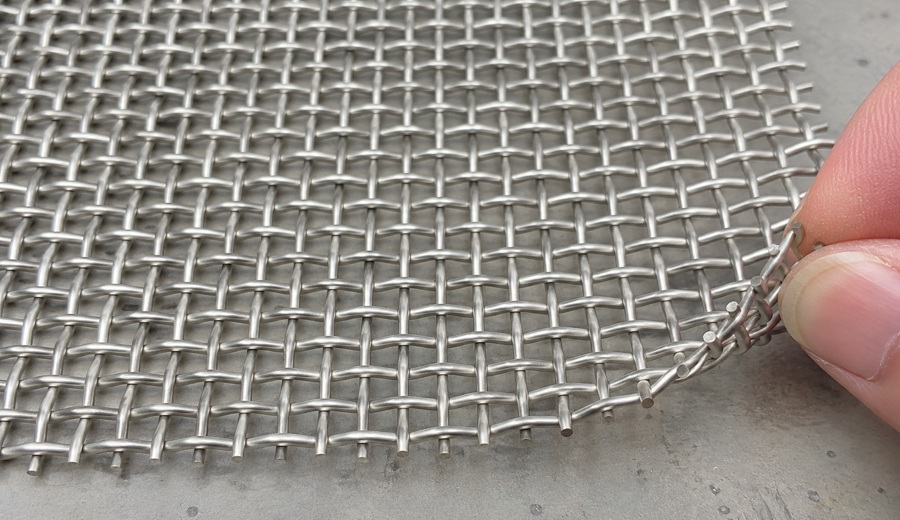
Woven wire mesh is especially common in screening, filtration, sieving, industrial processing, and applications where the mesh must handle vibration or conform to a surface.
Common Woven Mesh Patterns
| Weave Type | Description | Common Applications |
|---|---|---|
| Plain Weave | Each warp wire alternates over and under each weft wire. | General filtration, screening, sieving |
| Twill Weave | Each wire typically passes over two and under two wires. | Heavy-duty screening and fine filtration |
What Is Welded Square Wire Mesh?
Welded square wire mesh is manufactured by positioning longitudinal and transverse wires in a grid and welding them together at each intersection.
The welded intersections prevent the wires from shifting, producing fixed openings and a rigid grid structure.
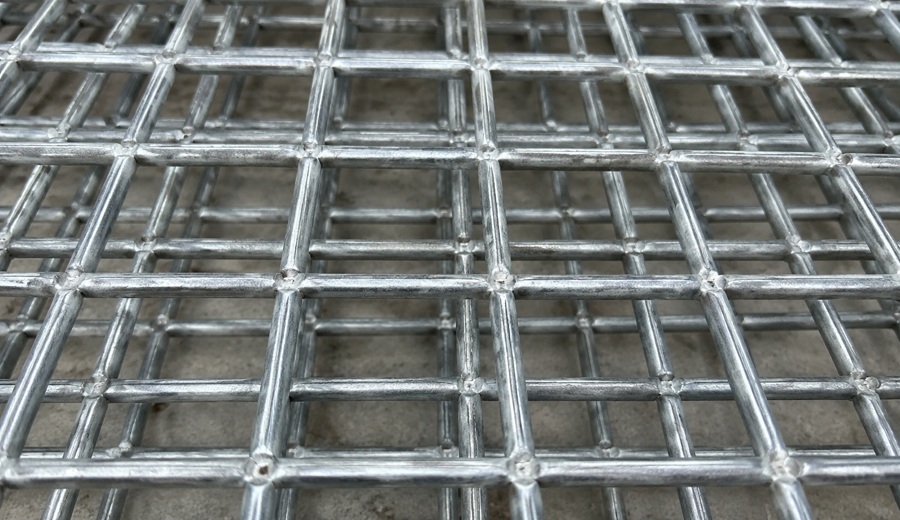
This dimensional stability makes welded mesh suitable for fencing, cages, machine guards, partitions, concrete reinforcement, and many other structural or containment applications.
Main Characteristics of Welded Mesh
| Characteristic | Description | Main Benefit |
|---|---|---|
| Rigidity | Welded intersections limit wire movement | Helps maintain panel shape |
| Fixed Aperture | Openings remain dimensionally stable | Useful for containment and spacing control |
| Grid Strength | Load is transferred through welded intersections | Suitable for fencing and reinforcement |
What Are the Main Differences Between Woven and Welded Mesh?
Woven Mesh
- Interlaced wire construction
- Flexible structure
- Suitable for vibration
- Available with very fine openings
- Common in filtration and screening
Welded Mesh
- Welded intersections
- Rigid structure
- Stable opening dimensions
- Easy to fabricate into panels
- Common in fencing and construction
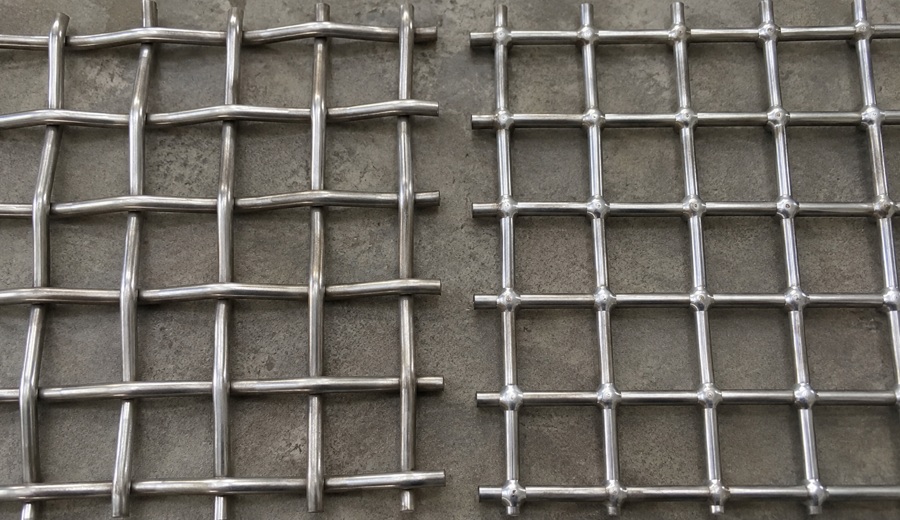
Direct Comparison
| Feature | Woven Square Wire Mesh | Welded Square Wire Mesh |
|---|---|---|
| Manufacturing | Wires are interlaced | Wires are welded at intersections |
| Structure | Flexible | Rigid |
| Intersections | Allow limited movement | Fixed |
| Aperture Stability | Application dependent | Generally high |
| Common Uses | Filtering, sieving, screening | Fencing, cages, reinforcement |
| Relative Cost | Can be higher for fine specifications | Often economical for standard bulk sizes |
Which Is Stronger: Woven or Welded Square Wire Mesh?
“Strength” should be considered in relation to the type of load the mesh must resist.
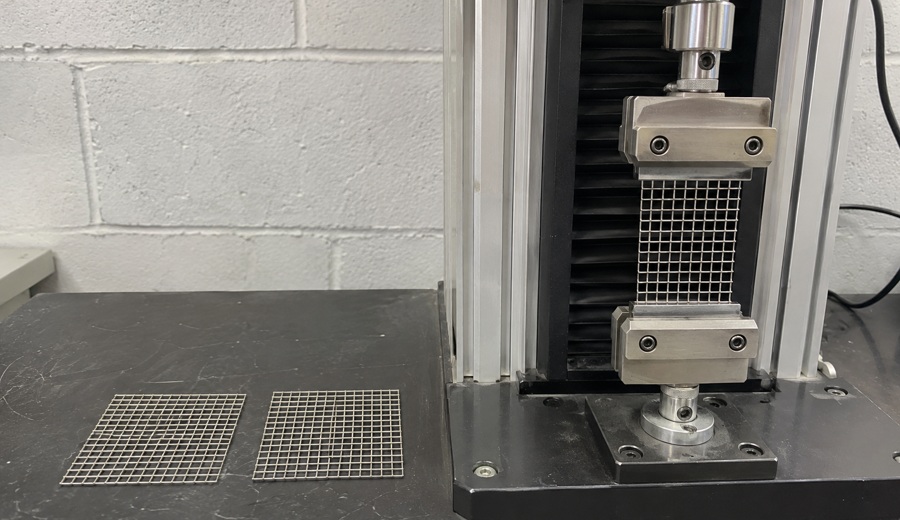
Welded mesh generally provides greater structural rigidity, while woven mesh provides greater flexibility under movement, vibration, and impact.
| Performance Requirement | Typical Choice | Reason |
|---|---|---|
| Structural Rigidity | Welded Mesh | Fixed intersections create a rigid grid |
| Flexibility | Woven Mesh | Interlaced wires can accommodate movement |
| Vibration Resistance | Woven Mesh | Flexible structure tolerates repeated movement |
| Shape Retention | Welded Mesh | Wires remain fixed in position |
Technical Note: Actual strength depends on wire diameter, material grade, opening size, manufacturing quality, coating, and test method. Mesh type alone does not determine final load capacity.
Which Type Offers Better Mesh Opening Accuracy?
For general-purpose structural and containment applications, welded mesh normally provides greater dimensional stability because the wires cannot easily shift after welding.
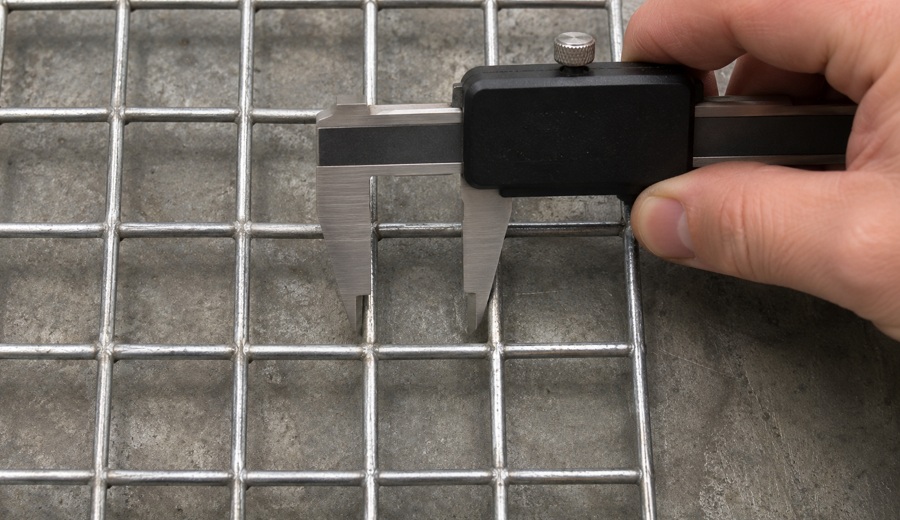
Woven mesh can allow minor movement at intersections. However, precision woven wire cloth can also be manufactured to very tight tolerances for industrial filtration and laboratory screening.
Selection Tip: For fencing and cages, opening stability often favors welded mesh. For precision filtration, choose woven mesh manufactured to the required mesh count and aperture tolerance.
How Do They Compare in Corrosion Resistance?
Corrosion performance depends more on material and coating system than on whether the mesh is woven or welded.
Woven Mesh
Because no welding heat is applied at intersections, pre-applied coatings are not locally affected by a welding process.
Welded Mesh
When pre-galvanized wire is welded, the coating around welded intersections may differ from the surrounding wire. For demanding outdoor applications, galvanizing after welding can provide a protective coating over the finished mesh.
Corrosion Protection Comparison
| Product | Coating Consideration | Typical Selection |
|---|---|---|
| Woven Mesh | No welded heat-affected intersections | Screening and corrosive environments |
| Galvanized Before Welding | Weld area requires consideration | General applications |
| Galvanized After Welding | Finished mesh receives zinc coating | Outdoor welded mesh |
| Stainless Steel | Corrosion resistance comes from alloy composition | Industrial and demanding environments |
What Are the Cost Differences?
Pricing depends on wire material, diameter, opening, roll or panel size, coating, quantity, and manufacturing complexity.
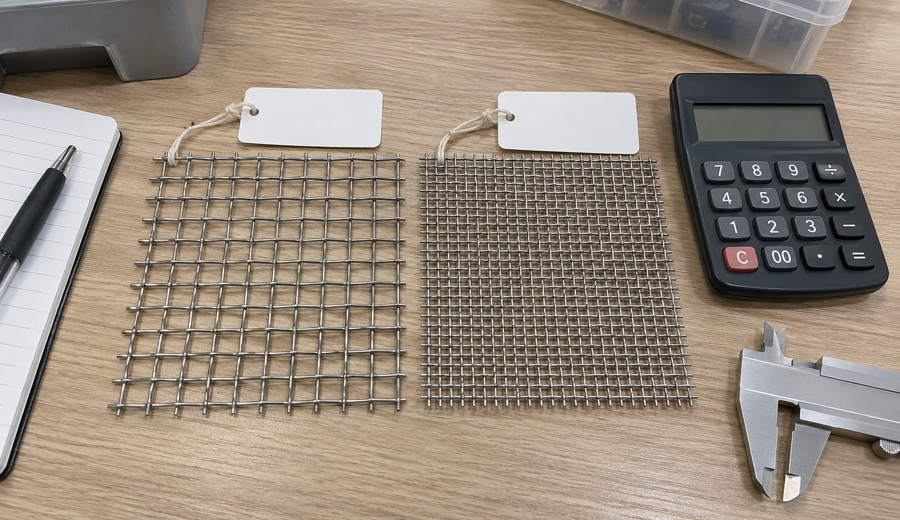
Standard welded mesh is often economical for large-volume fencing and construction orders, while fine woven mesh can be more expensive because of finer wire, tighter tolerances, and slower production.
| Application | Typical Choice | Main Cost Factor |
|---|---|---|
| General Fencing | Welded Mesh | High-volume automated production |
| Concrete Reinforcement | Welded Mesh | Standardized dimensions and production |
| Fine Filtration | Woven Mesh | Fine wire and precise weaving |
| Architectural Applications | Depends on Specification | Material, finish, weave and design |
Which Mesh Is Better for Industrial Screening and Filtration?
Woven wire mesh is generally the preferred choice for industrial screening, filtration, sieving, and particle separation.
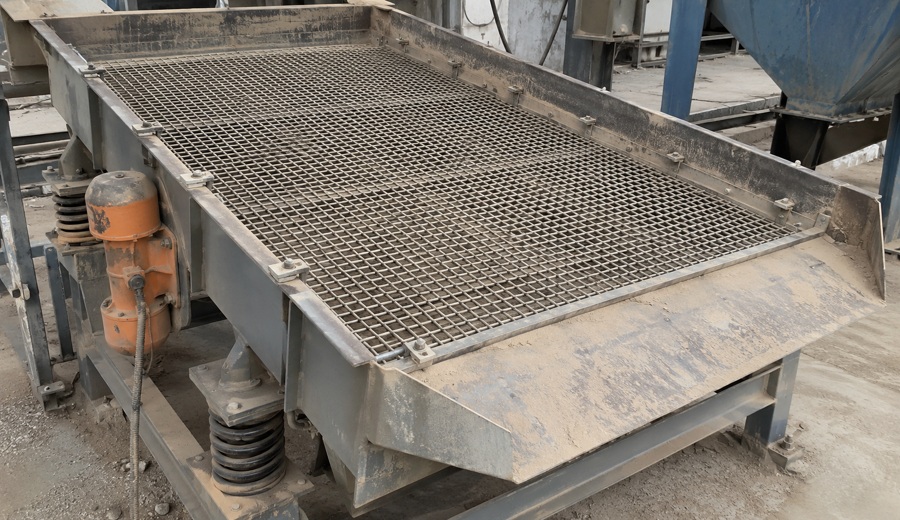
Woven mesh can be manufactured with very fine openings and various weave patterns, making it suitable for controlling particle size and flow.
Its flexibility also makes it well suited to vibrating screens and other equipment where repeated movement occurs during operation.
- Mining screens
- Food processing
- Chemical filtration
- Particle separation
- Industrial sieves
- Vibrating screens
Which Mesh Is Better for Fencing and Construction?
Welded square wire mesh is generally better suited to fencing, cages, machine guards, partitions, and many construction applications because its openings remain fixed and the mesh retains its shape.
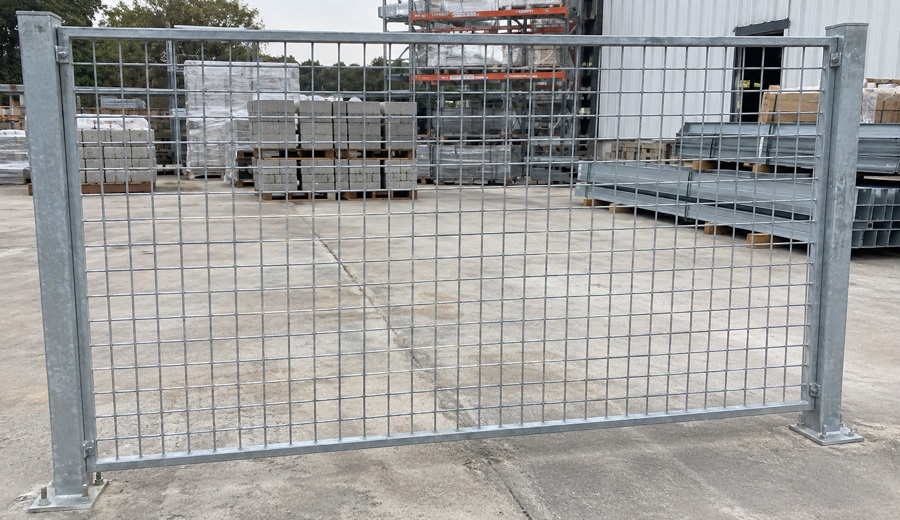
For agricultural enclosures, the rigid structure can help prevent deformation under normal animal pressure.
In concrete applications, welded wire reinforcement should be selected according to the structural specification, engineering design, and applicable construction standards.
Construction Note: Do not substitute one reinforcement product for another solely on general mesh descriptions. Structural drawings and engineering specifications should govern reinforcement selection.
How Do You Choose Between Woven and Welded Mesh?
The easiest way to choose is to start with the main function of the mesh.
- Define the Main Function
For structure, containment, cages, or fencing, welded mesh is often preferred. For filtration, separation, or screening, woven mesh is usually more suitable. - Determine Rigidity Requirements
If the mesh must retain its shape, consider welded mesh. If it must flex or tolerate vibration, consider woven mesh. - Confirm the Opening Size
Fine apertures usually favor woven mesh, while standard structural openings can often be produced economically as welded mesh. - Evaluate the Environment
Consider moisture, chemicals, salt exposure, temperature, and whether galvanizing, stainless steel, or PVC coating is required. - Compare Total Cost
Compare material, fabrication, installation, maintenance, and required service life rather than price per square meter alone.
Quick Decision Guide
| Requirement | Recommended Type |
|---|---|
| Rigid structure | Welded Mesh |
| Flexible structure | Woven Mesh |
| Fine filtration | Woven Mesh |
| General fencing | Welded Mesh |
| Concrete reinforcement | Welded Mesh to engineering specification |
| Vibrating screening equipment | Woven Mesh |
| Fixed square openings | Welded Mesh |
Frequently Asked Questions
Can You Cut Both Woven and Welded Mesh?
Yes. Both can be cut using suitable wire cutters, shears, or other fabrication tools depending on wire diameter.
Welded mesh normally retains its grid structure after cutting. Cut woven mesh edges may require additional finishing, folding, framing, or securing to prevent loose wires.
What Does Galvanized After Welding Mean?
Galvanized After Welding (GAW) means the mesh is welded first and the completed product subsequently receives a zinc coating.
This process provides zinc coverage over the finished welded structure, including the welded intersections.
Is Welded Mesh Heavier Than Woven Mesh?
Not necessarily. If two products use the same wire diameter, opening, material, and dimensions, their theoretical metal content may be similar.
In practice, welded mesh is often specified with heavier wire for structural and fencing applications, while woven mesh may use finer wire for screening.
Can Both Types Be PVC Coated?
Yes. Depending on the manufacturing process, both woven and welded wire mesh can be supplied with protective or decorative coatings, including PVC-coated options.
What Information Should You Send to a Supplier?
- Woven or welded construction
- Wire diameter
- Square opening size
- Material grade
- Galvanized, stainless, or PVC-coated finish
- Roll or panel dimensions
- Total order quantity
- Application
- Required standard or tolerance
- Packaging requirements
- Destination port or delivery location
Final Verdict: Woven or Welded Mesh?
Neither mesh is universally better. Each is designed for a different set of performance requirements.
- Choose welded square wire mesh when rigidity, fixed openings, dimensional stability, fencing performance, cages, guarding, or structural applications are the priority.
- Choose woven square wire mesh when flexibility, fine openings, filtration accuracy, screening, or vibration resistance are required.
For B2B purchasing, compare both products using measurable specifications such as wire diameter, aperture, material, coating, dimensions, tolerance, and application rather than choosing only by product name.