

How Do You Choose Galvanized Hexagonal Wire Mesh for Fencing?
Choosing the wrong fencing material can increase repair, replacement, and maintenance costs. For galvanized hexagonal wire mesh, factors such as wire diameter, mesh opening, zinc coating, and intended application all affect long-term performance.
Selecting galvanized hexagonal wire mesh for fencing requires evaluating five key factors: wire gauge, mesh opening, galvanizing method, zinc coating level, and application. These specifications determine strength, containment performance, corrosion resistance, and total project cost.

After years of working with wire mesh buyers across different markets, we have found that correct specification selection is one of the most important factors in achieving reliable fencing performance.
What Is Galvanized Hexagonal Wire Mesh?
Galvanized hexagonal wire mesh, commonly called chicken wire or poultry netting, is manufactured from steel wire twisted into a repeating hexagonal pattern.
Unlike rigid welded wire mesh, hexagonal mesh is flexible and can conform to slopes, curves, uneven ground, and irregular surfaces.

The production process generally begins with steel wire drawn to the required diameter. The wire is then galvanized and twisted into hexagonal openings using specialized mesh-forming equipment.
Typical Applications and Specifications
| Application | Typical Mesh Size | Wire Gauge | Typical Roll Width |
|---|---|---|---|
| Poultry Runs | 1" (25 mm) | 19–20 Gauge | 3–6 ft |
| Garden Fencing | 1/2"–1" | 19–20 Gauge | 3–4 ft |
| Erosion Control | 2" (50 mm) | 14–16 Gauge | 6–12 ft |
| Light Security | 1" (25 mm) | 16–18 Gauge | 4–6 ft |
Why Choose Galvanized Hexagonal Wire Mesh for Fencing?
The main advantage of galvanized wire mesh is corrosion protection. Zinc protects the underlying steel from moisture and atmospheric exposure, helping extend outdoor service life.
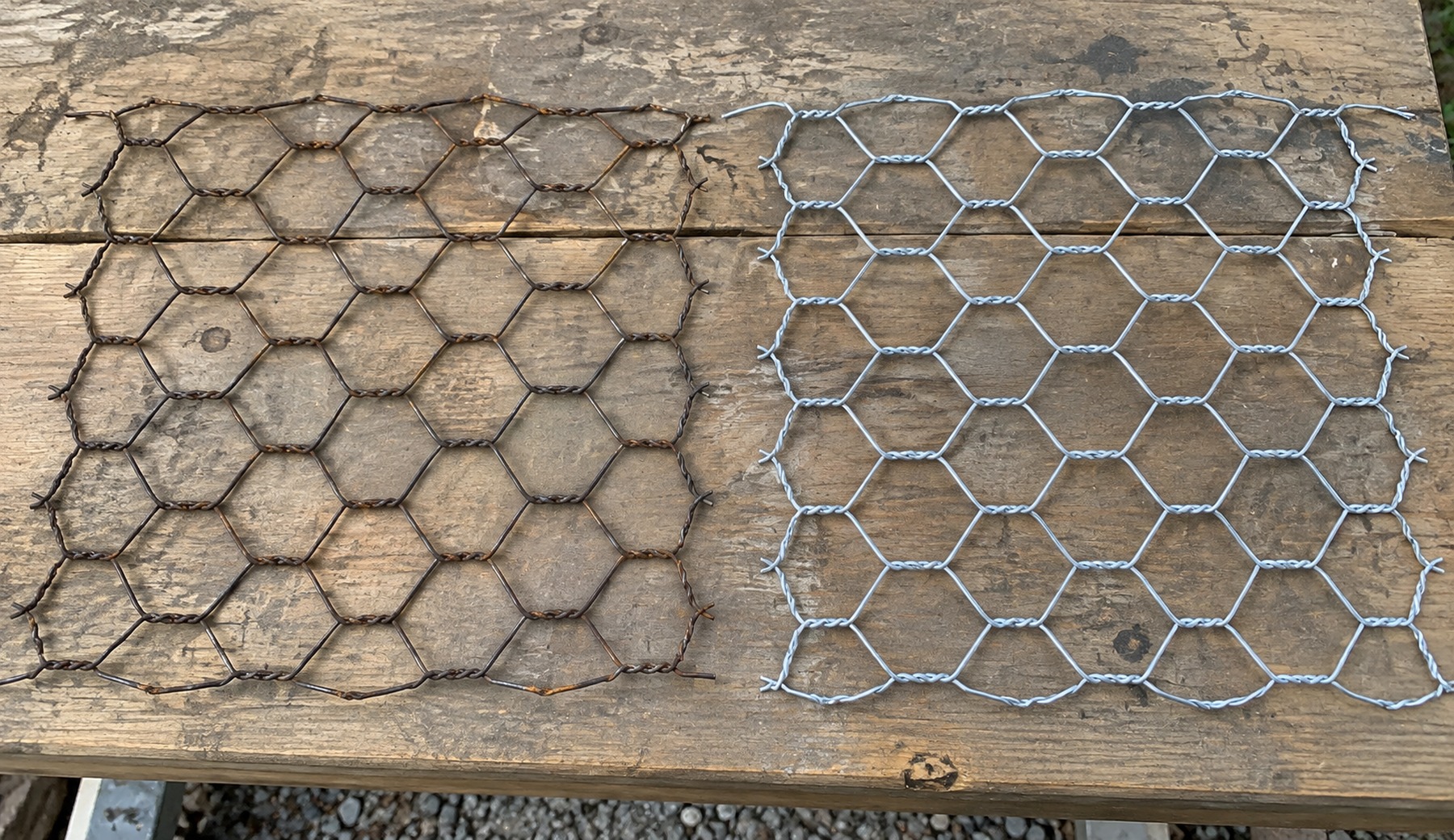
Uncoated Wire Mesh
Lower initial material cost, but the bare steel is more vulnerable to corrosion when exposed to rain, humidity, irrigation, and other outdoor conditions.
Galvanized Wire Mesh
The zinc coating provides additional corrosion protection and generally makes the mesh more suitable for long-term outdoor use.
Buyer Tip: When comparing prices, evaluate zinc coating, wire diameter, mesh opening, and expected service environment—not only the price per roll.
How Do You Choose Galvanized Hexagonal Wire Mesh?
The right specification should be selected according to what the fence needs to contain or exclude, the required service life, installation environment, and total purchasing budget.
Start with the application, then select wire gauge, mesh opening, galvanizing method, roll dimensions, and packaging.

1. Select the Wire Gauge
Wire gauge affects the strength, weight, durability, and flexibility of the finished mesh. Under common gauge systems, a lower gauge number normally represents thicker wire.
- 19–20 gauge: light residential and poultry applications
- 16–18 gauge: heavier fencing and commercial applications
- 14–16 gauge: heavy-duty applications such as erosion control
2. Select the Mesh Opening
Mesh opening determines what can pass through the fence. Smaller openings provide better containment for small animals, while larger openings reduce wire consumption and improve visibility and airflow.
Application Selection Guide
| Purpose | Recommended Gauge | Mesh Opening | Key Consideration |
|---|---|---|---|
| Small Poultry | 20 Gauge | 1/2" | Helps prevent small birds from escaping |
| Adult Poultry | 19 Gauge | 1" | Balances containment and material usage |
| Garden Protection | 19–20 Gauge | 1/2"–1" | Selected according to pest size |
| Erosion Control | 14–16 Gauge | 2" | Higher strength with drainage |
| Light Security | 16–18 Gauge | 1" | Greater physical resistance |
How Much Does Galvanized Hexagonal Wire Mesh Cost?
Pricing varies substantially according to wire diameter, opening size, roll dimensions, zinc coating, galvanizing process, order volume, and transportation requirements.
Thicker wire, smaller openings, heavier zinc coatings, and larger roll dimensions generally increase material cost.
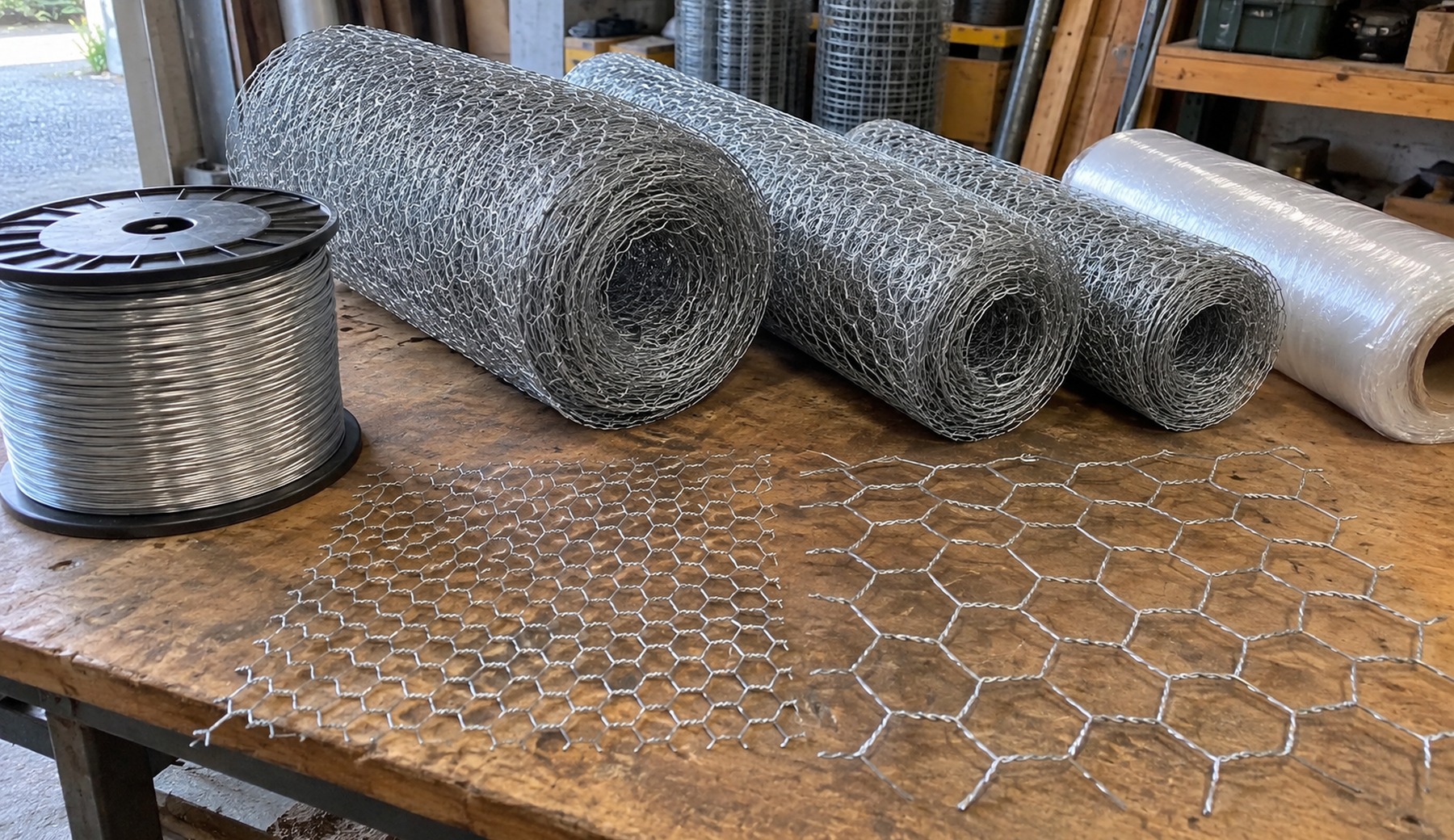
Smaller mesh openings require more wire per square meter, while heavier wire diameters increase total steel consumption. Hot-dip galvanizing can also carry a different production cost compared with electro-galvanizing.
B2B Purchasing Note: For export and wholesale orders, request pricing based on an exact technical specification rather than comparing generic “chicken wire” prices from different suppliers.
What Gauge and Mesh Size Should You Choose?
Wire gauge and opening size should be selected together. A heavier wire improves mechanical resistance, while the opening controls containment, visibility, ventilation, and material usage.

Animal and Application Guide
| Animal / Purpose | Typical Minimum Gauge | Typical Maximum Opening | Main Consideration |
|---|---|---|---|
| Chicks / Small Birds | 20 Gauge | 1/2" | Small-animal containment |
| Adult Chickens | 19 Gauge | 1" | General poultry fencing |
| Rabbits / Small Pets | 19 Gauge | 1/2" | Helps prevent squeezing through openings |
| Medium Animals | 16 Gauge | 1" | Higher physical resistance |
| Erosion Control | 14 Gauge | 2" | Strength combined with drainage |
| Garden Protection | 19–20 Gauge | 1/2"–1" | Depends on pest size |
Galvanized Before Weaving vs After Weaving
Buyers should also confirm the manufacturing sequence because hexagonal mesh can be galvanized before or after the weaving process.
Galvanized Before Weaving
Individual wires receive zinc coating before they are formed into the hexagonal mesh. The wire is therefore already protected during the weaving process.
Galvanized After Weaving
The mesh is first woven from wire and then galvanized as a finished product. Performance depends heavily on the galvanizing process and coating quality.

Important: Do not evaluate corrosion protection from the process name alone. Zinc coating mass, coating consistency, adhesion, wire quality, manufacturing control, and service environment should also be considered.
Hexagonal Wire Mesh vs Welded Wire Mesh
Both types are widely used for fencing, but their structures and performance characteristics differ.
Hexagonal mesh prioritizes flexibility, while welded wire mesh prioritizes rigidity and dimensional stability.

| Characteristic | Hexagonal Mesh | Welded Wire Mesh |
|---|---|---|
| Flexibility | Excellent | Lower |
| Rigidity | Moderate | High |
| Uneven Terrain | Very suitable | Requires more precise installation |
| Appearance | Traditional / flexible | Clean / structured |
| Typical Use | Poultry, garden, slopes | Security, cages, permanent fencing |
Hexagonal mesh can conform more easily to slopes and irregular ground. Welded mesh is generally preferred when rigidity, precise openings, and a more structured appearance are required.
Chicken Wire vs Hexagonal Wire Mesh
“Chicken wire” is commonly used as a general term for hexagonal mesh, but in commercial purchasing it usually refers to lighter-duty products intended primarily for poultry applications.
| Product Type | Wire Gauge | Opening Size | Typical Use |
|---|---|---|---|
| Light Chicken Wire | 22 Gauge | 1/2" | Chicks and light poultry use |
| Standard Chicken Wire | 20 Gauge | 1" | Adult poultry |
| Heavy Hexagonal Mesh | 16–18 Gauge | 1"–2" | Heavier fencing applications |
| Extra Heavy Hex Mesh | 14–16 Gauge | 2"–3" | Erosion and heavy-duty applications |
Procurement Tip: Avoid ordering only by the term “chicken wire.” Always provide the wire diameter, opening size, roll dimensions, coating, and quantity.
Galvanized Hexagonal Mesh vs PVC-Coated Mesh
Coating choice affects corrosion resistance, appearance, handling, and purchasing cost.

| Characteristic | Galvanized Mesh | PVC-Coated Mesh |
|---|---|---|
| Appearance | Metallic silver / gray | Multiple color options |
| Corrosion Protection | Zinc coating | Polymer barrier plus underlying metal protection |
| Outdoor Appearance | Industrial / traditional | Suitable for landscaping |
| Coating Damage | Zinc continues sacrificial protection | Damage can expose underlying metal |
| Typical Cost | Generally lower | Generally higher |
PVC-coated mesh is commonly selected where color and visual integration with landscaping are important. Galvanized mesh is often preferred where buyers prioritize straightforward corrosion protection and competitive material cost.
Factory vs Trader: Where Should You Buy Hexagonal Wire Mesh?
Supplier type becomes particularly important for B2B and bulk purchasing. A manufacturer and a trader can both be suitable, depending on order quantity, customization requirements, delivery urgency, and local support.
Direct Manufacturer
- Better suited to bulk orders
- Direct production control
- More customization options
- Technical specification support
- Usually higher MOQ
Trader / Distributor
- Suitable for smaller quantities
- Can combine multiple products
- May provide faster local delivery
- Lower inventory commitment
- Less direct control over production
| Factor | Manufacturer | Trader |
|---|---|---|
| Bulk Pricing | Generally stronger | Includes additional margin |
| Minimum Order | Usually higher | Usually lower |
| Customization | High flexibility | Depends on supplying factory |
| Quality Control | Direct | Indirect |
| Local Availability | Depends on location | Often better |
For regular bulk purchasing, direct relationships with manufacturers can provide advantages in specification consistency, customization, packaging, production planning, and quality control. Smaller buyers may prefer the flexibility offered by local distributors or traders.
What Should You Include in a Hexagonal Wire Mesh RFQ?
Providing a complete specification helps your supplier quote accurately and avoids misunderstandings during production.
Hexagonal Wire Mesh RFQ Checklist
For a professional B2B quotation, provide the following information:
- Wire gauge or actual wire diameter in mm
- Hexagonal mesh opening
- Roll width and length
- Galvanized or PVC-coated finish
- Required zinc coating level if specified
- Galvanizing process if required
- Total order quantity
- Application
- Packaging requirements
- Destination port or delivery location
Complete specifications allow manufacturers to compare production options and prepare a more accurate commercial quotation.
Conclusion
Choosing galvanized hexagonal wire mesh requires balancing wire diameter, mesh opening, corrosion protection, roll dimensions, application, installation requirements, and purchasing cost.
Light poultry and garden applications generally prioritize flexibility and economical specifications, while erosion control and higher-stress fencing require heavier wire. Galvanizing quality becomes increasingly important when the mesh will be installed outdoors or in humid and corrosive environments.
For wholesale and project buyers, specifications should be confirmed in measurable terms rather than relying only on product names such as “chicken wire.” Clear wire diameter, mesh opening, coating, dimensions, quantity, and packaging requirements make supplier comparison much more reliable.