

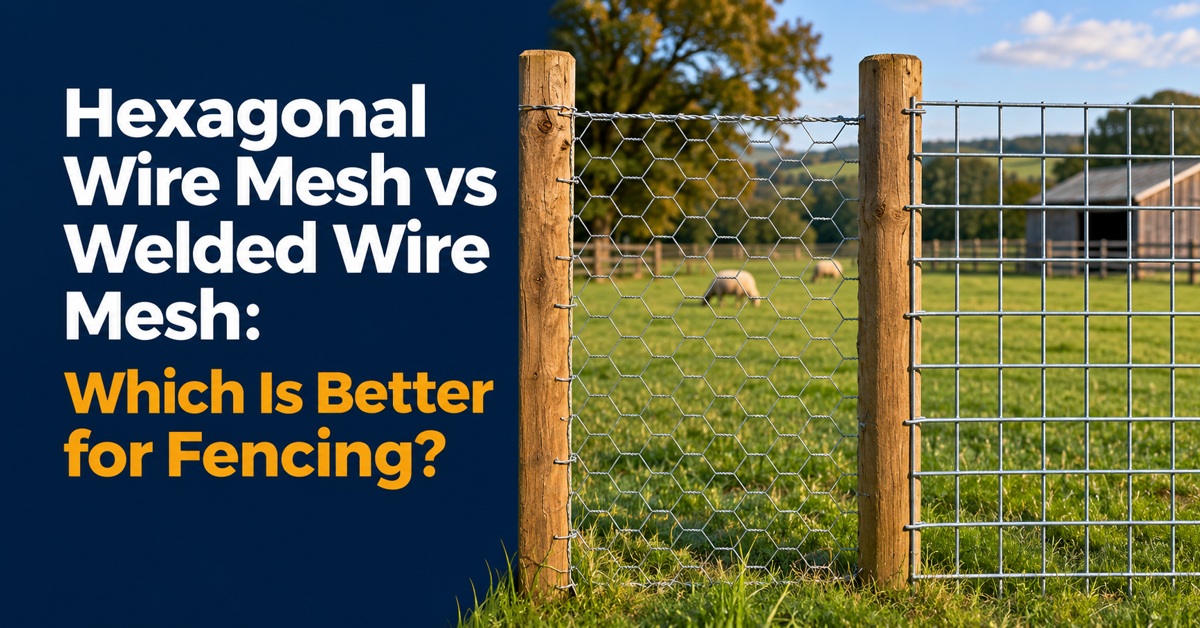
Hexagonal Wire Mesh vs Welded Wire Mesh: Which Is Better for Fencing?
Choosing the right fencing mesh affects strength, installation, maintenance, and total project cost. Hexagonal wire mesh and welded wire mesh are both widely used, but they serve different fencing requirements.
Hexagonal wire mesh is flexible and economical for poultry, small-animal enclosures, and light garden barriers, while welded wire mesh provides greater rigidity and is generally better suited to security, larger animals, and permanent fencing.

What Is the Difference Between Hexagonal and Welded Wire Mesh?
The main difference is how the wires are connected.
Hexagonal Wire Mesh
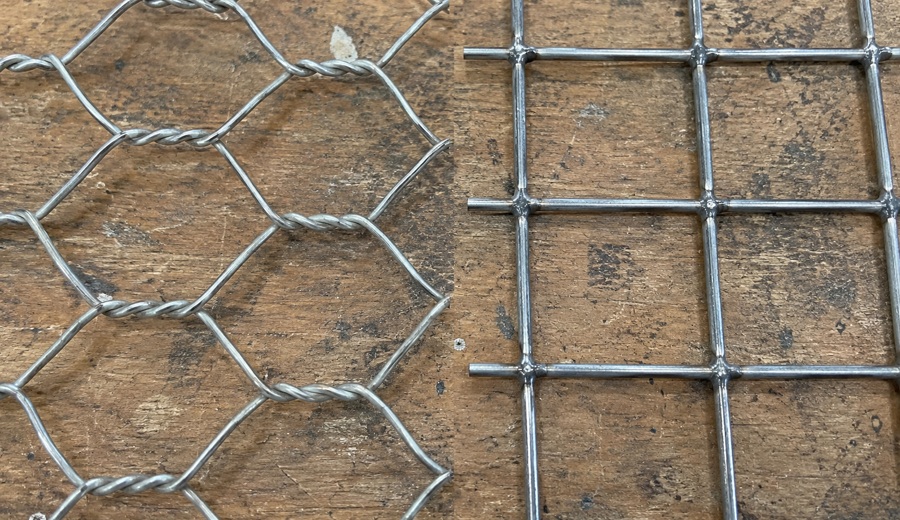
Thin wires are twisted together to form six-sided openings. This construction produces a flexible mesh that can follow slopes, wrap around posts, and adapt to irregular fence lines.
Welded Wire Mesh
Horizontal and vertical wires are arranged in a grid and welded at each intersection, creating a rigid structure with stable square or rectangular openings.
Core Structural Differences
| Feature | Hexagonal Wire Mesh | Welded Wire Mesh |
|---|---|---|
| Construction | Twisted wire | Welded intersections |
| Opening Shape | Hexagonal | Square / Rectangular |
| Flexibility | High | Low to moderate |
| Rigidity | Low | High |
| Typical Form | Flexible rolls | Panels or rolls |
| Typical Fencing Use | Poultry, garden, light enclosures | Security, larger animals, permanent fencing |
Which Is Stronger for Fencing?
For applications where resistance to deformation is the primary concern, welded wire mesh generally provides greater rigidity than lightweight hexagonal mesh.
Welded mesh is usually the better choice when the fence must resist pushing, leaning, impact, or deliberate deformation.
How Hexagonal Mesh Responds to Pressure
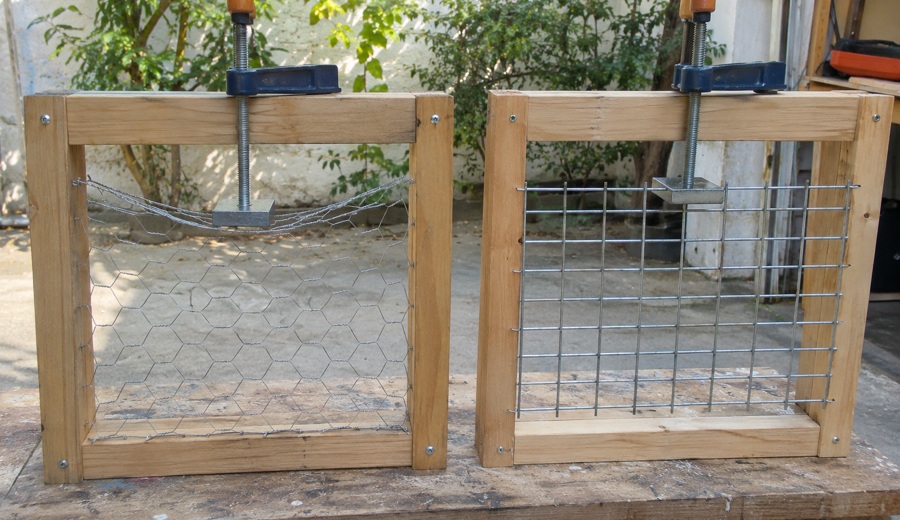
Hexagonal mesh can flex and bow when force is applied. This flexibility is useful for light fencing and irregular terrain, but lightweight specifications are not designed to provide the same resistance to deformation as heavier welded fencing.
How Welded Mesh Responds to Pressure
Welded intersections help distribute force through the grid while keeping the openings stable. Heavier wire diameters can provide a strong barrier for cages, animal enclosures, property fencing, and industrial applications.
Strength Comparison
| Factor | Hexagonal Mesh | Welded Mesh |
|---|---|---|
| Rigidity | Low | High |
| Shape Retention | Flexible | Strong |
| Resistance to Pushing | Specification dependent | Generally higher |
| Uneven Terrain | Excellent | Less adaptable |
| Typical Animal Use | Poultry and smaller animals | Larger animals and stronger enclosures |
Important: Do not compare strength using mesh type alone. Wire diameter, opening size, steel grade, coating, support posts, fence height, and installation method can significantly affect final performance.
How Do Cost and Durability Compare?
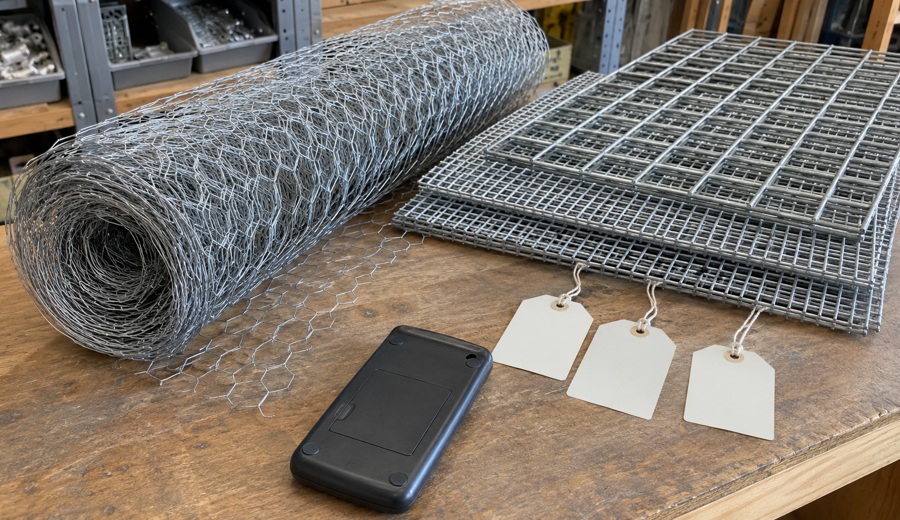
Hexagonal mesh often has a lower initial material cost because lightweight products use relatively small wire diameters and economical twisted-wire construction.
Welded mesh may have a higher initial cost, but its rigidity can provide advantages where a permanent, deformation-resistant fence is required.
General Cost Comparison
| Factor | Hexagonal Wire Mesh | Welded Wire Mesh |
|---|---|---|
| Initial Material Cost | Generally lower for light-duty specifications | Generally higher |
| Handling | Lightweight and flexible | Stiffer and potentially heavier |
| Shape Retention | May require tension and support | Generally better |
| Replacement | Easy for light-duty fencing | Often selected for longer-term installations |
| Total Cost | Good for light-duty requirements | Can provide better value for demanding permanent fencing |
How Does Coating Affect Fence Durability?
Corrosion protection can be just as important as the mesh structure itself. Both hexagonal and welded products are commonly available with protective finishes.
- Galvanized: zinc coating helps protect carbon steel against corrosion.
- Hot-Dip Galvanized: commonly selected for outdoor and humid environments.
- PVC Coated: adds a polymer barrier and provides color options.
- Stainless Steel: can be selected where higher corrosion resistance is required.
B2B Purchasing Tip: Compare actual wire diameter, zinc coating, PVC thickness, opening, and roll dimensions rather than comparing products only by the terms “galvanized mesh” or “chicken wire.”
Which Mesh Is Better for Poultry Farming?
Hexagonal wire mesh is widely used for poultry fencing because it is lightweight, flexible, economical, and easy to install around posts and irregular enclosure shapes.
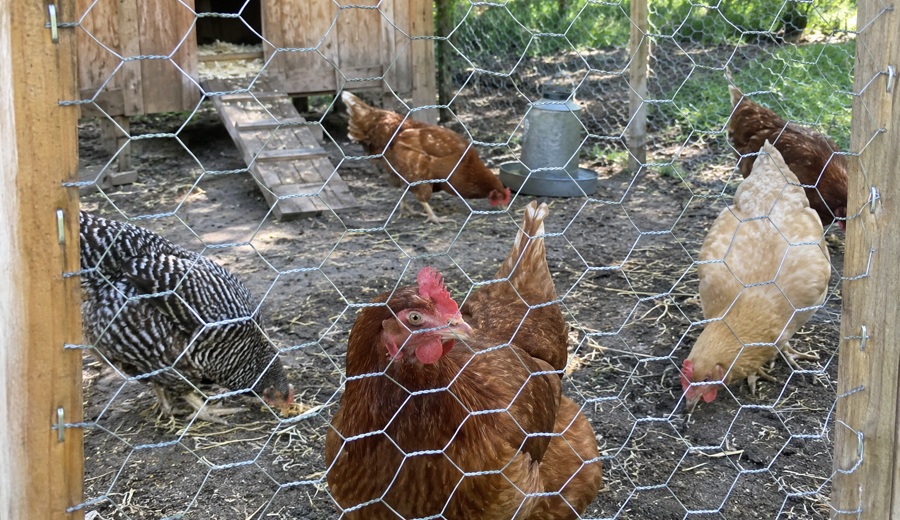
Opening size should be selected according to bird size, containment requirements, and potential predators.
Security Note: Lightweight chicken wire is primarily a containment product. Where predator exclusion is important, smaller-opening or heavier welded mesh may be required around vulnerable areas.
Which Mesh Is Better for General Agriculture?
Agricultural applications vary significantly, so both mesh types have appropriate uses.
Choose Hexagonal Mesh For
- Poultry runs
- Rabbit enclosures
- Light garden barriers
- Temporary enclosures
- Uneven fence lines
Choose Welded Mesh For
- Larger animal enclosures
- Rigid garden barriers
- Heavy plant trellises
- Permanent partitions
- Applications exposed to more physical pressure
Which Mesh Is Better for Security Fencing?
Between these two categories, welded wire mesh is generally the more appropriate choice where security and resistance to deformation are major requirements.
Welded mesh can be produced using heavier wire, smaller openings, and rigid panel systems, making it more suitable for commercial boundaries, machinery protection, warehouse partitions, and controlled-access areas.
Lightweight hexagonal mesh should not normally be considered a direct substitute for a purpose-designed security fence.
How Do You Choose Between Hexagonal and Welded Mesh?
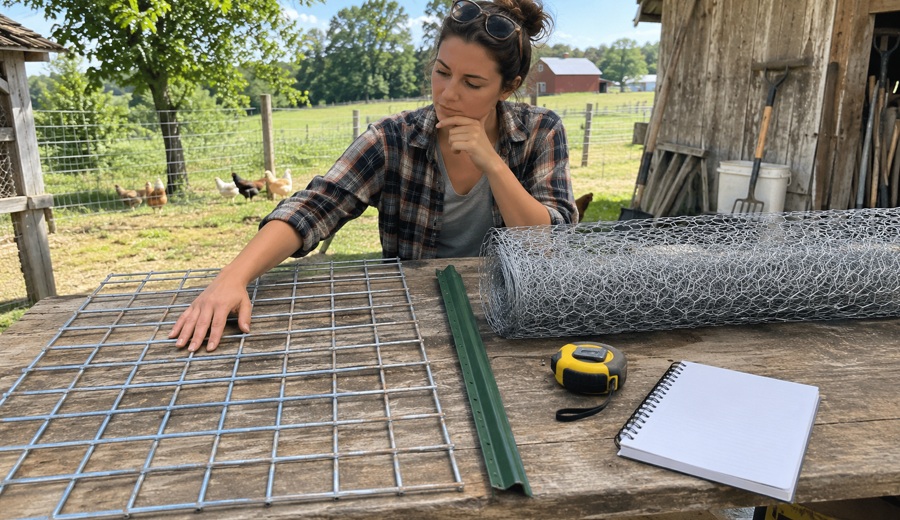
A practical purchasing decision starts with the purpose of the fence.
- Define the Main Goal
Decide whether the fence needs to contain animals, exclude pests or predators, create a boundary, or provide security. - Determine the Required Strength
Light poultry and garden barriers may use hexagonal mesh. Larger animals, high-pressure areas, and security applications generally require a more rigid solution. - Evaluate the Terrain
Hexagonal mesh adapts easily to slopes and irregular ground. Welded mesh works especially well on straight and well-supported fence lines. - Select the Corrosion Protection
Match galvanizing, PVC coating, or stainless steel to the expected moisture, salt, chemical, and outdoor exposure. - Compare Total Project Cost
Include posts, fasteners, installation labor, maintenance, repairs, and replacement—not only the mesh price.
Quick Fencing Selection Guide
| Fencing Application | Typical Choice | Main Reason |
|---|---|---|
| Chicken Coop | Hexagonal Mesh | Lightweight and flexible |
| Rabbit Enclosure | Hexagonal or Welded | Depends on opening and required security |
| Garden Barrier | Hexagonal Mesh | Economical and easy to install |
| Predator Exclusion | Welded Mesh | Greater rigidity and opening stability |
| Dog Kennel | Welded Mesh | Higher resistance to physical pressure |
| Larger Livestock | Welded Mesh / Purpose-Designed Farm Fence | Greater strength required |
| Commercial Security | Welded Mesh | Rigid security barrier |
| Uneven Terrain | Hexagonal Mesh | Conforms more easily to contours |
What Information Should You Send to a Supplier?
For professional B2B sourcing, provide a complete specification rather than requesting only “chicken wire” or “welded fence mesh.”
- Mesh type
- Wire diameter
- Mesh opening
- Fence height
- Roll length or panel dimensions
- Galvanized, PVC-coated, or stainless finish
- Required zinc coating if applicable
- Total quantity
- Animal or fencing application
- Packaging requirements
- Destination port or delivery location
Conclusion
The best fencing mesh depends on the actual performance requirement, not simply which product has the lower purchase price.
- Choose hexagonal wire mesh for poultry, light garden barriers, temporary fencing, and other applications where flexibility and economical coverage are priorities.
- Choose welded wire mesh for security fencing, larger animals, rigid garden protection, kennels, and permanent installations where resistance to deformation is more important.
For B2B buyers, the final comparison should include wire diameter, opening size, coating, fence height, support structure, installation environment, and expected service conditions.