

How Much Does Hexagonal Wire Mesh Cost? FOB Price & MOQ Explained
One of the most common questions from importers, distributors, and contractors is simple: how much does hexagonal wire mesh actually cost?
The answer depends on more than the supplier's price per ton. Wire diameter, mesh opening, galvanizing, order volume, packaging, shipping terms, customs duties, and inland transportation can all affect the final landed cost.
Hexagonal wire mesh pricing is mainly determined by wire diameter, mesh opening, zinc coating, roll dimensions, and order quantity. For import buyers, MOQ, Incoterms, ocean freight, duties, and destination charges must also be included when comparing quotations.

After years of working with wire mesh buyers, one of the most common purchasing mistakes we see is comparing only the quoted FOB price. A lower factory price does not necessarily mean a lower final import cost.
How Much Does Hexagonal Wire Mesh Cost Per Roll or Per Ton?
Accurate pricing requires a complete product specification. A supplier normally needs to know wire diameter, opening size, roll dimensions, surface treatment, zinc coating, quantity, and packaging before providing a firm quotation.
The source guide gives an indicative FOB range of approximately $800–$1,200 per ton for common hexagonal wire mesh specifications. Actual market prices can change substantially with steel, zinc, production, exchange rates, and order requirements.
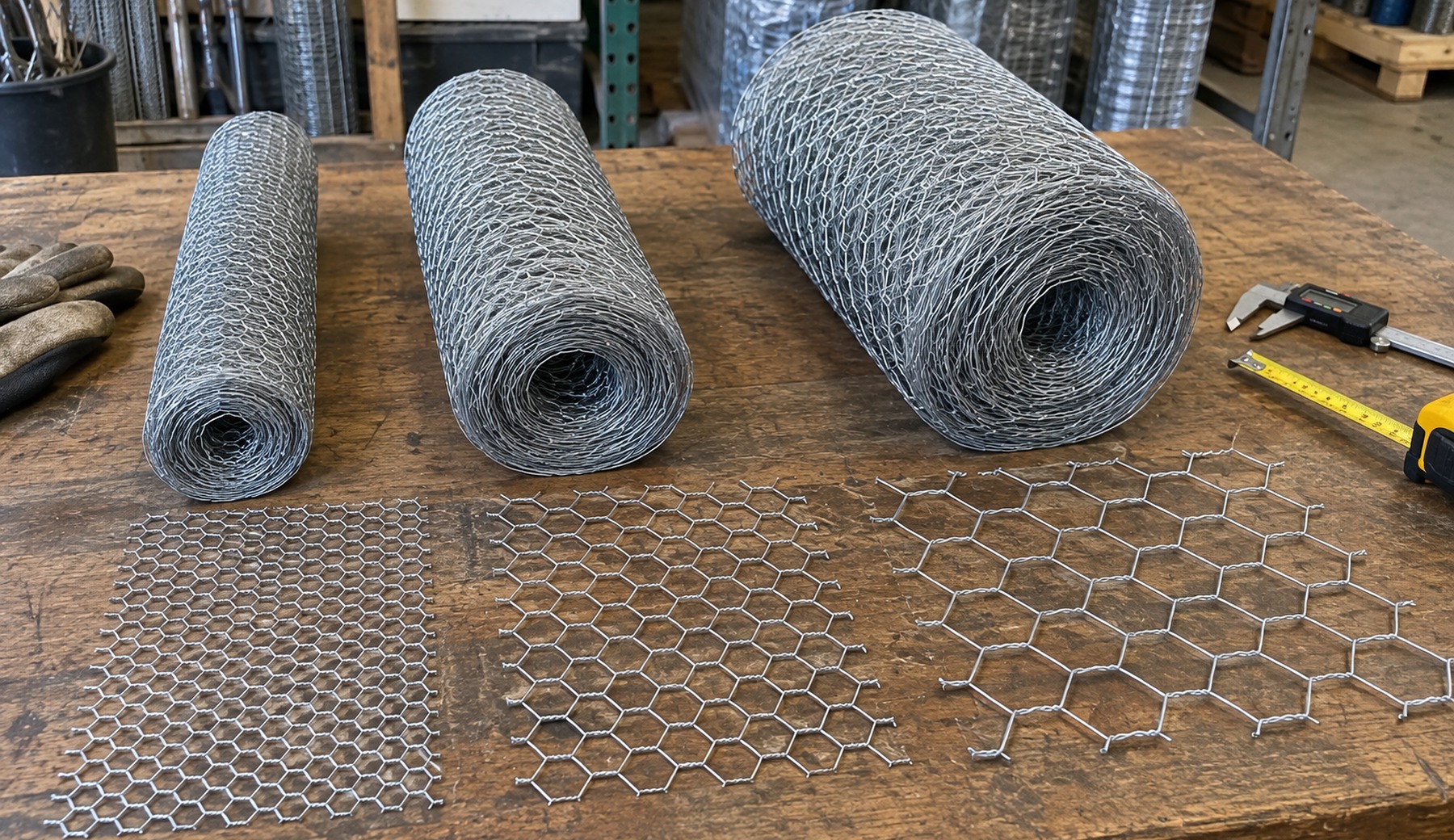
Indicative Price Range by Wire Diameter
| Wire Diameter | Indicative FOB Range | Typical Applications |
|---|---|---|
| 0.7–0.9 mm | $800–$950 / ton | Garden fencing and small-animal control |
| 1.0–1.2 mm | $900–$1,050 / ton | Poultry mesh and general fencing |
| 1.4–1.6 mm | $1,000–$1,150 / ton | Heavy-duty and industrial applications |
| 1.8–2.0 mm | $1,100–$1,200 / ton | Security and heavier animal fencing |
Important: These figures should be treated as reference values rather than current guaranteed quotations. Steel and zinc prices fluctuate, so B2B buyers should request a current quotation based on an exact specification.
Why Does Wire Diameter Affect Price?
Thicker wire increases the amount of steel required per square meter of mesh. As a result, heavier specifications generally have a higher cost per roll and a different production weight per square meter.
Mesh opening also affects material consumption. Smaller hexagonal openings require more wire within the same surface area, increasing both raw material usage and manufacturing requirements.
How Do Roll Dimensions Affect Price?
Standard roll sizes are normally more economical because manufacturers can produce them with established equipment settings and packaging methods.
- Standard widths simplify production.
- Standard roll lengths reduce setup changes.
- Larger rolls may reduce packaging cost per square meter.
- Custom roll sizes can increase setup and handling requirements.
What Factors Affect the FOB Price of Hexagonal Wire Mesh?
The FOB price is influenced by several cost components. Understanding these variables makes it easier to compare quotations from different manufacturers.

1. Steel Wire Price
Steel is the primary raw material. Changes in steel prices directly affect the production cost of hexagonal wire mesh.
2. Zinc Price and Coating Weight
Galvanized mesh requires additional zinc and processing. Higher zinc coating weights generally increase manufacturing cost but can provide improved corrosion resistance.
3. Wire Diameter
Thicker wires increase steel consumption and total mesh weight. Two products with the same roll dimensions and mesh opening can therefore have significantly different prices if their wire diameters differ.
4. Mesh Opening
Standard openings are generally easier to manufacture economically. Customized or uncommon openings may require additional production adjustments.
5. Order Quantity
Larger orders can improve manufacturing efficiency because production setup, inspection, packing, and administrative costs are distributed across more material.
B2B Pricing Tip: Instead of asking only “What is your best price?”, provide the supplier with an annual or project quantity. Volume information can help the manufacturer calculate a more realistic commercial offer.
6. Testing and Certification
Material certificates, zinc coating tests, tensile testing, third-party inspection, or other quality documentation can increase order cost when additional testing is required.
What Is the Typical MOQ for Hexagonal Wire Mesh from China?
Minimum order quantity is an important factor for importers because industrial mesh production involves machine setup, wire preparation, weaving, galvanizing, inspection, and packaging.
The source guide describes approximately 2–5 tons as a typical MOQ range for many factory orders, with higher minimums possible for customized specifications.
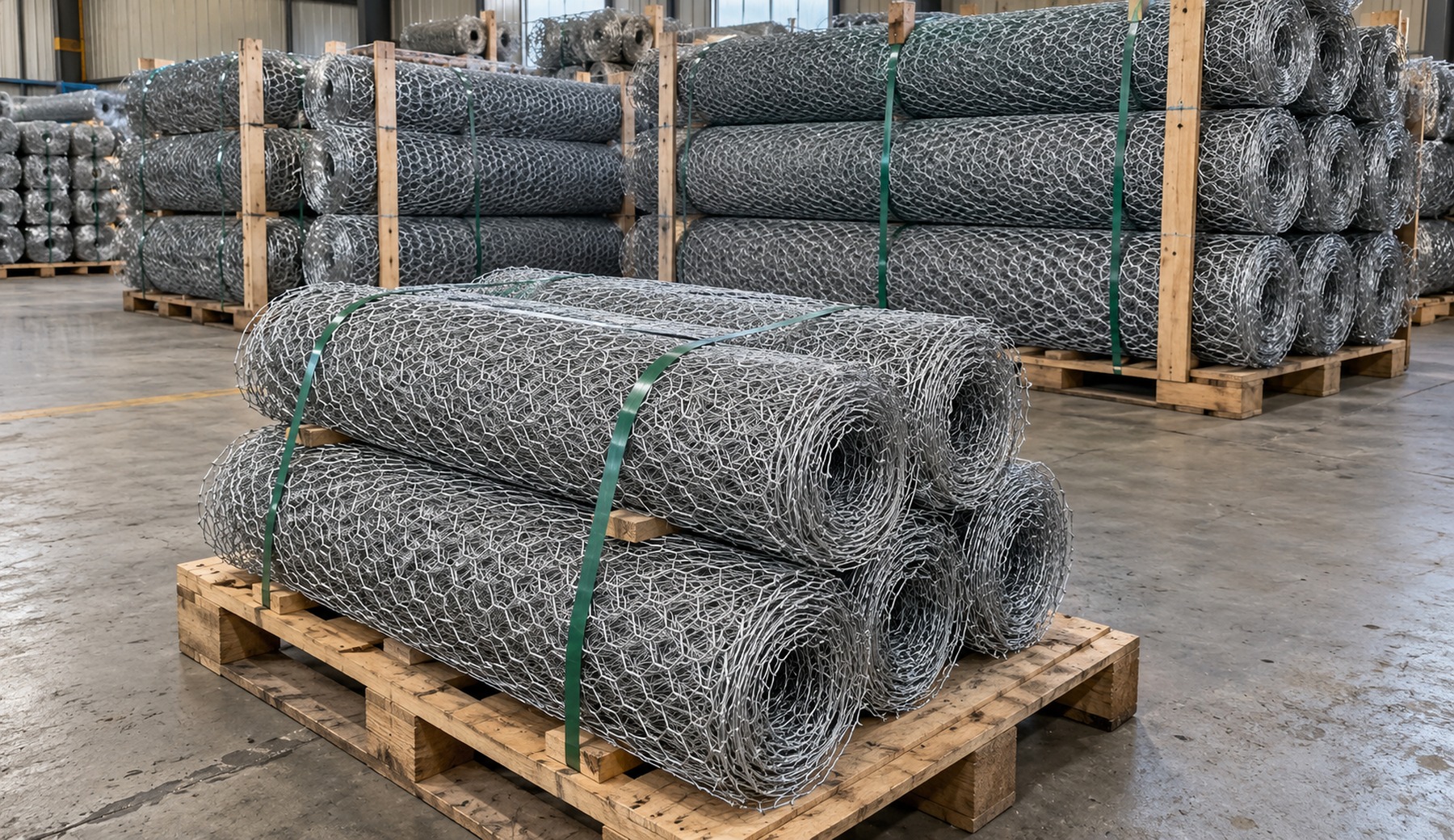
Standard specifications are usually easier to accept at lower quantities. Custom wire diameters, unusual openings, special zinc coating requirements, customized packaging, or non-standard roll sizes may require a larger production quantity.
Why Do Factories Have MOQs?
- Production line setup requires labor and machine time.
- Wire drawing equipment must be configured for the required diameter.
- Mesh machines must be adjusted for opening size.
- Galvanizing may require batch production.
- Packaging materials may need to be ordered specifically.
MOQ and Container Planning
Order quantity should also be evaluated alongside container utilization. A small order may be technically possible but have a high freight cost per ton, while a larger shipment may improve logistics efficiency.
Importer Tip: When testing a new supplier, ask whether different standard specifications can be combined into one shipment rather than focusing only on the MOQ of a single item.
FOB vs CIF vs DDP: Which Shipping Term Should You Choose?
Incoterms affect which party arranges transportation, insurance, customs clearance, and final delivery. They also affect how easily quotations from different suppliers can be compared.

FOB
The supplier handles the goods up to the agreed port of shipment. The buyer normally arranges the main international freight and destination logistics.
CIF
The supplier arranges cost, insurance, and freight to the named destination port, while the buyer handles destination clearance and subsequent delivery.
DDP
The seller takes responsibility for delivering the goods to the agreed destination under the applicable DDP terms.
Shipping Term Comparison
| Term | Buyer Involvement | Freight Control | Typical Buyer Profile |
|---|---|---|---|
| FOB | Higher | High | Experienced importers with forwarders |
| CIF | Medium | Medium | Buyers wanting supplier-arranged ocean freight |
| DDP | Lower | Lower | Buyers prioritizing door-to-door convenience |
Important: The cheapest Incoterm cannot be determined from the term alone. Freight rates, customs requirements, destination fees, supplier markup, tax treatment, and the buyer's logistics capability all affect the final result.
How Do You Calculate the Total Landed Cost?
Landed cost is more useful than FOB price when comparing imported wire mesh. It represents the total cost required to move the product from the supplier to the buyer's destination.

Main Landed Cost Components
- Product Price
The agreed EXW, FOB, CIF, or other commercial price for the mesh. - International Freight
Ocean, rail, air, or multimodal transportation from the origin to the destination market. - Insurance
Cargo insurance should be considered according to shipment value and the agreed trade term. - Import Duty & Taxes
Duties vary by destination country, product classification, origin, and applicable trade measures. - Port & Terminal Charges
These may include handling, documentation, terminal charges, storage, and other destination fees. - Inland Transportation
Trucking or other transport from the destination port or terminal to the buyer's warehouse or project site. - Banking & Administrative Costs
Wire transfer fees, letters of credit, customs brokerage, inspection, and documentation expenses may also apply.
Landed Cost Planning Table
| Cost Component | How to Verify | Main Variable |
|---|---|---|
| FOB Product Price | Supplier quotation | Specification and volume |
| Ocean Freight | Freight forwarder quote | Destination and season |
| Insurance | Insurer / forwarder | Cargo value |
| Import Duties | Customs authority / broker | HS classification and origin |
| Port Charges | Forwarder / terminal | Destination port |
| Inland Freight | Local carrier quote | Distance and cargo weight |
Example: How to Compare Two Supplier Quotations
Suppose Supplier A offers a lower FOB price than Supplier B. That does not automatically mean Supplier A provides the lower total cost.
Buyers should compare both quotations using the same specification and include:
- Actual wire diameter
- Mesh opening
- Zinc coating
- Roll dimensions
- Net and gross weight
- Packaging
- Container loading quantity
- FOB port
- Payment terms
- Lead time
Key Point: A quotation that appears cheaper per ton may become more expensive if it has lower container utilization, higher freight costs, weaker packaging, or a different product specification.
What Information Should You Send for an Accurate Price?
A professional manufacturer cannot provide a meaningful final price from the product name alone. “Hexagonal wire mesh” includes many different combinations of wire diameter, opening size, coating, and dimensions.
Hexagonal Wire Mesh RFQ Checklist
Include the following information when requesting a B2B quotation:
- Wire diameter in mm or specified gauge system
- Hexagonal mesh opening
- Roll width
- Roll length
- Galvanized, PVC-coated, or other finish
- Required zinc coating if applicable
- Total quantity in rolls, square meters, or tons
- Packaging requirements
- Required quality standard or inspection
- Target Incoterm: EXW, FOB, CIF, etc.
- Destination port or delivery location
How Can Buyers Reduce Hexagonal Wire Mesh Import Costs?
- Use standard specifications where possible. Non-standard wire diameters and openings can increase production complexity.
- Optimize container loading. Compare roll dimensions and packing methods before placing a large order.
- Consolidate purchasing. Larger production batches may improve manufacturing efficiency.
- Compare total landed cost. Do not select suppliers based only on FOB price.
- Confirm specifications before production. Specification errors are often more expensive than small differences in unit price.
- Request packing and loading details. This helps estimate freight cost before confirming the order.
Conclusion
Understanding hexagonal wire mesh pricing requires more than knowing the factory price per roll or per ton. Wire diameter, mesh opening, zinc coating, roll dimensions, order quantity, and manufacturing requirements determine the product cost.
Import buyers must also consider MOQ, Incoterms, international freight, customs duties, terminal charges, local transport, payment fees, and other import expenses.
For B2B procurement, the most reliable comparison is therefore total landed cost for the same technical specification, rather than the lowest advertised FOB price.