

How to Import from a Bulk Wire Mesh Supplier in China with FCL & LCL Shipping?
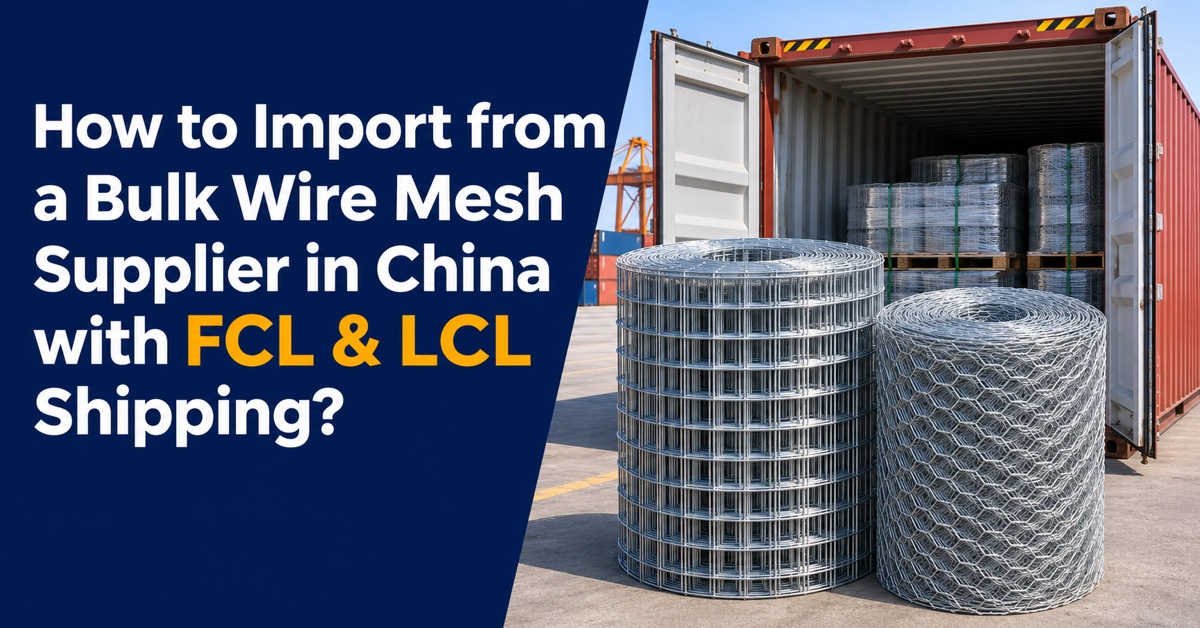
Importing bulk wire mesh from China can offer competitive purchasing opportunities for wholesalers, distributors, construction contractors, and agricultural suppliers. However, choosing the wrong shipping method or packaging configuration can increase logistics expenses and reduce your profit margins.
For large-volume wire mesh orders, FCL (Full Container Load) can offer a lower shipping cost per unit. LCL (Less than Container Load) is more flexible for smaller trial orders. The right choice depends on cargo weight, volume, freight rates, and destination.
Why Choose a China Supplier for Bulk Welded and Hexagonal Wire Mesh?
China is an established sourcing market for international wire mesh buyers. Manufacturers offer a wide range of products, production capabilities, customization options, and export packaging solutions.
For importers and distributors, purchasing multiple product categories from one manufacturer can also simplify procurement and shipping coordination.

1. Competitive Manufacturing Costs
Access to steel wire raw materials, established manufacturing facilities, and production experience can help Chinese factories offer competitive quotations for bulk wire mesh orders.
However, factory price should not be the only purchasing consideration. Buyers should also evaluate product specifications, quality consistency, packaging, logistics, and total landed cost.
2. One-Stop Sourcing for Multiple Products
Construction and agricultural distributors often require more than one type of wire mesh. Purchasing related products from a single supplier can reduce communication and coordination between different factories.
| Product Category | Available Products | Common Applications |
|---|---|---|
| Mesh Products | Welded Mesh, Hexagonal Mesh, Chain Link Fence, Field Fence | Construction, fencing, agriculture |
| Nails & Wire | Common Nails, Concrete Nails, Galvanized Wire, Black Annealed Wire | Construction and hardware distribution |
| Accessories | Fence Posts, Tie Wire, Fence Fittings | Fencing installation and infrastructure |
3. Manufacturing and Customization Capabilities
Working directly with a manufacturer can provide better coordination for custom product requirements, including wire diameter, mesh opening, roll dimensions, surface treatment, and packaging.
- Custom wire diameter and mesh opening
- Different roll widths and lengths
- Galvanized and PVC-coated finishes
- OEM branding and private-label packaging
- Custom export packaging
- Mixed-product purchasing arrangements
What Is the Difference Between FCL and LCL Shipping for Wire Mesh?
When importing wire mesh internationally, choosing between FCL and LCL is an important logistics decision.
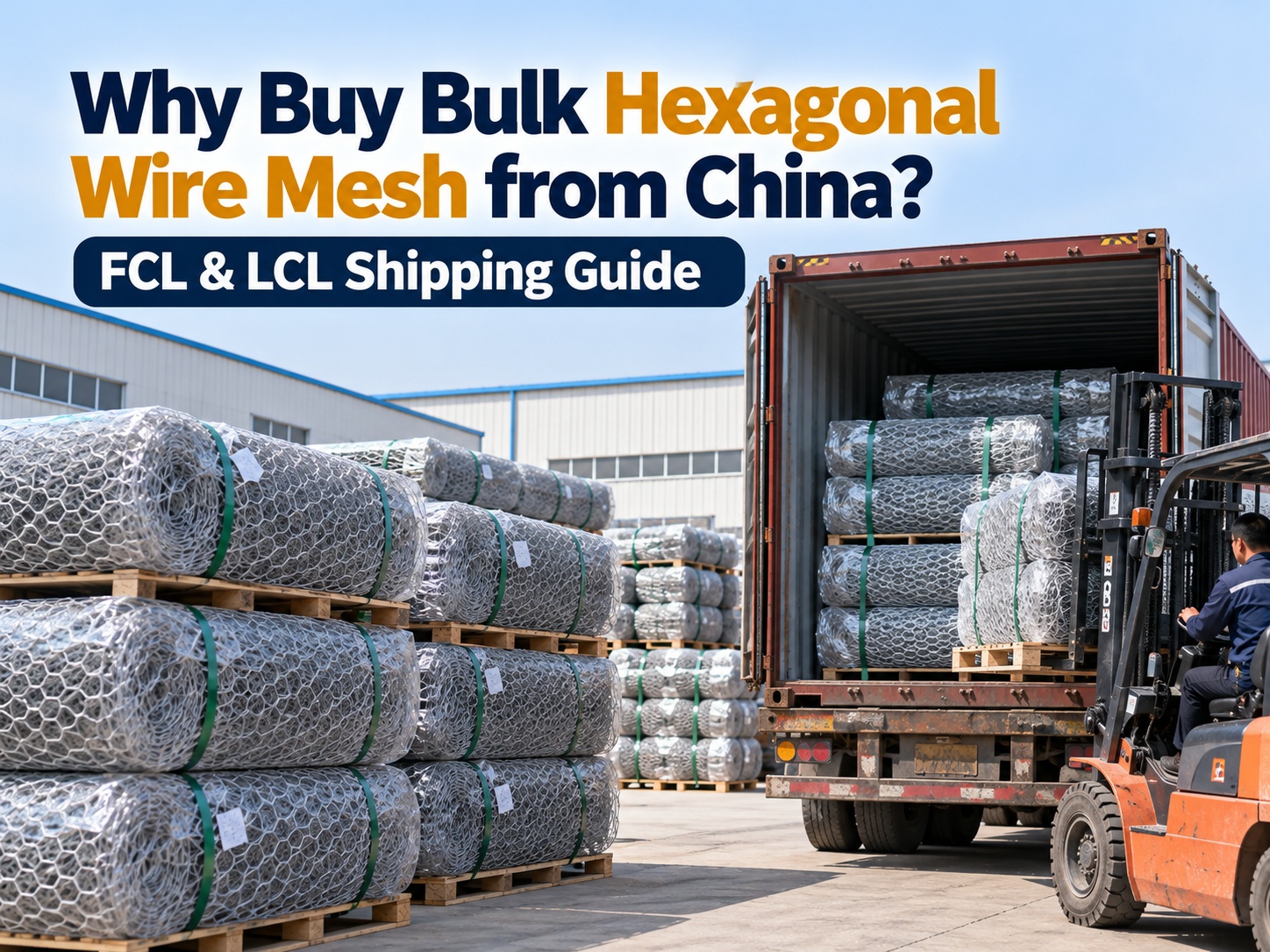
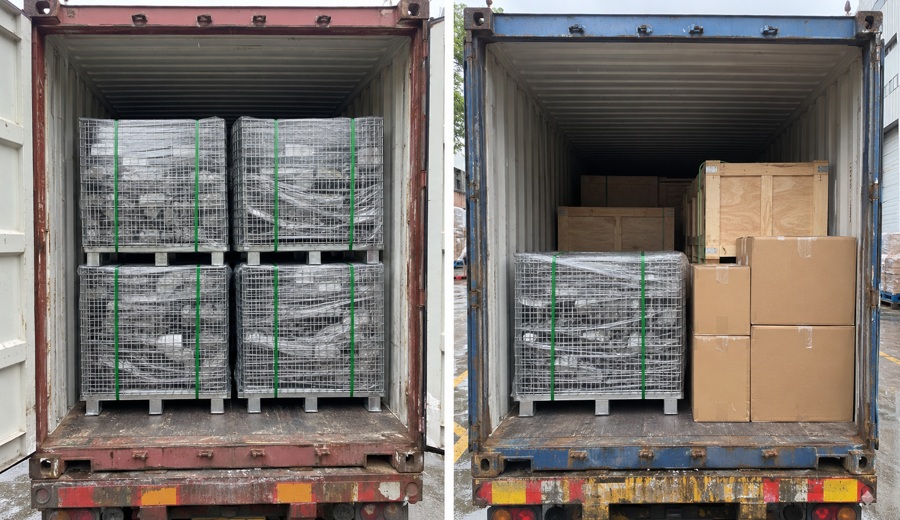
FCL means booking an entire container for your cargo. LCL means sharing container space with shipments from other importers. FCL is often more economical for sufficiently large shipments, while LCL provides flexibility for smaller orders.
Understanding Full Container Load (FCL)
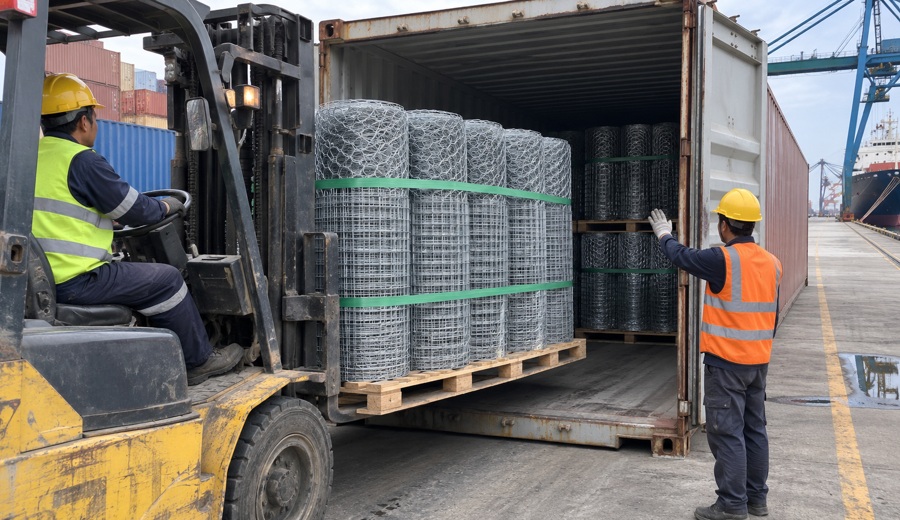
FCL shipping means that one importer books the container for their cargo. Common container options include 20-foot and 40-foot containers.
For heavy products such as wire mesh, a 20-foot container is frequently considered because cargo weight can become the limiting factor before the container's internal volume is fully used.
FCL may provide several advantages:
- Lower shipping cost per ton when cargo volume is sufficient
- More direct cargo handling arrangements
- Less consolidation and deconsolidation handling
- Better control over container loading arrangements
- Suitable for regular wholesale and distribution orders
Understanding Less than Container Load (LCL)
LCL shipping is designed for cargo that does not require an entire container. Your wire mesh shipment is consolidated with goods from other importers.
LCL freight is generally calculated according to chargeable volume or weight, subject to the forwarder's applicable rating rules and minimum charges.
This method can be useful for:
- First-time supplier evaluation
- Small trial orders
- Testing products in a new market
- Purchasing several small product categories
- Orders that do not justify a dedicated container
Important: LCL can have higher freight and destination handling costs per unit. Buyers should compare the complete shipping quotation, not just the ocean freight rate.
FCL vs LCL: Quick Comparison
| Comparison Factor | FCL | LCL |
|---|---|---|
| Best For | Large-volume shipments | Small and trial shipments |
| Container Space | Dedicated container | Shared container |
| Freight Cost per Unit | Often lower at sufficient volume | Often higher for bulky cargo |
| Handling | Generally fewer consolidation stages | Additional consolidation and deconsolidation |
| Transit Time | Depends on shipping service and route | May take longer due to consolidation |
| Cargo Handling Risk | Generally fewer handling stages | Potentially more handling exposure |
| Typical Use | Regular wholesale orders | Product testing and smaller orders |
How Do Packaging and Order Volume Affect Wire Mesh Shipping Costs?
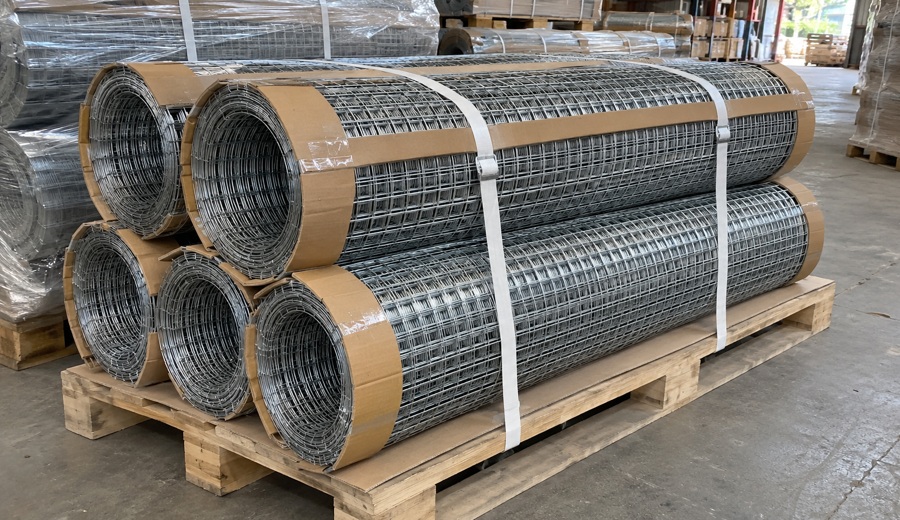
Packaging and cargo dimensions have a direct influence on shipping efficiency. For bulky wire mesh products, poorly designed packaging can occupy valuable container space and increase freight expenses.
Understanding CBM and Chargeable Weight
CBM means cubic meter and measures the volume occupied by cargo. It is an important factor when calculating LCL shipping charges.
All dimensions must be measured in meters.
LCL freight forwarders commonly compare actual cargo weight with volumetric measurement to determine chargeable weight or volume, according to their pricing rules.
For bulky products such as wire mesh rolls, packaging dimensions can significantly affect the final freight quotation.
Packaging Options for Different Wire Mesh Products
| Mesh Type | Common Packaging | Shipping Considerations |
|---|---|---|
| Welded / Hexagonal Mesh | Waterproof paper and plastic film | Roll dimensions and moisture protection |
| Chain Link Fence | Compacted rolls | Efficient stacking and cargo density |
| Brick Mesh / Panel Mesh | Wooden or steel pallets | Pallet dimensions and handling space |
How to Optimize Your FCL Container Loading
For heavy cargo such as wire mesh, container loading should consider both available space and permitted payload weight.
- Confirm the container's maximum payload
- Check the gross weight of all cargo
- Optimize roll dimensions and packaging
- Distribute cargo weight appropriately
- Confirm container floor loading requirements
- Use suitable securing and protection materials
- Prepare a detailed loading plan before shipment
Loading Tip: Do not maximize cargo weight without considering container payload, road weight restrictions, axle limits, port regulations, and cargo securing requirements. The permitted loading quantity varies by container, route, and jurisdiction.
Mixed Container Loading: A Practical Solution for Importers
Not every distributor needs a full container of one product. Mixed container loading allows buyers to combine different compatible product categories in one shipment, subject to factory production and container loading arrangements.
Example of a Mixed Product Order:
- 10 tons of welded wire mesh
- 5 tons of hexagonal wire mesh
- 5 tons of common nails
- 3 tons of galvanized wire
The final loading plan must be checked against container payload, dimensions, and applicable transport restrictions.
This purchasing method can help distributors manage multiple product categories without placing separate orders with several manufacturers.
How Long Does It Take to Ship Bulk Wire Mesh from China to Africa and South America?
Shipping time is an important consideration for construction contractors, wholesalers, and importers managing inventory and delivery commitments.
The original article provides indicative sea transit estimates of approximately 30–45 days for selected African destinations and 35–50 days for selected South American destinations. Actual schedules depend on the shipping route, carrier, port, and current logistics conditions.

What Affects Total Delivery Time?
The complete import lead time includes several stages beyond ocean transit.
- Production Time
Manufacturing begins after specifications, commercial terms, and order arrangements are confirmed. The original article estimates approximately 15–25 days for production. - Inland Transportation and Export Procedures
Goods are transported from the factory to the departure port, followed by export documentation and customs procedures. - Ocean Transit
The vessel transports the container from the Chinese departure port to the destination port. - Destination Port and Customs Clearance
Import clearance, port handling, documentation, and final delivery must be completed after arrival.
Estimated Sea Transit Times to Major Destinations
The following figures are the indicative estimates stated in the original article, not guaranteed current shipping schedules.
| Destination Region | Major Port | Estimated Sea Transit Time |
|---|---|---|
| Southern Africa | Durban, South Africa | 30–40 days |
| West Africa | Lagos, Nigeria | 40–50 days |
| East Africa | Mombasa, Kenya | 28–35 days |
| East South America | Santos, Brazil | 35–45 days |
| East South America | Buenos Aires, Argentina | 40–50 days |
Shipping Reminder: These are historical planning estimates from the source article. Before placing an order, confirm current vessel schedules, transshipment arrangements, port congestion, and estimated arrival dates with your freight forwarder.
How to Manage International Shipping Lead Times
- Confirm production schedules before placing orders
- Allow sufficient time for custom manufacturing
- Book shipping space according to the required schedule
- Prepare export documents in advance
- Confirm destination customs requirements
- Maintain communication with the freight forwarder
- Allow contingency time for unexpected delays
How Can You Choose a Reliable Wire Mesh Supplier in China?
Selecting a reliable supplier is just as important as choosing the right shipping method. A suitable manufacturing partner should understand your product specifications, production requirements, packaging needs, and export arrangements.
1. Verify Manufacturing Capabilities
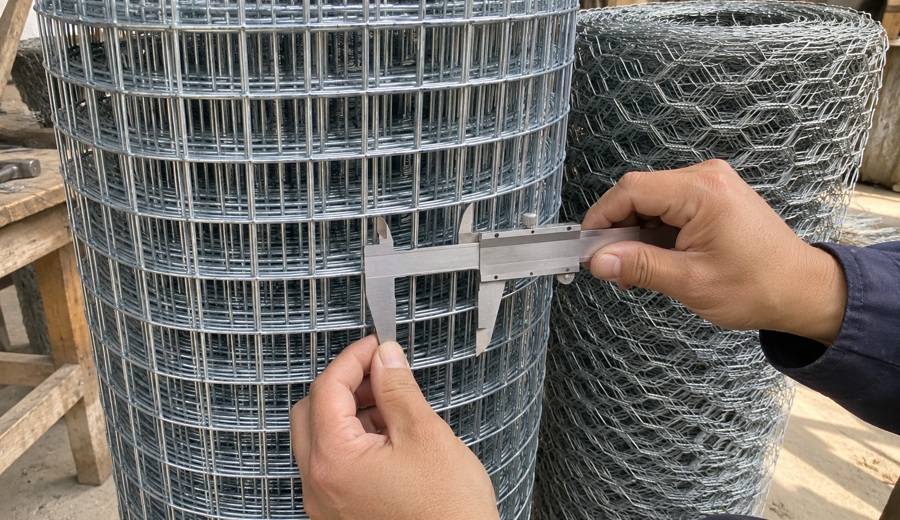
Check whether the supplier operates its own manufacturing facilities and can provide information about production equipment, quality control, product range, and manufacturing capacity.
2. Check Customization and OEM Services
For distributors and hardware retailers, customization can be important. Ask whether the factory can manufacture specific wire diameters, mesh openings, roll dimensions, coatings, and branded packaging.
3. Evaluate Export Experience
International shipping requires coordination between production, packaging, export documentation, freight forwarders, and destination import procedures.
Ask the supplier about its experience with your destination market and the types of shipping arrangements it can support.
4. Consider One-Stop Purchasing
If your business purchases several product categories, a supplier capable of coordinating mesh, nails, wire, and fencing accessories may simplify procurement and shipment planning.
What Information Is Needed to Get an Accurate Wire Mesh Shipping Quote?
A detailed inquiry helps the manufacturer calculate product costs, packaging requirements, cargo weight, and shipping arrangements more accurately.
| Information Required | Example | Why It Matters |
|---|---|---|
| Product Name | Galvanized Welded Wire Mesh | Identifies the product |
| Specifications | 1" × 1" mesh, 2 mm wire, 1.2 m × 30 m roll | Determines material usage and product weight |
| Quantity | Required tonnage or roll quantity | Determines production and shipping arrangements |
| Packaging | Waterproof paper inside, plastic film outside | Affects cargo protection and dimensions |
| Destination Port | Port of Santos, Brazil | Required for freight calculation |
| Incoterm | FOB Tianjin or CIF Santos | Defines commercial cost and responsibility allocation |
FOB vs CIF: Which Quotation Should You Request?
FOB Quotation
FOB quotations are useful when the buyer has an established freight forwarder or wants to manage international ocean freight.
- Product manufacturing cost
- Export-side arrangements
- Delivery on board at named port
CIF Quotation
CIF quotations include cost, insurance, and freight to the agreed destination port, subject to the applicable Incoterms rules.
- Product cost
- Ocean freight
- Required insurance under CIF
Commercial Note: Under CIF, the seller arranges and pays freight and insurance to the named destination port, but risk transfers when goods are loaded on board at the shipment port. Destination import clearance and applicable import duties are generally the buyer's responsibility.
Why Is a Trial Order a Smart Way to Start?
For importers working with a new supplier, a trial order can provide an opportunity to evaluate product quality, packaging, communication, and export coordination before committing to larger purchasing volumes.
A smaller initial shipment can help buyers verify product specifications and market demand before moving to regular full-container purchasing.
What Should You Check During a Trial Order?
- Actual wire diameter and mesh opening
- Product dimensions and weight
- Welding or weaving quality
- Galvanized or PVC coating quality
- Packaging condition upon arrival
- Shipping documentation accuracy
- Supplier communication and response time
- Actual landed cost in your market
Once the product and supplier meet your requirements, you can evaluate larger orders, recurring purchasing schedules, and mixed-container sourcing arrangements.
Bulk Wire Mesh Importing Checklist
Before Placing Your Order
- Confirm the exact wire mesh product
- Provide complete technical specifications
- Confirm wire diameter and mesh opening
- Choose galvanized, PVC-coated, or other material options
- Confirm roll or panel dimensions
- Determine order quantity and cargo weight
- Compare FCL and LCL shipping quotations
- Confirm packaging and container loading plans
- Check current production and shipping schedules
- Confirm FOB or CIF commercial terms
- Provide the destination port
- Review samples and quality requirements
Conclusion
Importing bulk wire mesh from China requires more than finding a competitive factory price. Buyers need to evaluate product specifications, packaging, container utilization, shipping methods, and total landed cost.
FCL is often a suitable option for sufficiently large shipments, while LCL offers flexibility for smaller trial orders and initial supplier evaluation. Mixed-container loading can also help distributors purchase several related product categories in one shipment.
By selecting a capable manufacturer, preparing accurate product specifications, and planning international logistics in advance, importers can improve purchasing efficiency and build a more reliable wire mesh supply chain.