

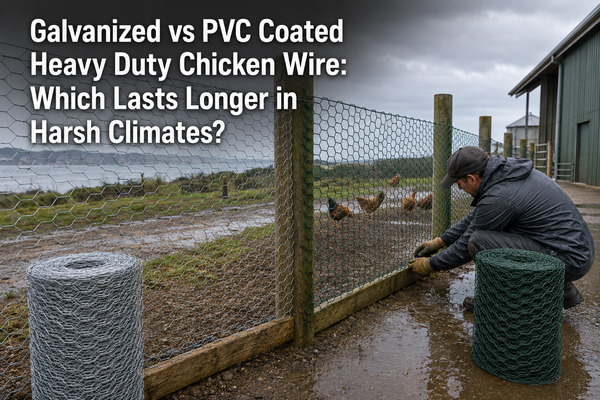
Galvanized vs PVC Coated Heavy Duty Chicken Wire: Which Lasts Longer in Harsh Climates?
I watched a customer's chicken coop fall apart after just two winters. The cheap wire mesh couldn't handle our harsh weather conditions, and the chickens escaped through the rusted holes.

After 15 years in the wire mesh business at Dingzhou Bestar, I've seen countless projects succeed and fail based on material choice. Let me share what really works in tough conditions.
Is PVC Coated Chicken Wire Good?
Many farmers ask me if the extra cost for PVC coating is worth it. The answer depends on your local weather conditions and how long you want your fence to last.

PVC coating works like a protective shield around your wire mesh. The polymer layer blocks moisture, oxygen, and harmful chemicals from touching the metal underneath. This protection becomes critical in areas with high humidity, salt air, or frequent rain.
I remember working with a coastal farm in Florida where regular galvanized wire failed within 18 months due to salt corrosion. We replaced it with PVC coated mesh, and it's still performing perfectly after 8 years. The initial investment was 40% higher, but the long-term savings were substantial.
PVC Coating Performance Factors
| Climate Factor | PVC Protection Level | Expected Lifespan |
|---|---|---|
| High Humidity | Excellent | 15-20 years |
| Salt Air/Coastal | Superior | 12-18 years |
| Extreme UV | Very Good | 10-15 years |
| Temperature Swings | Good | 12-16 years |
| Chemical Exposure | Excellent | 8-15 years |
The coating thickness matters significantly. Standard PVC coatings measure 0.5-0.8mm thick, while premium versions reach 1.0mm. Thicker coatings resist cracking and peeling better, especially during freeze-thaw cycles. Color also affects performance - darker colors absorb more heat and may degrade faster in extreme sun exposure.
Will Galvanized Chicken Wire Rust?
This question comes up in every sales conversation I have. The short answer is yes, but the timeline varies dramatically based on conditions and coating quality.
Galvanization works through sacrificial protection. The zinc coating corrodes first, protecting the steel underneath. Once the zinc layer depletes, rust begins immediately. The process accelerates in acidic conditions, high moisture, and areas with salt exposure.
I've documented rust patterns across different climates for our quality control process. Desert environments with low humidity show minimal rust for 10+ years. Tropical coastal areas develop surface rust within 2-3 years. Industrial zones with air pollution accelerate corrosion significantly due to sulfur compounds in the atmosphere.
Galvanized Wire Rust Timeline
| Environment Type | First Rust Signs | Structural Decline | Replacement Needed |
|---|---|---|---|
| Arid/Desert | 5-7 years | 12-15 years | 15-20 years |
| Temperate | 3-5 years | 8-12 years | 10-15 years |
| Tropical/Humid | 2-3 years | 5-8 years | 8-12 years |
| Coastal/Salt Air | 1-2 years | 3-5 years | 5-8 years |
| Industrial/Polluted | 1-3 years | 4-7 years | 6-10 years |
The zinc coating thickness determines initial protection level. Class 1 galvanizing (minimum 245g/m² zinc) provides basic protection suitable for mild climates. Class 3 galvanizing (minimum 610g/m²) offers superior protection for harsh conditions. Most chicken wire uses Class 1 coating to keep costs down, which explains why many installations fail prematurely.
Which is Better, Galvanized or Vinyl Coated Fence?
Choosing between these options requires balancing upfront costs against long-term performance. I help customers make this decision based on their specific conditions and budget constraints.

The performance gap widens significantly in challenging environments. Vinyl coating provides multiple protection layers - the polymer barrier blocks moisture and chemicals while maintaining flexibility during temperature changes. Galvanized coating relies solely on zinc sacrificial protection, which depletes over time.
Cost analysis becomes crucial for large projects. A recent agricultural project in Kenya required 5,000 meters of perimeter fencing. Galvanized wire cost $8,500 total, while vinyl coated reached $12,200. However, the galvanized option would need replacement in 8 years, making the total 20-year cost $17,000 versus $12,200 for vinyl coated.
Performance Comparison Matrix
| Factor | Galvanized Rating | Vinyl Coated Rating | Winner |
|---|---|---|---|
| Initial Cost | 9/10 | 6/10 | Galvanized |
| Corrosion Resistance | 6/10 | 9/10 | Vinyl |
| UV Resistance | 5/10 | 8/10 | Vinyl |
| Mechanical Durability | 8/10 | 7/10 | Galvanized |
| Temperature Tolerance | 7/10 | 8/10 | Vinyl |
| Maintenance Requirements | 4/10 | 9/10 | Vinyl |
| Lifespan Value | 5/10 | 9/10 | Vinyl |
Installation factors also matter. Vinyl coated wire requires gentler handling to prevent coating damage during installation. Sharp bends or excessive tension can crack the polymer layer, creating rust entry points. Galvanized wire tolerates rougher handling but shows immediate scratches that become rust initiation sites.
What's the Best Chicken Wire to Use?
After analyzing thousands of installations across different climates, I can provide clear recommendations based on your specific situation and requirements.

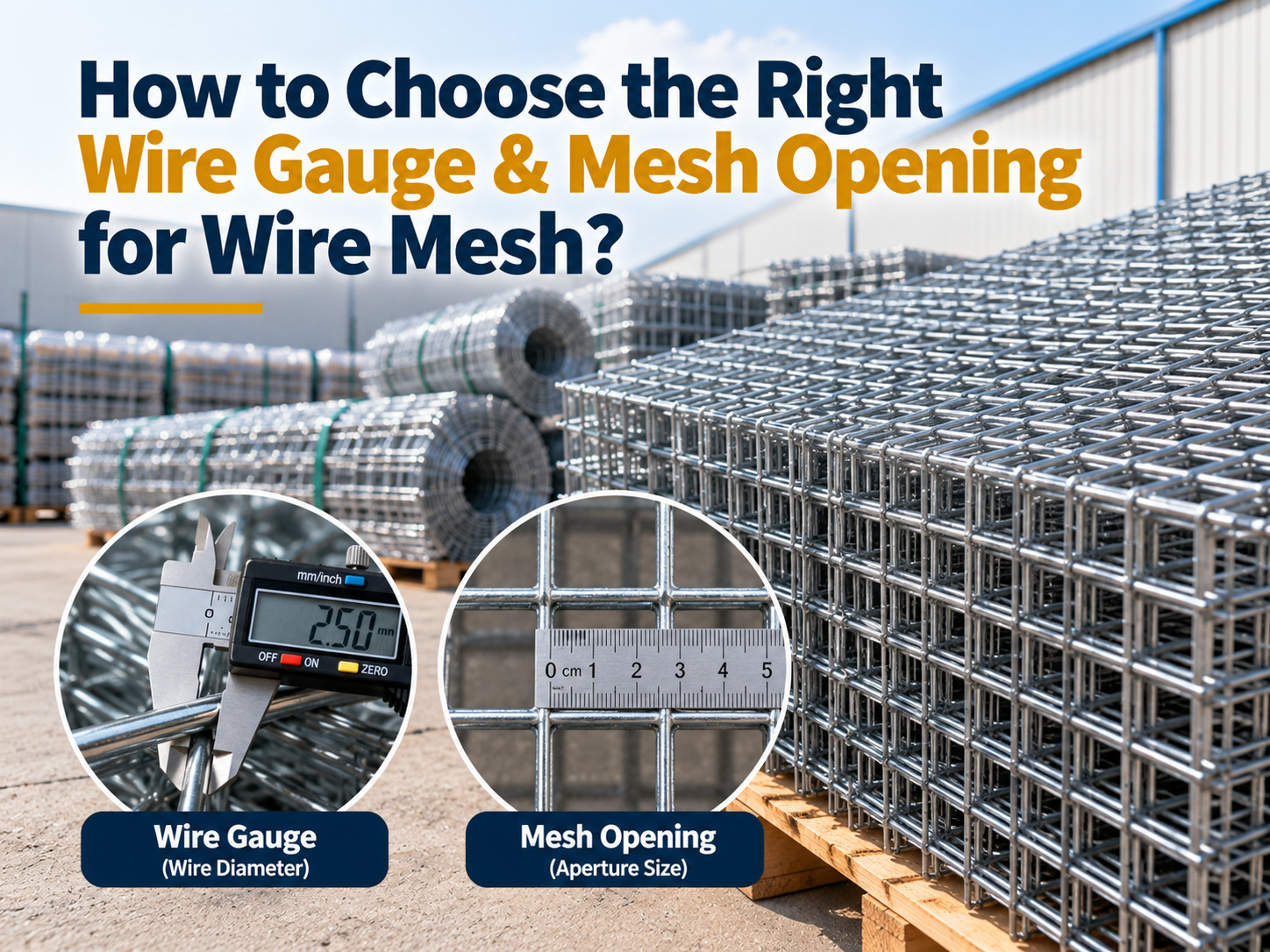
Wire gauge significantly impacts durability regardless of coating type. 19-gauge wire (1.0mm diameter) provides adequate strength for temporary installations. 16-gauge wire (1.6mm diameter) suits permanent residential applications. 14-gauge wire (2.0mm diameter) handles commercial and high-stress environments effectively.
Mesh opening size affects both security and airflow. 1-inch (25mm) hexagonal mesh stops most predators while allowing excellent ventilation. 0.5-inch (13mm) mesh provides maximum security against small predators but reduces airflow. 2-inch (50mm) mesh works for large poultry but allows smaller predators through.
Recommended Specifications by Application
| Application | Wire Gauge | Mesh Size | Coating Type | Expected Life |
|---|---|---|---|---|
| Temporary Chicken Run | 19-gauge | 1-inch hex | Galvanized | 3-5 years |
| Permanent Backyard Coop | 16-gauge | 1-inch hex | PVC Coated | 12-15 years |
| Commercial Poultry | 14-gauge | 0.75-inch hex | Heavy PVC | 15-20 years |
| Predator Protection | 16-gauge | 0.5-inch hex | PVC Coated | 10-15 years |
| Garden Protection | 19-gauge | 1-inch hex | Light PVC | 8-12 years |
Quality indicators help identify superior products. Look for uniform coating thickness without thin spots or bubbles. Check wire diameter consistency using calipers - variations exceed 10% indicate poor quality control. Examine mesh uniformity - irregular openings suggest manufacturing defects that create stress concentration points.
At Dingzhou Bestar, we test every batch for coating adhesion, wire tensile strength, and corrosion resistance. Our dual-facility production (China and Ethiopia) allows us to serve different markets with appropriate quality levels while maintaining competitive pricing through optimized logistics.
Conclusion
PVC coated chicken wire delivers superior longevity in harsh climates, lasting nearly twice as long as galvanized alternatives while requiring minimal maintenance throughout its service life.