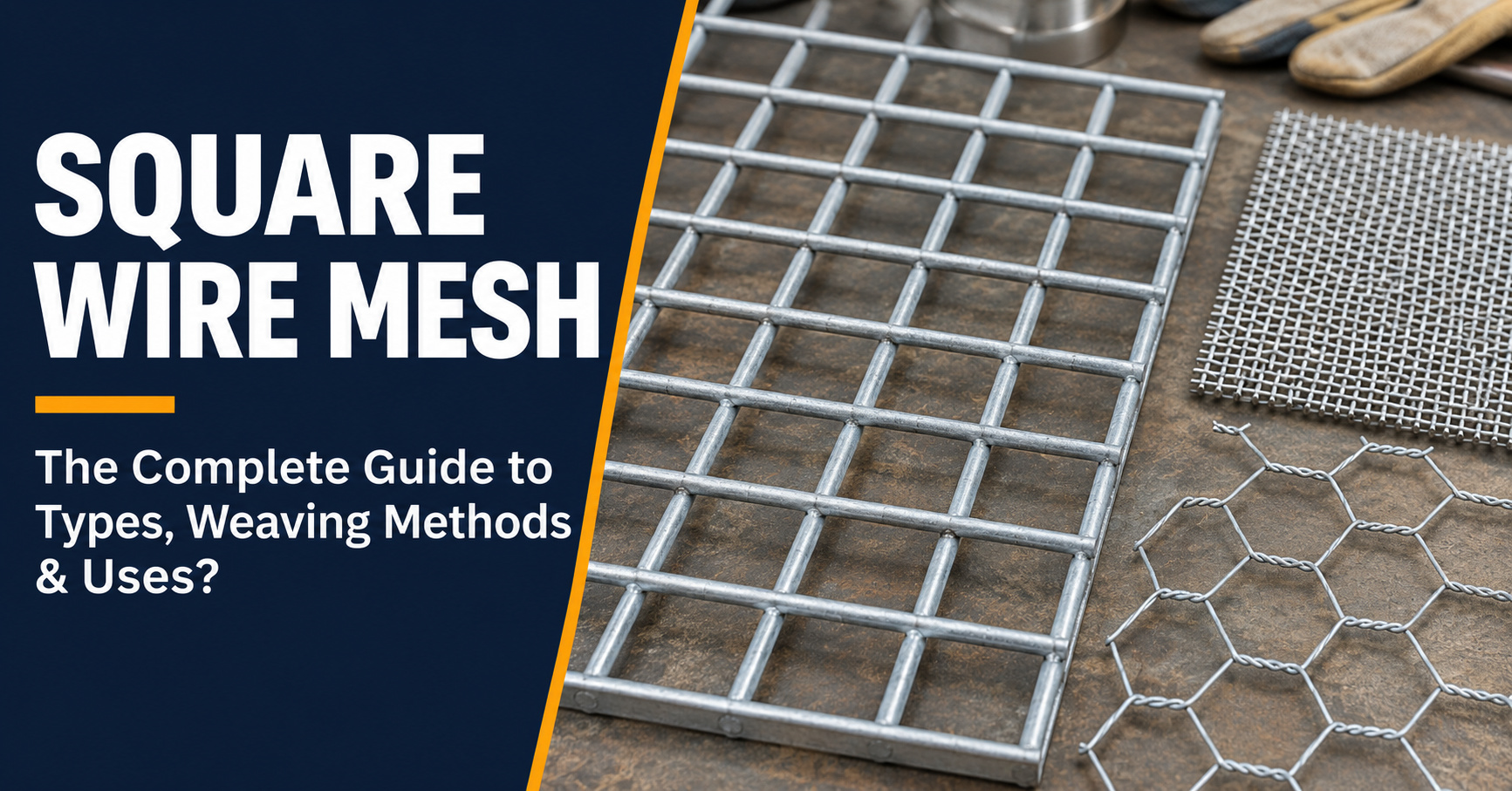


How Can You Find the Right Square Wire Mesh for Your Filtration and Sieving Needs?
Industrial screening performance depends heavily on the mesh specification. An unsuitable opening size, wire diameter, or material can reduce separation efficiency, increase maintenance, and shorten service life.
Choosing welded wire mesh for industrial screening requires balancing mesh opening, wire diameter, open area, impact load, abrasion, corrosion exposure, and the properties of the material being screened.
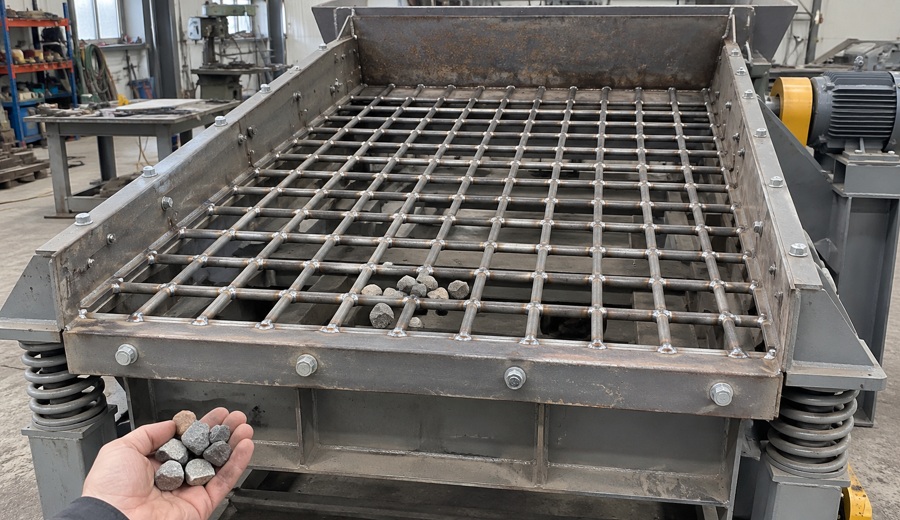
What Is Welded Wire Mesh and How Is It Used for Industrial Screening?
Welded wire mesh is manufactured by arranging longitudinal and transverse wires in a grid and joining them at each intersection through resistance welding.
Fixed intersections create a relatively rigid structure with stable openings, making welded mesh suitable for coarse screening, sizing, guarding, reinforcement, and support applications.
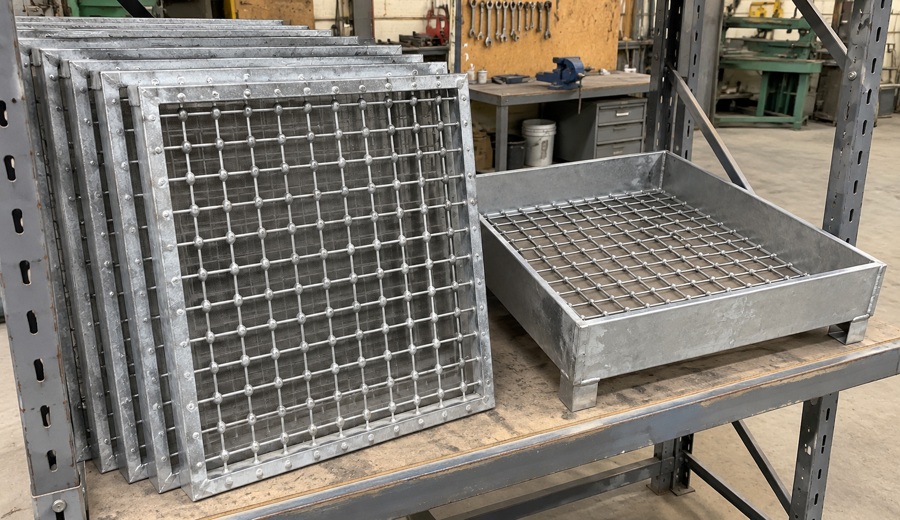
Common Industrial Uses
- Coarse screening and sizing
- Aggregate separation
- Machine guarding
- Safety barriers
- Support for finer filter media
- Industrial partitions
- Selected agricultural sorting applications
Welded Mesh vs Woven Mesh for Screening
Welded Wire Mesh
Welded intersections provide rigidity and stable openings. It can be suitable where dimensional stability and coarse separation are more important than flexibility.
Woven Wire Mesh
Interlaced wires provide greater flexibility and are commonly used for finer screening, vibrating screens, filtration, and applications requiring a wide range of mesh counts.
| Feature | Welded Wire Mesh | Woven Wire Mesh |
|---|---|---|
| Construction | Welded intersections | Interlaced wires |
| Rigidity | High | More flexible |
| Opening Stability | Generally high | Depends on weave and tension |
| Typical Screening Range | Coarse or structural screening | Fine to coarse screening |
| Vibration Response | More rigid | Generally better suited to repeated flexing |
Selection Note: Welded mesh is not automatically the best choice for every vibrating screen. Fine industrial screening often uses purpose-designed woven screen media because flexibility, aperture range, fatigue behavior, and open area can be critical.
How Do Mesh Opening and Wire Diameter Affect Screening Performance?
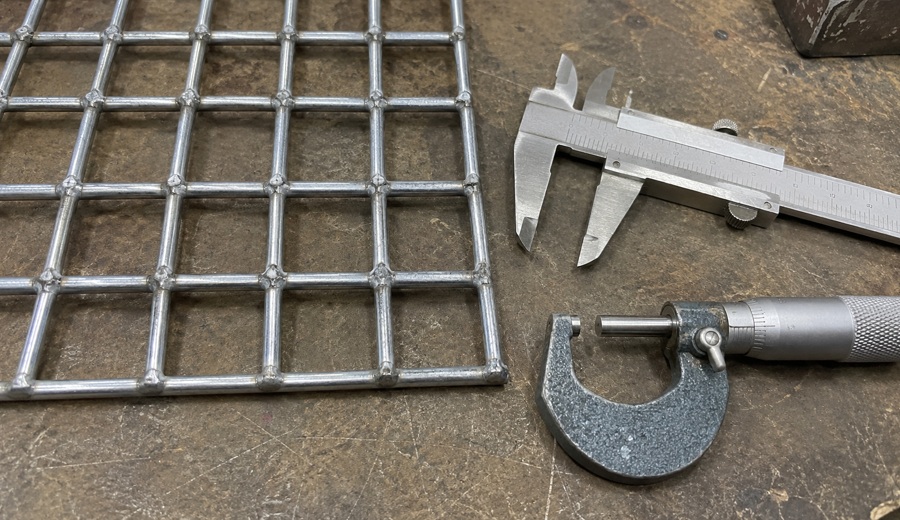
Mesh opening and wire diameter should always be selected together. Increasing wire diameter can improve rigidity and wear resistance, but it also reduces open area.
The correct specification balances particle separation accuracy, throughput, open area, impact resistance, and expected service life.
Mesh Opening
Mesh opening determines what particle size can pass through the screen. It should be selected according to the target cut size and the shape and distribution of the material being processed.
Wire Diameter
Heavier wire generally provides greater rigidity and resistance to bending and impact, but it reduces the percentage of open screening area.
Open Area
Open area affects throughput. A screen with heavy wire and small openings may be durable but can restrict material flow.
Technical Tip: Avoid choosing the thickest wire simply for durability. Excessively heavy wire can reduce open area and screening capacity.
Typical Welded Mesh Specifications for Different Applications
The source article provides several example combinations of opening size and wire diameter. These should be treated as starting references rather than universal engineering specifications.
| Application | Example Opening | Example Wire Diameter | Main Requirement |
|---|---|---|---|
| Rock & Aggregate Screening | Approx. 50 × 50 mm | Approx. 5.0 mm | Impact resistance and coarse sizing |
| General Purpose Sieving | Approx. 25 × 25 mm | Approx. 3.0 mm | Balance between opening and rigidity |
| Grain & Seed Sorting | Approx. 12 × 12 mm | Approx. 2.0 mm | Smaller particle separation |
| Machine Guarding | Approx. 25 × 25 mm | Approx. 3.0 mm | Visibility and access protection |
Important: Screening specifications should be confirmed according to feed size, particle shape, throughput, vibration, impact, abrasion, screen deck design, and required cut size.
Which Materials Are Best for Industrial Screening?
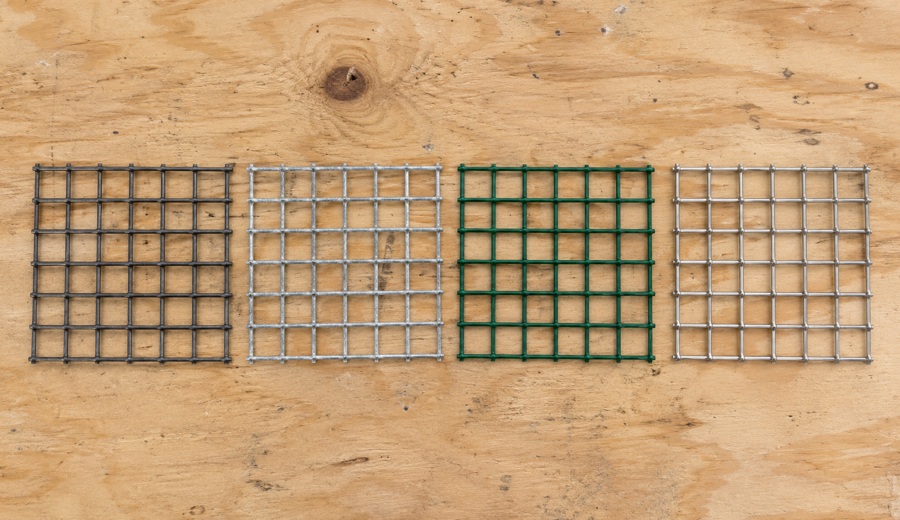
Material selection depends on moisture, abrasion, corrosion, chemicals, hygiene requirements, and service temperature.
Plain Carbon Steel
An economical option where corrosion exposure is limited and the screen operates in a dry environment.
Galvanized Steel
Zinc coating helps protect carbon steel against corrosion and is commonly used for outdoor, agricultural, and general industrial use.
PVC-Coated Mesh
Adds a polymer layer over the wire and may provide additional protection in selected moisture or chemical environments.
Stainless Steel
Suitable where corrosion resistance, hygiene, or chemical compatibility is a priority, depending on the selected alloy grade.
Electro-Galvanized vs Hot-Dip Galvanized
| Finish | General Characteristics | Typical Environment |
|---|---|---|
| Electro-Galvanized | Usually lighter zinc coating and smoother finish | Indoor or lower-corrosion applications |
| Hot-Dip Galvanized | Can provide heavier zinc coating depending on specification | Outdoor and more demanding environments |
Procurement Tip: Ask for the actual zinc coating specification rather than selecting only by the terms “electro-galvanized” or “hot-dip galvanized.”
When Should You Use Stainless Steel Screening Mesh?
Stainless steel may be appropriate when galvanized carbon steel does not provide sufficient corrosion resistance or when hygiene requirements restrict the use of coated carbon steel.
- Food processing
- Pharmaceutical production
- Chemical processing
- High-humidity environments
- Selected marine applications
Stainless steel grade should be matched to the actual environment. Different alloys provide different levels of corrosion and chemical resistance.
What Are the Benefits of Welded Wire Mesh in Industrial Applications?
1. Structural Rigidity
Welded intersections create a fixed grid that can maintain its shape under many static and moderate mechanical loads.
2. Stable Openings
Fixed intersections help maintain consistent aperture dimensions, which can be useful for coarse sizing and guarding.
3. Fabrication Flexibility
Welded mesh can be cut and fabricated into panels, guards, frames, baskets, partitions, and other industrial components.
4. Material Options
Buyers can select carbon steel, galvanized steel, stainless steel, or other suitable finishes according to the service environment.
Performance Note: Abrasion life and fatigue performance depend on actual load, material hardness, screen motion, feed characteristics, weld quality, and installation. Welded construction alone does not guarantee longer service life.
How Do You Choose Welded Wire Mesh for Screening Equipment?
- Identify the Material Being Screened
Determine particle type, shape, density, abrasiveness, moisture, and whether the material is dry or wet. - Determine the Required Cut Size
Select an aperture that separates the target particle sizes while maintaining acceptable throughput. - Select Wire Diameter
Balance wear resistance and rigidity against open area and flow capacity. - Assess Impact and Abrasion
Heavy rock and mineral applications may require significantly different materials and screen construction than grain or agricultural products. - Choose Material and Surface Treatment
Consider moisture, corrosion, chemicals, food-contact requirements, and expected operating conditions. - Confirm Equipment Compatibility
Check screen dimensions, mounting method, vibration, tensioning, support structure, and equipment manufacturer's requirements.
Quick Material Selection Guide
| Environment | Typical Material Option | Main Consideration |
|---|---|---|
| Indoor / Dry | Plain Carbon Steel | Economical where corrosion exposure is limited |
| Outdoor / Humid | Galvanized Steel | Zinc coating provides corrosion protection |
| Coastal / Chemical | PVC-Coated or Suitable Stainless Steel | Verify chemical and corrosion compatibility |
| Food / Pharmaceutical | Suitable Stainless Steel | Hygiene and material compatibility requirements |
What Information Should You Send to a Supplier?
Industrial Screening Mesh RFQ Checklist
- Application and screened material
- Required cut size
- Mesh opening
- Wire diameter
- Mesh width and length
- Panel or roll form
- Material grade
- Surface treatment
- Expected impact or abrasion level
- Wet or dry operating environment
- Required open area if critical
- Equipment or mounting dimensions
- Required quantity
- Packaging requirements
- Destination port or delivery location
Conclusion
Selecting welded wire mesh for industrial screening requires more than choosing an opening size. Wire diameter, open area, abrasion, impact, material, corrosion exposure, and equipment design all affect performance.
Welded mesh can be a strong option for coarse screening, machine guarding, support structures, and applications requiring stable openings and rigidity. However, fine or highly dynamic screening applications may be better served by purpose-designed woven screen media.
For accurate B2B sourcing, provide the supplier with the screened material, required aperture, wire diameter, dimensions, material, operating environment, load conditions, and equipment requirements before requesting a quotation.