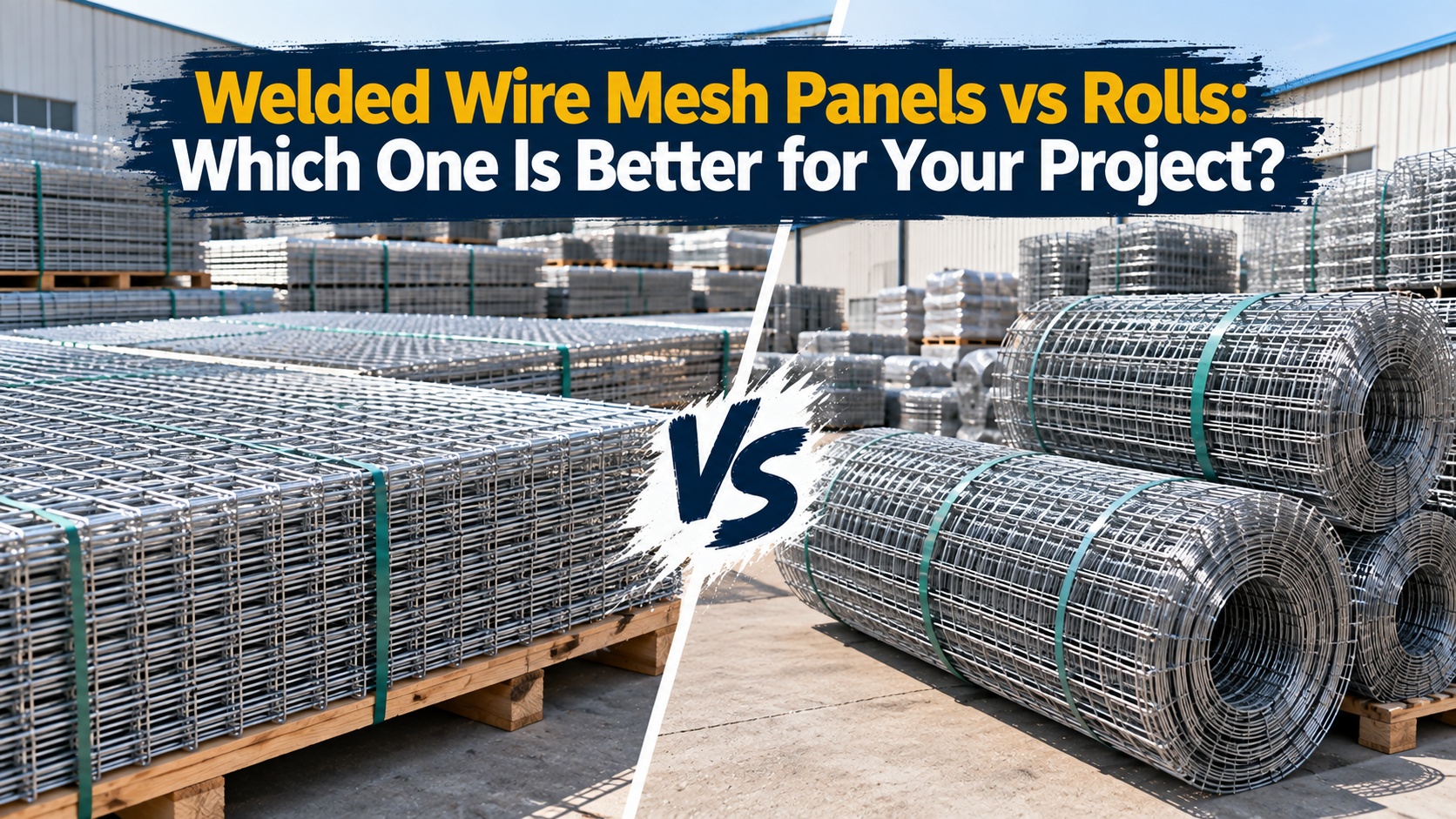


Welded vs Woven Wire Mesh Netting: Strength, Cost & Application Differences?
You're comparing welded and woven wire mesh options for your project. Both seem similar at first glance. But choosing wrong could cost thousands in material waste and installation delays.
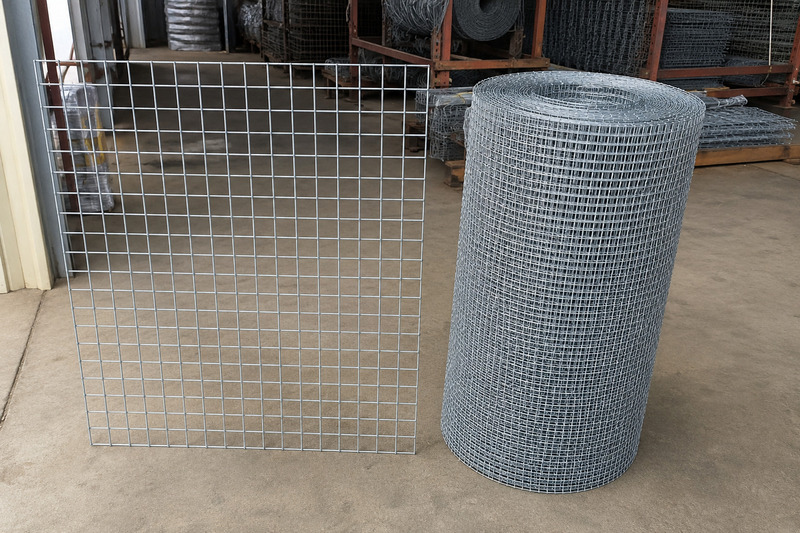
After 15 years manufacturing both types at our facilities in China and Ethiopia, I've seen countless projects succeed or fail based on this choice. Let me walk you through the technical differences that matter for your purchasing decision.
What are the differences between welded mesh and woven mesh?
The manufacturing process creates fundamentally different products. Most buyers focus only on appearance. But the real differences run much deeper.

Manufacturing Process Impact on Performance
The welding process fuses wire intersections into solid joints. Each crossing becomes a fixed connection point. This eliminates wire movement but creates stress concentration zones. Heat from welding can affect wire properties in the immediate area.
Weaving mechanically interlaces wires without heat treatment. Wires maintain their original properties throughout. The over-under pattern allows controlled movement at crossings. This flexibility distributes loads differently across the mesh structure.
| Manufacturing Aspect | Welded Mesh | Woven Mesh |
|---|---|---|
| Joint Type | Fused/Rigid | Mechanical/Flexible |
| Wire Properties | Heat-affected zones | Unchanged |
| Production Speed | Fast (automated) | Slower (complex weaving) |
| Opening Consistency | High precision | Variable tolerance |
| Quality Control | Visual weld inspection | Weave pattern verification |
Structural Behavior Differences
Welded mesh behaves like a rigid frame structure. Loads transfer through fixed joints to adjacent wires. This creates predictable load paths but can cause failure at weld points under excessive stress. The rigid structure excels in applications requiring dimensional stability.
Woven mesh acts more like a flexible membrane. Loads distribute across multiple wire paths through the interlaced structure. Individual wire failure rarely causes catastrophic mesh failure. The flexible nature allows accommodation of ground movement and thermal expansion.
Opening Accuracy and Consistency
Welded mesh achieves superior opening accuracy. The welding fixture holds wires in precise positions during joining. Typical tolerance ranges from ±2% for standard products. This precision matters for applications requiring specific opening sizes.
Woven mesh openings vary more due to the mechanical weaving process. Wire tension during weaving affects final opening dimensions. Typical tolerances range ±5-8%. Post-weaving stretching can improve accuracy but increases cost.
What is the strongest type of wire mesh?
Strength isn't a simple comparison. Different mesh types excel in different strength categories. Understanding these differences prevents costly specification mistakes.
Tensile Strength Analysis
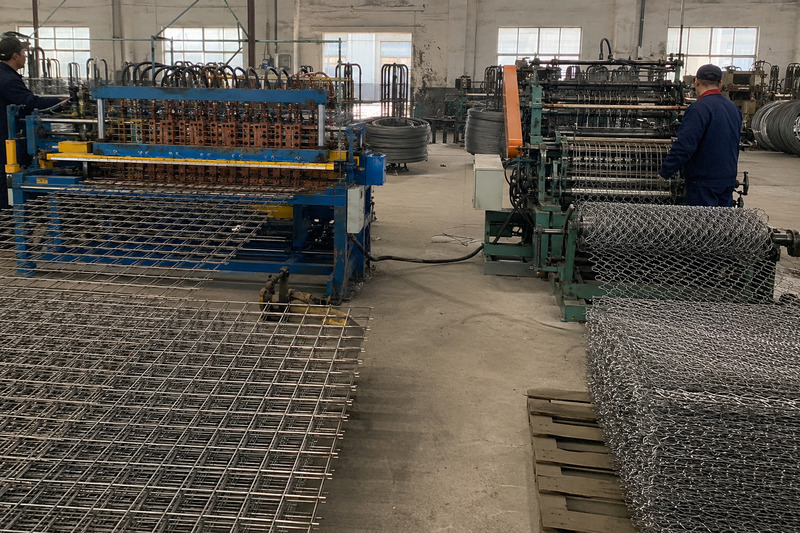
Welded mesh tensile strength approaches that of continuous wire in both directions. The welded joints don't significantly reduce wire capacity under pure tension. Standard 6mm wire welded mesh typically handles 40-50 kN/m tensile loads.
Woven mesh tensile strength varies by weave pattern. Plain weave patterns reduce effective wire cross-section at crimp points. The same 6mm wire in woven form typically handles 30-35 kN/m. However, the interlaced structure provides better load redistribution if individual wires fail.
Impact and Tear Resistance
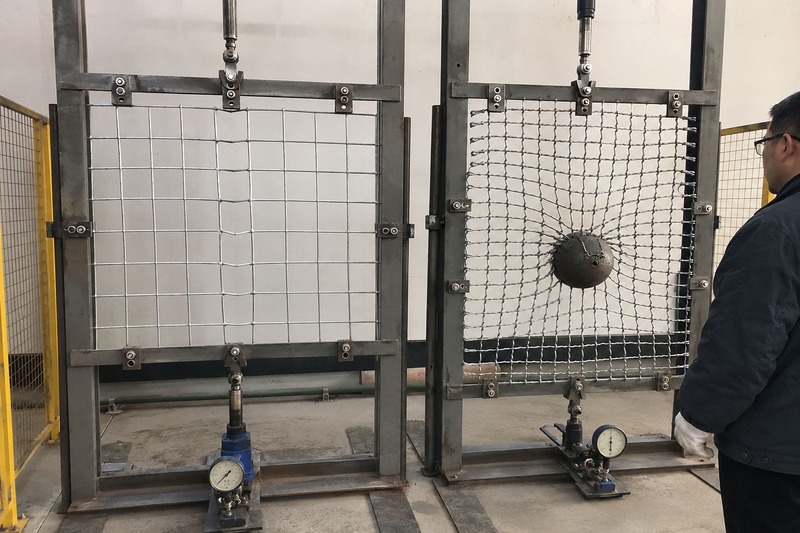
Woven mesh significantly outperforms welded mesh under impact loading. The flexible structure absorbs energy through wire movement and deformation. Localized impacts distribute across multiple wire intersections.
Welded mesh concentrates impact energy at rigid weld points. High impacts can fracture welds, causing sudden failure. Once a weld fails, the mesh loses structural continuity in that area.
| Strength Type | Welded Mesh | Woven Mesh | Application Impact |
|---|---|---|---|
| Tensile (wire direction) | Excellent | Good | Load-bearing applications |
| Tensile (diagonal) | Good | Excellent | Multi-directional loads |
| Impact resistance | Fair | Excellent | Security, animal containment |
| Tear resistance | Poor | Excellent | Vandalism resistance |
| Fatigue resistance | Fair | Good | Vibration environments |
Rigidity vs Flexibility Trade-offs
Welded mesh rigidity benefits applications requiring dimensional stability. Concrete reinforcement, architectural panels, and machine guards perform better with rigid mesh. The fixed geometry maintains design dimensions under load.
Woven mesh flexibility suits applications with ground movement, thermal cycling, or impact exposure. Fencing, filtration, and protective barriers benefit from the accommodating nature. The mesh adapts to changing conditions without failure.
Is woven wire better than welded wire?
Neither type is universally better. The optimal choice depends on your specific application requirements, environmental conditions, and performance priorities.
Application-Specific Performance
Security fencing favors woven mesh for its cut resistance and impact tolerance. The interlaced structure makes cutting more difficult than severing welded joints. Woven mesh also handles vandalism attempts better through energy absorption.
Concrete reinforcement requires welded mesh for its dimensional stability and bond characteristics. The rigid structure maintains reinforcement placement during concrete pour. Welded joints won't shift under concrete pressure.
Agricultural applications often prefer woven mesh for animal containment. The flexibility accommodates animal impact without catastrophic failure. Woven mesh also conforms better to uneven terrain.
Industrial screening applications favor welded mesh for consistent opening sizes. The precise openings ensure accurate material separation. Welded mesh also cleans more easily due to smooth intersections.
Environmental Considerations
Corrosive environments affect both mesh types differently. Welded joints create crevice corrosion risks where dissimilar metals contact. The heat-affected zones may have different corrosion resistance than base wire.
Woven mesh presents more uniform corrosion characteristics. The mechanical joints avoid galvanic corrosion issues. However, the wire contact points can trap contaminants, potentially accelerating localized corrosion.
Temperature cycling impacts welded mesh more severely. Differential expansion between wire and weld metal can create stress concentrations. Repeated cycling may fatigue weld joints over time.
Woven mesh accommodates thermal movement through wire sliding at intersections. This flexibility prevents thermal stress buildup. The mesh maintains performance across wider temperature ranges.
Cost Analysis Framework
Initial material costs favor welded mesh due to automated production efficiency. Welded mesh typically costs 15-25% less than equivalent woven mesh. However, total project costs include installation, maintenance, and replacement considerations.
Installation costs vary by application complexity. Welded mesh installs faster for rigid applications due to dimensional stability. Woven mesh may require more installation time but adapts better to irregular surfaces.
Maintenance costs often favor woven mesh for its damage tolerance. Localized damage rarely requires full panel replacement. Welded mesh damage at joints may necessitate larger repair areas.
What are the advantages of using welded wire mesh?
Welded wire mesh offers specific benefits that make it the preferred choice for many applications. Understanding these advantages helps optimize your material selection.

Manufacturing and Quality Advantages
Automated welding equipment produces consistent weld quality across entire panels. Computer-controlled systems maintain precise wire spacing and welding parameters. This automation reduces human error and quality variations.
Quality control focuses on easily verified weld integrity. Visual inspection quickly identifies defective welds. Destructive testing of sample welds provides quantitative strength data. The straightforward quality assessment reduces inspection costs.
Inventory management simplifies with welded mesh's dimensional stability. Panels maintain their geometry during storage and transport. Stacking doesn't deform lower panels. This stability reduces handling damage and storage space requirements.
Installation and Construction Benefits
Welded mesh installs faster in applications requiring precise placement. The rigid structure maintains position during installation. Workers spend less time adjusting and aligning mesh panels. This efficiency reduces labor costs significantly.
Concrete applications benefit from welded mesh's bond characteristics. The smooth weld joints create minimal interference with concrete flow. The rigid structure prevents displacement during concrete placement. Better bond strength improves structural performance.
Cutting and fabrication operations proceed more predictably with welded mesh. The rigid structure supports itself during cutting. Clean cuts result from the stable geometry. Fabrication waste decreases due to predictable behavior.
| Installation Aspect | Welded Mesh Advantage | Quantified Benefit |
|---|---|---|
| Placement time | Maintains geometry | 20-30% faster installation |
| Concrete bond | Smooth intersections | 15% better bond strength |
| Cutting accuracy | Stable during cutting | 90% reduction in waste |
| Transport efficiency | Dimensional stability | 25% more panels per truck |
| Storage requirements | No deformation | 30% less warehouse space |
Long-term Performance Benefits
Structural applications benefit from welded mesh's predictable load transfer. Engineering calculations accurately model the rigid joint behavior. This predictability enables optimized designs with appropriate safety factors.
Maintenance planning becomes more straightforward with welded mesh's defined failure modes. Weld joint failures occur at predictable stress levels. Inspection programs can focus on high-stress areas. Preventive maintenance schedules prevent unexpected failures.
The smooth surface finish of welded intersections reduces contamination accumulation. Cleaning operations remove debris more effectively. This characteristic benefits food processing, pharmaceutical, and other sanitary applications.
Specification Guidelines for Purchasing
When requesting quotes for welded wire mesh, provide these specifications to ensure accurate pricing and delivery:
Material specification: Include wire material grade (mild steel, stainless steel, galvanized), carbon content for structural applications, and any special alloy requirements.
Geometric specifications: Define wire diameter (both longitudinal and transverse if different), mesh opening dimensions, panel or roll dimensions, and any special cutting requirements.
Surface treatment requirements: Specify galvanizing type (hot-dip vs electro-galvanized), coating weight, powder coating colors, or other protective finishes.
Quality and testing requirements: Include weld strength requirements, opening tolerance specifications, surface finish standards, and any required certifications.
Packaging and shipping specifications: Define packaging method (loose, bundled, palletized), container loading requirements, marking and labeling needs, and delivery schedule constraints.
Quantity and delivery terms: Provide total quantity, delivery schedule flexibility, FOB terms, and any trial order requirements for new suppliers.
Conclusion
Choose welded mesh for rigid applications requiring precision and dimensional stability. Select woven mesh where flexibility and impact resistance matter most. Consider your specific requirements, not general recommendations.