



What Factors Affect Concrete Nail Performance? A Complete OEM Buyer's Guide
Low-quality concrete nails can lead to bending, cracking, rust, and costly construction delays. For OEM buyers and distributors, inconsistent nail performance often means customer complaints, warranty risks, and damaged brand reputation. Understanding the key factors behind concrete nail quality helps reduce procurement risks and improve long-term profitability.
Concrete nail performance mainly depends on raw material quality, heat treatment, cold drawing precision, surface coating, production equipment, and quality control standards. Variations in these factors directly affect hardness, penetration ability, corrosion resistance, dimensional consistency, and construction reliability. For OEM buyers sourcing concrete nails from China, choosing a manufacturer with stable production systems and strict inspection standards is critical to reducing engineering risks and maintaining consistent product quality.
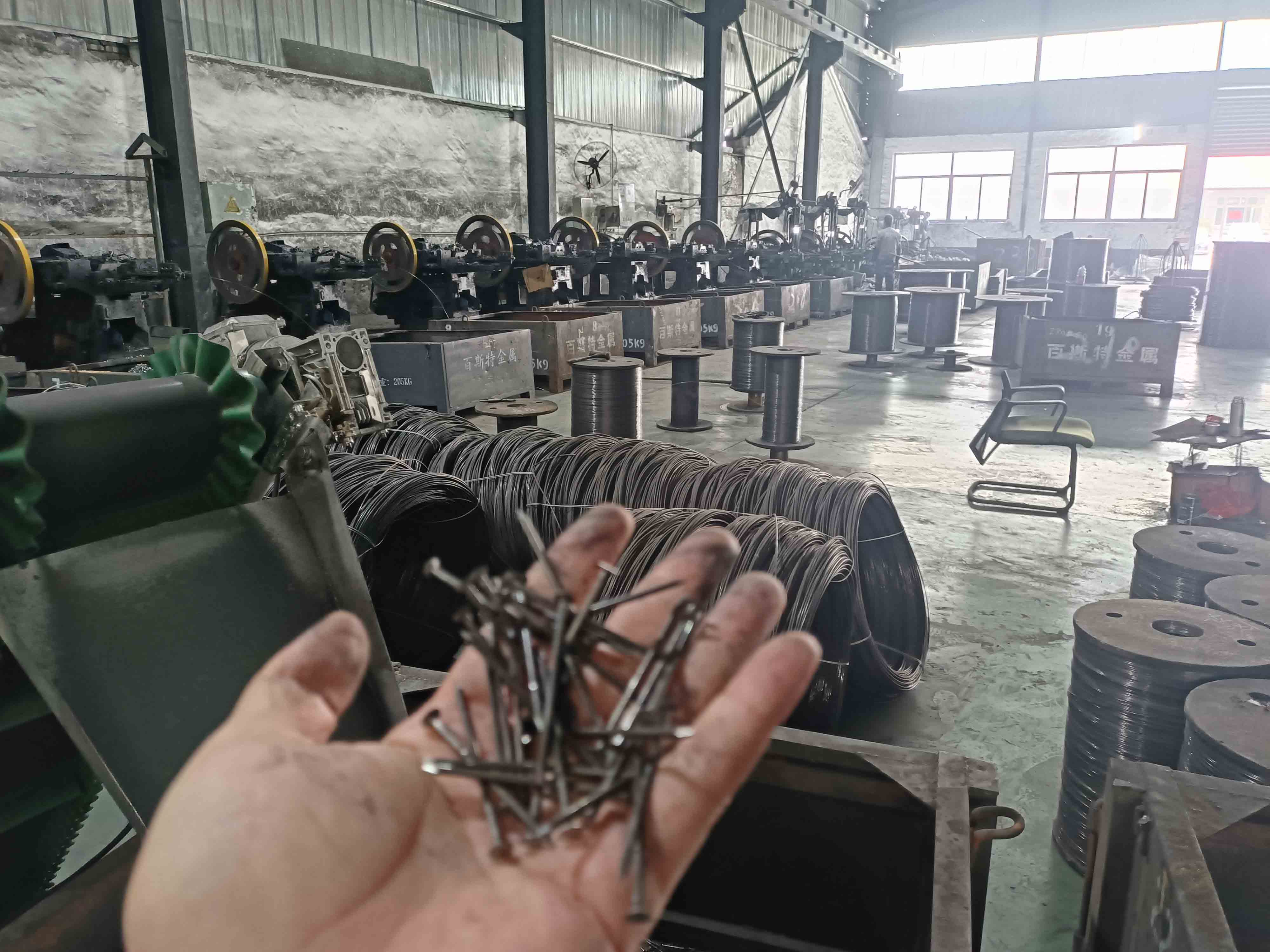
Different manufacturing processes create major differences in construction performance, durability, and customer satisfaction. Below are the most important factors OEM buyers should evaluate carefully. You can also explore our concrete nails product range and quality control process for more sourcing details.
Why Does Concrete Nail Performance Matter So Much in Construction Projects?
Concrete nails are widely used in construction, woodworking, wall fastening, and infrastructure projects. Although they appear to be simple fasteners, their performance directly affects installation efficiency, structural stability, and long-term durability.
For contractors, poor-quality nails often cause bending, head breakage, or penetration failure during installation. This slows down project progress and increases labor costs. In many construction projects, rework and installation failures may increase total costs by 5%–15%.
For OEM brands and distributors, the risks are even greater. Product inconsistency may lead to customer complaints, product returns, damaged reputation, higher logistics costs, and loss of long-term distributors.
Raw Materials Are the First Key Factor Affecting Concrete Nail Quality
The quality of steel wire used in production is the foundation of concrete nail performance. Most high-quality hardened concrete nails are made from medium or high-carbon steel.
Carbon content usually ranges between 0.45% and 0.75%, which provides the hardness required for penetrating concrete and masonry materials.
Low-carbon steel is softer and cheaper, but it often causes bending, poor penetration ability, lower tensile strength, and higher breakage risk.
For OEM buyers sourcing concrete nails China products, inconsistent raw material sourcing is one of the main reasons why suppliers produce very different quality levels.
| Material Type | Typical Carbon Content | Performance | Common Risk |
|---|---|---|---|
| Low-carbon steel | 0.05%–0.25% | Softer, easier to form | Bending, weak penetration |
| Medium-carbon steel | 0.30%–0.45% | Better strength and toughness | Needs stable heat treatment |
| High-carbon steel | 0.45%–0.75% | Higher hardness and penetration ability | Brittleness if over-hardened |
Heat Treatment Determines the Balance Between Hardness and Toughness
Heat treatment is one of the most critical processes in manufacturing china black concrete nail products.
The purpose of heat treatment is to create the right balance between hardness, toughness, and impact resistance. If nails are too soft, they cannot penetrate concrete effectively. If they are too hard, they may crack or snap during installation.
Most high-quality concrete nails maintain a hardness range between HRC 45–55. This range allows strong penetration while reducing brittleness.
| Heat Treatment Condition | Typical HRC Range | Construction Performance | Procurement Risk |
|---|---|---|---|
| Insufficient heat treatment | Below HRC 40 | Poor penetration, easy bending | High complaint risk |
| Controlled heat treatment | HRC 45–55 | Good hardness and toughness balance | Stable OEM quality |
| Over-hardening | Above HRC 58 | Strong hardness but brittle | Cracking or head breakage |
Improper heat treatment commonly causes nail tip cracking, head breakage, excessive bending, and uneven hardness between batches. For OEM buyers, requesting hardness test reports is an effective way to reduce sourcing risk.
Learn more about our concrete nail manufacturing process.

Cold Drawing Processes Affect Dimensional Accuracy and Consistency
Cold drawing affects nail diameter, surface smoothness, and mechanical consistency. During this process, steel wire is drawn through precision dies to achieve the required size and strength.
Poor cold drawing control may result in diameter inconsistency, uneven shank thickness, surface defects, and reduced penetration efficiency.
| Process Control Level | Diameter Consistency | Impact on OEM Orders |
|---|---|---|
| Manual or unstable drawing | Higher deviation | Batch inconsistency and more complaints |
| Precision cold drawing | Lower deviation | More stable penetration and packaging weight |
| Automated drawing line | Best consistency | Suitable for long-term OEM supply |
For OEM customers, dimensional inconsistency increases complaint risks because different batches may perform differently in the field.


