

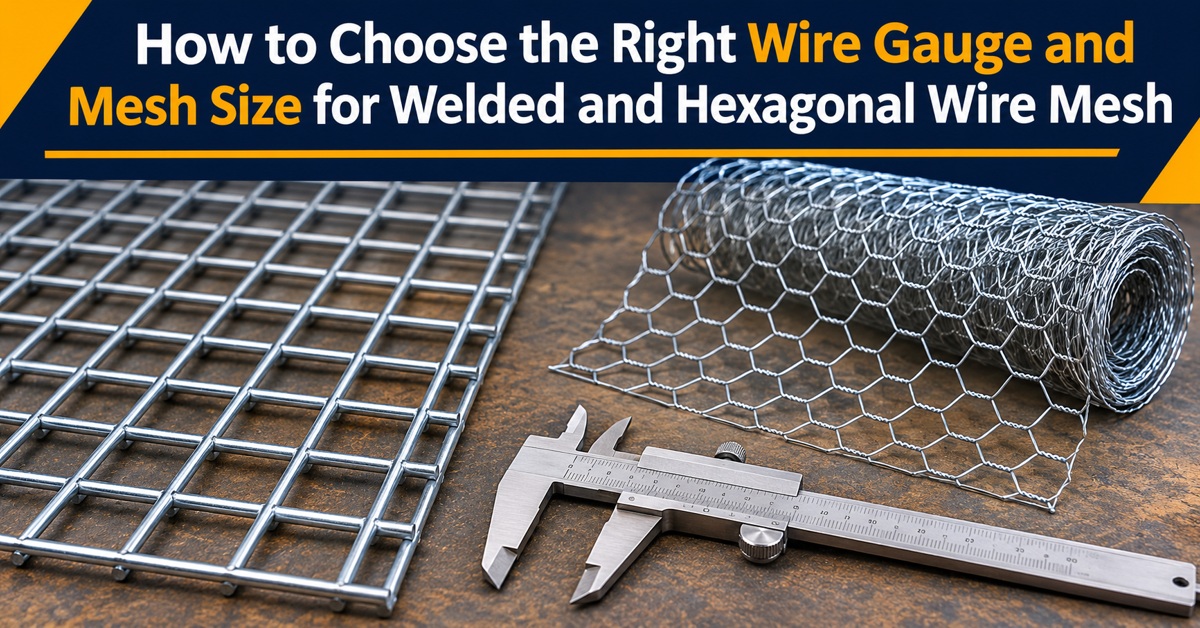
How to Choose the Right Wire Gauge and Mesh Size for Welded and Hexagonal Wire Mesh
Choosing the right wire mesh starts with two basic specifications: wire gauge and mesh opening. These two factors have a major influence on strength, flexibility, weight, containment performance, and purchasing cost.
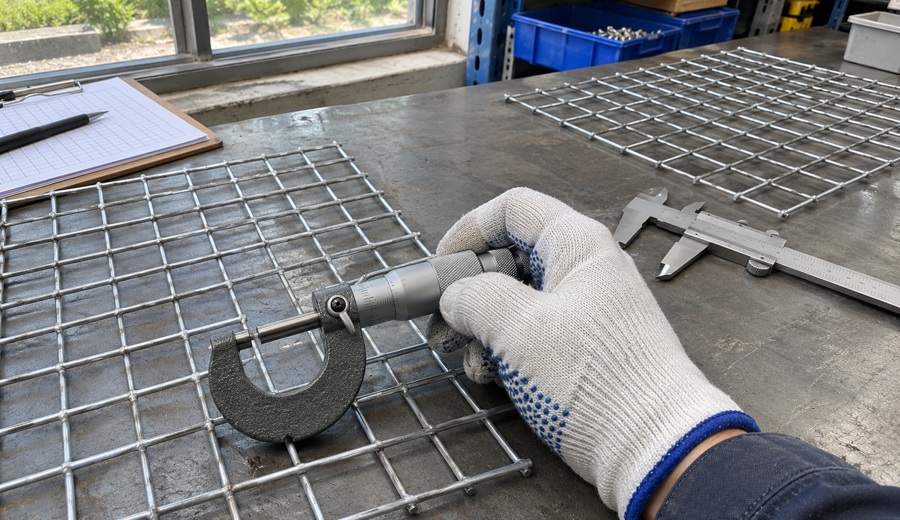
Wire gauge describes wire thickness, while mesh size describes the opening between wires. In many gauge systems, a lower gauge number means a thicker wire. However, buyers should always confirm the gauge standard and preferably specify the actual wire diameter in millimeters.
What Are Wire Gauge and Mesh Size?
Wire Gauge
Wire gauge is a system used to describe wire diameter. Depending on the standard, the gauge number is converted into an actual wire thickness.
In commonly used systems such as BWG, a lower gauge number generally represents a thicker wire.
Mesh Size
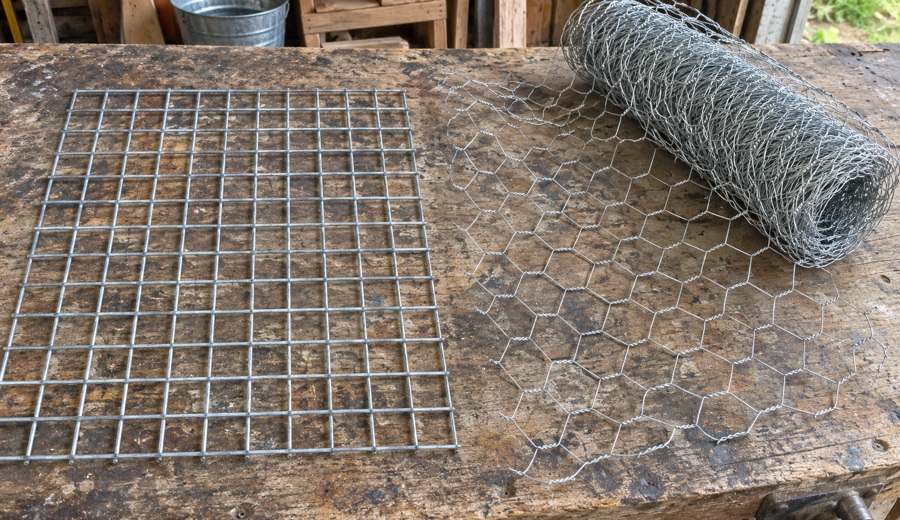
Mesh size describes the opening or spacing in the finished mesh. Welded mesh normally uses square or rectangular openings, while hexagonal mesh uses six-sided openings.
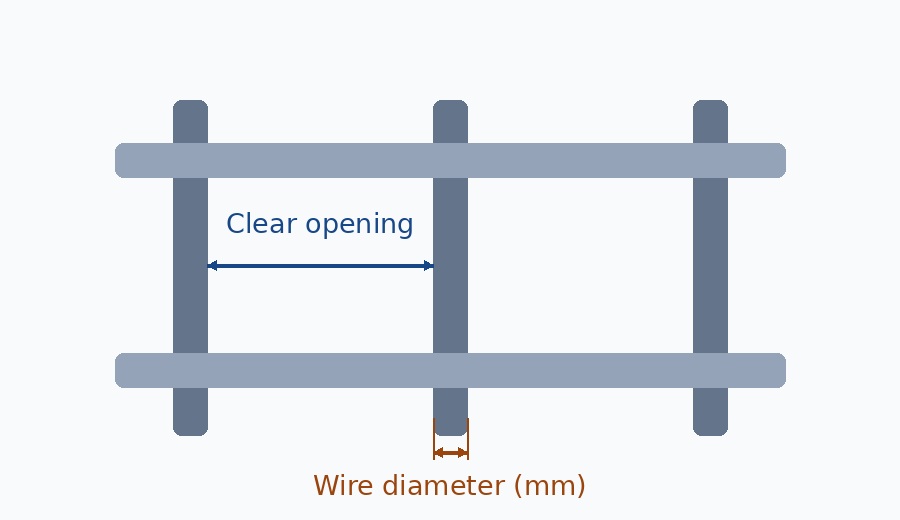
Important: Gauge systems are not universal. BWG, SWG, AWG, and other standards can represent different wire diameters for the same gauge number. For international B2B purchasing, specify the actual diameter in mm.
How Is Mesh Opening Measured?
Welded wire mesh is commonly specified using square or rectangular dimensions such as 1" × 1" or 2" × 4". Suppliers should confirm whether the dimension refers to center-to-center spacing or clear opening.
Hexagonal wire mesh is commonly specified using the nominal dimension across the hexagonal opening.
What Are Common Welded Wire Mesh Sizes?
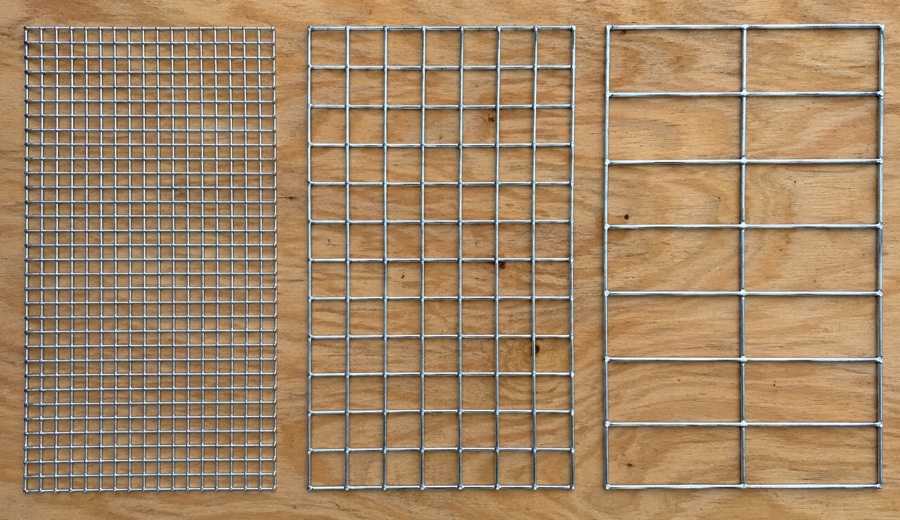
Welded wire mesh is available in a very wide range of wire diameters and openings. Heavier wire and larger openings are common in fencing and structural applications, while lighter wire and smaller openings are widely used for cages, guards, pest barriers, and screening.
| Gauge Reference | Typical Mesh Opening | Common Applications |
|---|---|---|
| Approx. 12–14 Ga. | 2" × 2", 2" × 4" | Security fencing, kennels, heavier animal enclosures |
| Approx. 16 Ga. | 1" × 1", 1" × 2" | General fencing, cages, partitions |
| Approx. 19 Ga. | 1/2" × 1/2", 1/2" × 1" | Small-animal cages, guards, pest barriers |
| Approx. 23 Ga. | 1/4" × 1/4" | Light screening, gutter guards, small pest barriers |
Selection Note: These combinations are general references from the source article, not universal engineering specifications. Actual requirements should be selected according to the application and required performance.
What Are Common Hexagonal Wire Mesh Sizes?
Hexagonal wire mesh, also known as chicken wire or poultry netting, normally uses lighter wire than heavy-duty welded mesh because its primary advantage is flexibility.
| Gauge Reference | Typical Opening | Common Applications |
|---|---|---|
| Approx. 20 Ga. | 1" | Chicken coops, poultry runs, garden protection |
| Approx. 22 Ga. | 1/2" | Fruit cages, seedlings, small-bird protection |
| Approx. 20 Ga. | 2" | Light garden fencing and selected plaster applications |
How Does Wire Diameter Affect Strength?
Wire diameter is one of the most important mechanical factors in wire mesh selection.
All else being equal, thicker wire generally provides greater resistance to bending, cutting, deformation, and physical pressure.
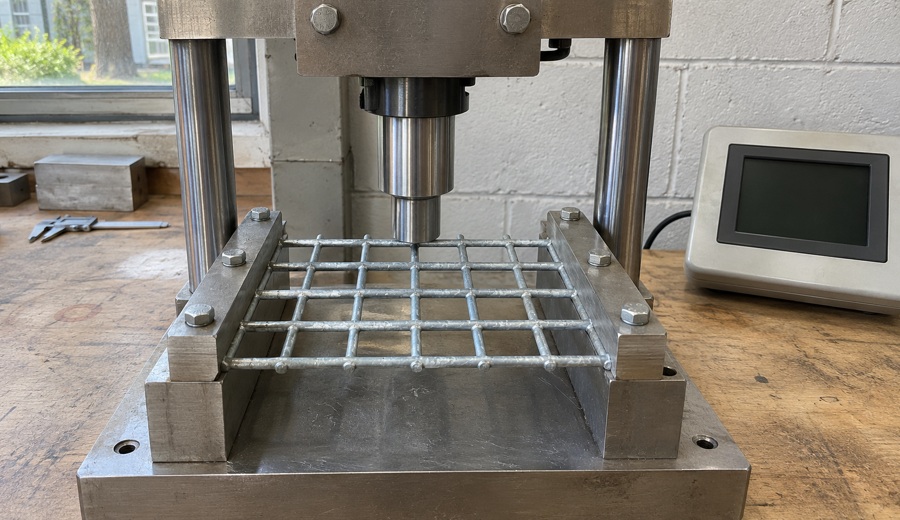
Heavier wire also increases material weight and steel consumption, which normally increases purchase price and transportation weight.
The goal is therefore not to choose the thickest possible wire, but to select sufficient wire diameter for the actual loading and application.
How Does Mesh Opening Affect Strength and Performance?
Opening size affects containment, visibility, airflow, material usage, rigidity, and the number of wire intersections per unit area.
- Smaller openings: provide denser wire coverage and help contain smaller animals or particles.
- Larger openings: reduce wire consumption, weight, and visual obstruction.
- More intersections: can increase grid stability depending on construction.
- Smaller openings + heavier wire: generally increase steel consumption and product cost.
Technical Note: A smaller opening does not automatically make every mesh “stronger.” Strength also depends on wire material, diameter, weld or twist quality, panel dimensions, support structure, and loading direction.
How Do You Choose Wire Gauge and Mesh Size by Application?
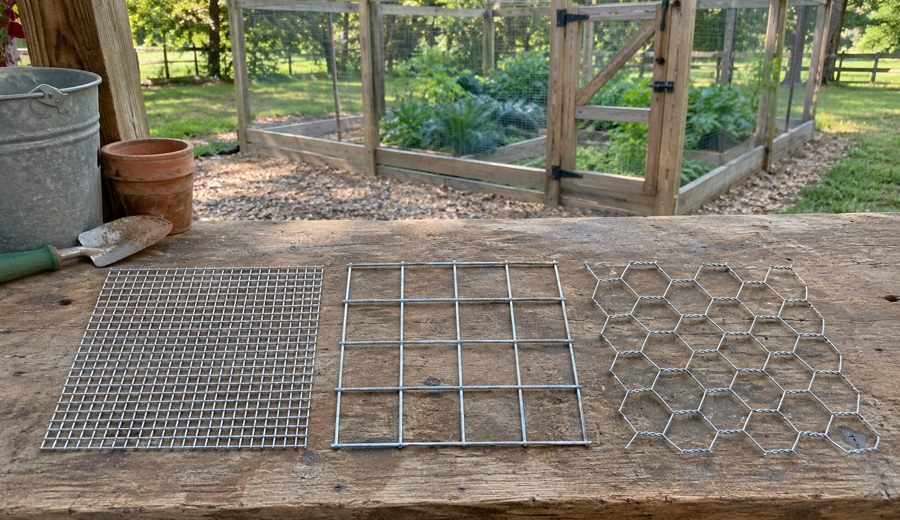
The best specification depends on what the mesh needs to contain, exclude, support, or reinforce.
| Application | Mesh Type | Typical Gauge Reference | Typical Opening | Main Requirement |
|---|---|---|---|---|
| Chicken Coop | Hexagonal | Approx. 20–22 Ga. | Approx. 1" | Lightweight poultry containment |
| Rabbit Cage | Welded | Approx. 14–16 Ga. | Approx. 1" × 1/2" | Stable openings and greater rigidity |
| Garden Fence | Welded | Approx. 16–19 Ga. | Approx. 2" × 3" or 2" × 4" | General garden protection |
| Security Fence | Welded | Approx. 12–14 Ga. | Approx. 2" × 2" | Rigidity and physical resistance |
| Rodent Barrier | Welded | Approx. 19–23 Ga. | Approx. 1/4"–1/2" | Small opening for exclusion |
| Stucco Netting | Hexagonal | Approx. 20–22 Ga. | Approx. 1"–1.5" | Flexible plaster support |
How Do You Select the Right Specification?
- Identify the Application
Determine whether the mesh is for fencing, cages, pest exclusion, poultry, screening, stucco, security, or another purpose. - Determine the Required Wire Strength
Applications exposed to greater physical pressure normally require heavier wire. - Select the Opening Size
Choose an opening that contains or excludes the required animal, object, or particle while avoiding unnecessary material cost. - Confirm the Gauge Standard
Do not rely on the gauge number alone. Confirm BWG, SWG, AWG, or another system and request the equivalent diameter in millimeters. - Select the Surface Treatment
Match galvanized, PVC-coated, or other finishes to indoor, outdoor, humid, coastal, or corrosive environments. - Compare Weight and Cost
Heavier wire and smaller openings increase steel usage, product weight, and typically total purchasing cost.
What Specifications Should You Check Before Ordering?
Clear technical specifications reduce quotation errors and make it easier to compare multiple wire mesh suppliers on the same basis.
Wire Mesh RFQ Checklist
- Product type: welded or hexagonal mesh
- Wire gauge system
- Actual wire diameter in mm
- Exact mesh opening
- Roll width and length or panel dimensions
- Steel or material grade
- Galvanized, PVC-coated, or other finish
- Required zinc coating if applicable
- Total quantity
- Application
- Packaging requirements
- OEM labels or barcodes if required
- Destination port or delivery location
Why Should B2B Buyers Specify Wire Diameter in Millimeters?
Gauge terminology can create confusion in international sourcing because different markets may use different gauge systems.
A specification such as “16 gauge” is less precise than stating the actual required diameter in millimeters.
Procurement Tip: A professional RFQ can include both formats, for example: “16 Gauge BWG, equivalent wire diameter ___ mm.” This reduces the risk of receiving a technically different product.
Conclusion
Choosing the correct wire gauge and mesh opening requires balancing strength, containment performance, flexibility, weight, and cost.
Heavier wire is generally selected for applications requiring more resistance to deformation, while smaller openings are used when better containment, exclusion, or denser wire coverage is required.
For B2B purchasing, always confirm the gauge standard and actual wire diameter, opening size, material, coating, roll or panel dimensions, quantity, and application before placing an order.